Why Is My Tankless Water Heater Not Working? Causes and Fixes
Most tankless heater problems come down to five things: no power or gas, too little water flow, a blocked vent or filter, scale buildup, or a unit that is too small for the demand. Start with the simple checks below, then read the error code on the display. If the fix involves gas lines, venting or wiring, stop and call a licensed pro.
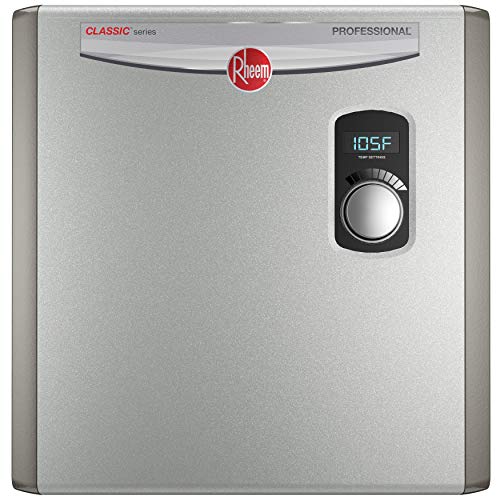 Rheem RTEX-24Best overall
 Rheem RTG-70DVLN-3Top UEF, indoor gas
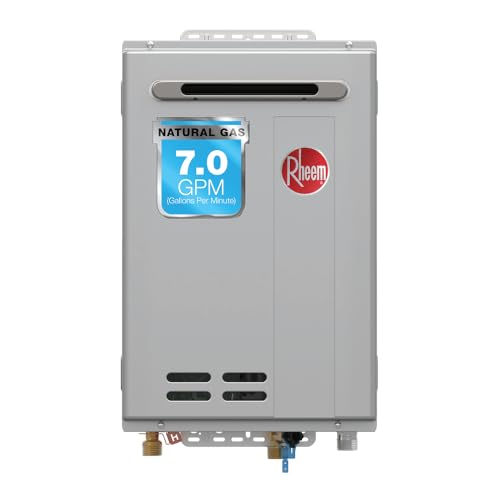 Rheem RTG-70XLN-3Outdoor gas, no venting
Start with the quick checks
Before you look up any error code, rule out the basics. A tankless heater only fires when it senses water moving, so it depends on power, fuel and flow all at once. If any one of them is missing, you get cold water.
These checks are safe for most homeowners and take a few minutes:
- Power: Make sure the unit is plugged in or the breaker has not tripped, and that the display lights up. Electric models are hardwired to dedicated breakers, so only flip a breaker back on. Do not open the cabinet.
- Gas: Confirm the gas shutoff valve is open and other gas appliances work. Propane users should check the tank level.
- Water: Check that the cold water shutoff to the heater is fully open and that other taps have normal pressure.
- Settings: Look at the temperature setting. A unit set low can feel like it is not heating, and some displays show a lock or standby mode.
- Display: Write down any error code or blinking light pattern before you reset anything.
Why it goes cold or shuts off mid-use
Cold water in the middle of a shower is the most common complaint. The usual cause is flow. Every tankless unit needs a minimum flow to switch on, and if a faucet is open only a little, the heater may never fire or may cut out. Low pressure, a clogged faucet aerator or a partly closed valve can all do this. For reference, the MIZUDO gas listing states a 0.53 GPM low-flow activation, so a trickle below a unit's activation point will not trigger heating.
The opposite problem also happens. Every unit has a maximum flow, and when you ask for more hot water than it can heat, the water stays lukewarm or the unit limits output. The Rheem RTEX-24 is listed at 5.9 GPM, while the Rheem RTG gas models list 7 GPM for two to three showers at once. Run two showers, a dishwasher and a washing machine together and you can pass those limits.
Scale is another culprit. Minerals in hard water build up inside the heat exchanger and filters, which restricts flow and makes the unit overheat and shut itself down for safety. A heater that worked well for a year and slowly got worse often needs a descaling flush. Your manual will show the correct method and the interval.
You may also notice a short burst of cold water between two hot uses. That happens because water sitting in the pipes cooled while the heater was off. It is normal behavior, not a fault.
Electric versus gas: what to look for
Electric and gas units fail in different ways, so the checks differ.
Large electric units draw a lot of current. The RTEX-24 listing calls for 240V single-phase power, three 40-amp double-pole breakers and a recommended 200-amp household service panel. If one breaker trips or a connection loosens, the unit may heat only partly or not at all. Loose wiring is a job for an electrician. Turn the breakers off before anyone touches the unit.
Gas units add combustion to the list. The Rheem RTG models list flame failure protection, freeze protection and a multi-point safety system, which means the unit shuts down on purpose when it detects a problem. Common triggers include a closed or low gas supply, a dirty burner or igniter, and a blocked or damaged vent. The MIZUDO listing describes a sealed concentric vent kit that draws outdoor air, so a blocked intake or exhaust can also stop it. The same listing says it is not recommended above 3,000 feet, so elevation matters for some models.
Also check what you actually own. Some products sold as tankless are small point-of-use units. The Jflapil 3000 W unit, for example, lists flows of 0.3 to 0.5 GPM and is not meant for showers on our comparison data. A small unit like that will never feel like a whole-house heater, and that is a mismatch rather than a defect.
Beeping, error codes and noise
Beeping usually means the controller has found a fault and wants your attention. Codes differ by brand, so the manual or the label inside the door is the only reliable key. Typical categories include ignition failure, no flame, a vent or airflow problem, overheating, a water flow fault and a sensor fault.
Try one reset after correcting the obvious cause, such as opening a valve. If the same code returns, do not keep resetting. Repeated resets on a gas unit can mask a real safety problem.
Noise has its own set of causes:
- Rumbling or popping: Often scale on the heat exchanger. A descaling flush usually helps.
- Whistling or humming: Can point to a restricted flow path, a partly closed valve or a fan working harder than it should.
- Banging in the pipes: Water hammer from a fast-closing valve or loose piping, not usually the heater itself.
- Clicking at startup: Normal for gas igniters. Continuous clicking with no flame is not normal.
Quick reference: symptom, cause and next step
Use this table to match what you see with the likeliest cause.
| Symptom | Likely cause | What to try | Call a pro? |
|---|---|---|---|
| No hot water, display off | No power or tripped breaker | Check outlet or breaker | Yes, if it trips again |
| No hot water, display on | No flow, closed valve or gas off | Open valves, check gas supply | Yes, if gas is on and no ignition |
| Hot then cold | Flow too low or demand too high | Clean aerators, reduce simultaneous use | If still cold after cleaning |
| Shuts off by itself | Scale, blocked vent or safety trip | Flush the unit, check the vent opening | Yes, for vent or gas issues |
| Beeping or code | Fault detected | Read the code, fix the cause, reset once | If the code returns |
| Loud rumbling | Scale buildup | Descale per the manual | If noise continues |
Safety and when to call a pro
Gas, venting and high-amperage wiring are not do-it-yourself areas. If you smell gas, leave the house and call your gas utility from outside. Do not flip switches or look for the source. If a vent looks damaged, stained or loose, stop using the unit, because exhaust gases can contain carbon monoxide. Working carbon monoxide alarms near gas appliances are a good idea.
Hot water can also scald. If your heater is delivering water hotter than the setting, turn it down and have it checked. When you handle a descaling flush, shut off power and gas first and let the unit cool.
Plan on professional help for ignition failures, gas pressure, venting, internal leaks and anything that needs the cabinet opened. Our listings note that gas models like the Rheem RTG series need professional installation, and repair deserves the same caution.
When repair stops making sense
Sometimes the heater is fine but the match is wrong. If you added a bathroom, a second shower or a large tub, an older unit may simply be undersized. Our best tankless water heater page lines up flow, fuel and power requirements so you can see what a larger replacement would need from your home, including gas line and venting or 240V wiring.
If you are not sure a tankless unit is right for you at all, our best water heater page compares other styles side by side. Either way, count your peak fixtures first, check your power or fuel supply, and choose a flow rating that covers real use.
Frequently asked questions
Can I fix a tankless heater that keeps shutting off myself?
You can check power, gas valves, water valves, aerators and filters, and you can follow the manual to descale. Anything involving gas pressure, venting or internal wiring should go to a licensed pro.
How often should a tankless heater be descaled?
It depends on your water hardness and the maker's guidance. Hard water means more frequent flushes, so check the manual for the interval.
Why does the heater work at some faucets but not others?
A low-flow faucet may not reach the unit's activation flow, or a clogged aerator may be limiting it. A long pipe run can also delay hot water at distant taps.
Is it safe to keep resetting the unit?
One reset after fixing an obvious cause is fine. If the fault returns, stop and call a technician, especially for gas models.