Why Is My Snow Blower Not Starting? Causes and Fixes
Most gas snow blowers that won't start have a fuel problem, usually old gas or a clogged carburetor. Next most common are a fouled spark plug, a skipped starting step, or a dead power supply on electric-start, corded and cordless models. Work through the checks below in order, from easiest to hardest, and you will usually find the cause quickly.
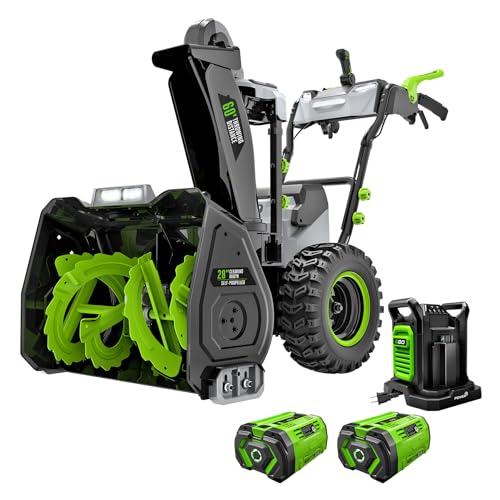 EGO Power+ SNT2807Best overall
 PowerSmart 101010648Wide gas two-stage
 PowerSmart 101010644Smaller gas two-stage
Start with the quick checks
Before you pull anything apart, rule out the simple stuff. A surprising number of no-start problems come down to a switch left in the wrong position or an empty tank.
Do these checks first, with the machine on level ground and the engine cool:
- Check that there is fresh fuel in the tank and that the fuel valve (if your model has one) is open.
- Make sure the engine stop switch or safety key is in the run position.
- Set the choke to full for a cold start, then press the primer bulb the number of times your manual calls for.
- Confirm the auger and drive levers are released, since some models will not start with them engaged.
- Look for packed snow or ice around the pull handle, linkage and chute that could block moving parts.
Safety before you troubleshoot
Gas engines produce carbon monoxide. Never run a snow blower in a garage, shed or any enclosed space, even with the door open. Move it outside to test it.
Gasoline is flammable. Let the engine cool before refueling, keep fuel away from sparks and heaters, and wipe up spills. Before you remove a spark plug or touch the carburetor, pull the spark plug wire off the plug so the engine cannot fire by accident.
Never put your hand in the chute or near the auger, even if the engine is off. Use the clearing tool that came with your machine. Wear safety glasses and hearing protection once the engine is running.
Fuel is the most common culprit
Gasoline breaks down over time. If the machine sat all summer with fuel in the tank, the gas may have gone stale, and it can leave gummy deposits inside the carburetor. Those deposits block the tiny passages that meter fuel into the engine.
If the fuel is old, drain it into an approved container and refill with fresh gas. Use the fuel type your manual specifies. Then try the primer and choke again.
If fresh gas does not help, the carburetor is the next suspect. Cleaning it with carburetor cleaner often solves the problem. If you are not comfortable removing and cleaning it, a small engine repair shop can do it. Also check that the fuel cap vent is not blocked and that the fuel line is not cracked, kinked or collapsed.
Check the spark plug
A fouled, wet or loose spark plug can stop an engine from starting. With the plug wire disconnected, remove the plug with a spark plug socket and look at the tip.
A plug coated in black soot, oil or fuel, or one with a cracked porcelain body or worn electrode, should be replaced. A clean, dry plug in good shape can be reinstalled. Make sure it is tightened snugly, since a plug that has worked loose can cause starting trouble.
Use the plug type and gap listed in your owner's manual. If a new plug is in and the engine still has no spark, the ignition coil or wiring may be at fault, and that is a job for a repair shop.
Electric start, corded and cordless models
Many gas models add a push-button electric start. On our best snow blower page, for example, the PowerSmart gas models list push-button electric start, and the listings for two of them describe plugging in an outdoor extension cord to use it. If the button does nothing, check that the cord is fully seated, that the outlet has power and that the cord is rated for outdoor use. The pull cord still works as a backup.
Corded electric models, such as the Westinghouse WSnow20 with its 1800 W motor, have no engine to troubleshoot. If one will not run, check the outlet, the circuit breaker, any GFCI outlet that may have tripped and the extension cord. A thin or damaged cord can cause trouble, so inspect it for cuts before use.
Cordless models depend on the battery. The EGO Power+ SNT2807 lists a 1344 Wh battery energy, and any cordless unit needs a charged, properly seated battery. Cold batteries can also perform poorly, so bring them indoors to charge and store them. Check the battery contacts for ice or dirt, and confirm any safety key or start button sequence in the manual.
Why a snow blower sputters or surges
Sputtering and surging, where the engine speeds up and slows down in cycles, point to the same family of causes. The engine is not getting a steady supply of clean fuel and air.
The usual suspects are stale fuel, a partly clogged carburetor jet, a choke left on after the engine warms up, a blocked fuel cap vent, or a dirty air filter. Try moving the choke to the run position first. If the engine still hunts for a steady speed, drain old fuel, replace it with fresh gas and clean the carburetor.
A sputter under load, such as when you hit a heavy bank, can also mean the machine is simply being pushed too hard. Slow your ground speed and take a narrower bite.
Quick symptom guide
Use this table to match what you see with the most likely cause and the first thing to try.
| Symptom | Likely cause | First fix |
|---|---|---|
| Pulls over but never fires | Old fuel or no spark | Replace fuel, check the spark plug |
| Starts then dies | Clogged carburetor or choke left on | Open the choke, clean the carburetor |
| Sputters or surges | Stale fuel or partial blockage | Drain and refill, clean the carburetor |
| Electric start button does nothing | Cord, outlet or switch problem | Check the cord, outlet and breaker |
| Cordless unit is dead | Battery not charged or not seated | Charge and reseat the battery |
| Pull cord will not move | Frozen auger or seized part | Let it thaw and clear any ice |
When to repair and when to replace
If your machine starts after fresh fuel, a new plug or a cleaned carburetor, you can head back out. To avoid repeats, add fuel stabilizer before off-season storage, or run the tank and carburetor dry as the manual advises.
If problems keep returning, or the repair would take a lot of time, it may be worth looking at a newer machine. Compare clearing width, intake height, throw distance and power type against your driveway on our best snow blower comparison, and pick one that fits your snowfall and storage space.
Frequently asked questions
Why does my snow blower start with starter fluid but then die?
That usually means fuel is not reaching the engine in a steady flow. The carburetor is likely clogged or the fuel is stale. Clean the carburetor and refill with fresh gas instead of relying on starter fluid, which is a short-term test, not a fix.
Can a dirty air filter keep a snow blower from starting?
A badly clogged air filter can make the engine hard to start and run rough. Inspect it and clean or replace it as your manual directs.
Should I leave gas in the tank over summer?
It is better to add fuel stabilizer to fresh gas or empty the tank and carburetor before storage. Old gas is a leading reason machines will not start in the first cold snap.
Is it safe to spray a starting aid into the carburetor?
Use it sparingly and only if your manual allows it. Never use it near sparks or hot parts, and never with the engine running. If in doubt, skip it and fix the underlying fuel problem.