Why Is My Sand Blaster Not Working? Common Fixes
Most sand blaster problems come from three things: a compressor that cannot supply enough air volume, damp air or damp media that clogs the gun, and a worn or blocked nozzle. Check those first, in that order. If you feel a shock, it is usually static electricity from dry air and abrasive moving through the hose, but a shock from the compressor itself means you should stop and have the electrical supply checked.
 LE LEMATEC AS118-2Best overall
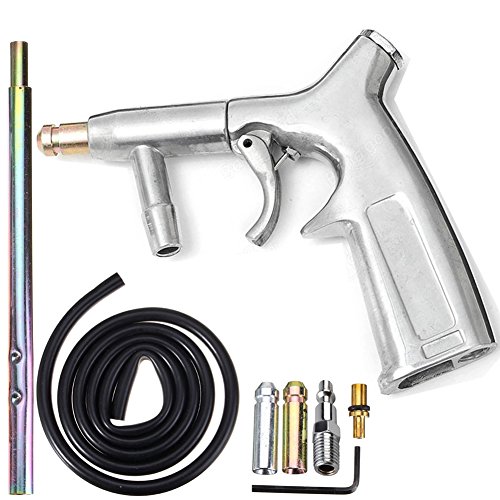 Jewboer Best for blast cabinets
 HOLDWIN SAFD45Best for small detail work
Start with a quick checklist
Before you take anything apart, run through the basics. Most fixes take a few minutes and need no tools. Always shut off the compressor and release the pressure in the line before you touch the gun, the nozzle or any fitting.
- Confirm the compressor has enough air volume, not just enough pressure.
- Look for moisture in the air line and in the abrasive.
- Check that the nozzle opening is clear and not worn wide.
- Make sure the pickup hose is not kinked, cracked or sitting above the media.
- Check the connector and fittings for air leaks.
- Confirm you are using the right grit size for your gun.
Weak or sputtering flow: check your compressor
Sandblasting uses air continuously, so a compressor that feels fine for a nail gun can fall short here. Pressure on the gauge may look right for a moment, then the tank drains and the gun sputters or pulses.
The published numbers show how demanding it is. LE LEMATEC says its AS118-2 needs at least 4 CFM at 90 PSI for continuous operation, and its listing says it is not for pancake compressors under 6 gallons. It also warns that 1 to 3 gallon compressors will cause sputtering and low performance. One Jewboer gun lists 6 CFM at 80 PSI. Check the CFM rating on your compressor against the gun's requirement.
Siphon feed is especially sensitive. The LE LEMATEC listing notes that siphon mode needs full air flow to create the vacuum that lifts media up the hose. If your compressor is marginal, try gravity feed for small jobs, or work in short bursts and let the tank refill. If you are choosing a new gun, our best sand blaster comparison lists the air requirements that manufacturers publish.
Air blows but no sand comes out: moisture and clogs
This is the classic complaint. Compressed air carries water vapor, and that moisture makes abrasive clump. Clumped media will not feed through the pickup tube or the gun. LE LEMATEC says plainly that wet air clumps media and that you must use an inline air filter or water trap.
Here is how to clear a clog and keep it from coming back:
- Turn off the air and release pressure, then unplug the pickup hose from the media.
- Pull the nozzle and check for packed or damp abrasive. Clear it with a small pick or a wire, then let parts dry.
- Dump out any lumpy media. Damp abrasive will clog again, so replace it with clean, dry media.
- Drain the compressor tank. Water collects at the bottom and travels down the line.
- Fit an inline filter or water trap close to the gun, and drain it often.
- Store media in a sealed container somewhere dry.
Nozzle, hose and fitting problems
If air flows and the media is dry but results are poor, look at the hardware. Abrasive wears nozzles quickly, and a worn nozzle opens up, which drops pressure at the tip and spreads the blast pattern. Ceramic nozzles resist wear better than steel, and kits vary a lot in what they include. The EUMAYES kit lists 12 nozzles, while the LE LEMATEC AS118-2 comes with one, so spares matter if you blast often.
Check nozzle size against your compressor too. The Halfchet kit, for example, lists nozzles from about 4.5 mm to 7 mm. A larger opening uses more air, so a small compressor may only manage the smaller sizes.
Next, inspect the pickup hose. A crack, a loose connection or a tube end sitting above the media level will break the suction. Also confirm the fitting matches your air line. The LE LEMATEC gun uses a 1/4 inch NPT connector, while others use quick connectors or adapters. Wrap threaded joints with thread tape if you hear air hissing.
Finally, check the media. Your gun's listing gives a workable range. LE LEMATEC says 46 to 220 grit, and HOLDWIN says 46 to 240. Media that is too coarse or too fine for the gun may feed poorly. Also note that the Wogoboo kit at 0.9 lb does not include a hose, so you need to supply your own.
Why your sand blaster may shock you
The most common cause is static electricity. Dry, fast-moving air and abrasive rubbing through a hose and gun can build up a charge, and you may feel a snap when you touch metal parts. It tends to be worse in dry weather and with plastic hoses.
To reduce it, try these steps:
- Work on a grounded metal surface or connect the workpiece to a good ground.
- Keep the air and media dry, since damp conditions make static less likely.
- Avoid dragging a dry plastic hose across the floor while blasting.
- Wear dry gloves and insulating footwear suited to the job.
If the shock feels like mains electricity
A sharp snap that fades right away points to static. A shock that continues, tingles, or happens when you touch the compressor body is different. That can mean a wiring fault, a damaged cord or a poorly grounded outlet. Unplug the compressor, stop using it, and have it inspected by a qualified electrician or repair shop. Never use an extension cord that is damaged or too light for the compressor, and keep cords and outlets away from water and wet media.
Symptom and fix at a glance
Use this table to match what you see with the most likely cause.
| Symptom | Likely cause | What to try |
|---|---|---|
| Sputtering or pulsing blast | Compressor volume too low | Compare CFM to the gun's requirement, use gravity feed, rest between bursts |
| Air only, no media | Wet or clumped abrasive, blocked tube | Clear the nozzle and tube, replace with dry media, add a water trap |
| Weak blast, wide pattern | Worn nozzle | Replace with a spare, preferably ceramic |
| Hissing at the connection | Leaking fitting | Reseat the connector, add thread tape on threaded joints |
| Small snaps when touching metal | Static buildup | Ground the workpiece, keep air and media dry |
| Shock from the compressor itself | Electrical fault | Unplug and have it inspected before use |
Safety notes before you try again
Blasting throws abrasive and rust particles at high speed. Wear sealed eye protection, a respirator rated for dust, hearing protection and gloves. HOLDWIN's own listing advises protective equipment and warns never to point the gun at people or animals.
Release all air pressure before you clear a clog or change a nozzle, and never look into the nozzle or clear it with air still connected. Blast in a ventilated area, and be careful when removing old paint, since it can contain lead. If a gun still fails after these checks, it may simply be a poor match for your compressor. In that case, our sand blaster comparison can help you find a gun whose air needs fit your setup.
Frequently asked questions
Can a small pancake compressor run a sand blaster?
Usually not for continuous work. Manufacturer listings, such as LE LEMATEC's, say small compressors cause sputtering. A very small job with short bursts and a small nozzle may work, but expect frequent pauses.
Does a water trap really make a difference?
Yes. Damp air is a leading reason abrasive clumps and blocks the gun. A trap or inline filter near the gun, drained regularly, removes much of that moisture.
How do I know when to replace a nozzle?
If the blast pattern widens, pressure at the tip drops, or the opening looks visibly larger than a fresh spare, it is worn. Compare it with an unused nozzle from the same kit.
Is it safe to keep blasting if I only get small static shocks?
Static snaps are usually a nuisance, but they can make you jump while holding a gun that is under pressure. Ground the work and fix the cause before you continue.