Why Is My Core Drill Not Working or Stopping?
A core drill usually stops for one of four reasons: a power or overload cutoff, a bit that has glazed or is wrong for the material, too little water, or the barrel binding in the hole. Unplug the drill, check the cord and breaker, then inspect the bit and water flow before you try again. Most problems are fixed in a few minutes once you know which cause you have.
 VEVOR Z1Z-9230Best overall
 VEVOR (8260H)Z1Z-9260Largest hole capacity
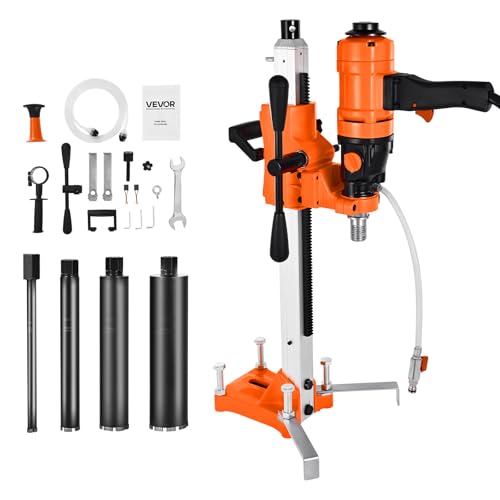 VEVOR Z1Z-CF03-80SHandheld or stand with four bits
Start with safety before you troubleshoot
Core drilling mixes electricity, water and heavy rotating parts, so slow down before you diagnose anything. Unplug the drill, or switch off its power source, before you touch the bit, the barrel or any part inside the housing.
Plug the drill into a GFCI-protected outlet or a GFCI adapter, especially when you are using water. Keep connections off wet ground. If a cord or plug looks damaged, replace it before you go on.
Wear safety glasses, hearing protection and gloves. Concrete and masonry dust can harm your lungs, so use wet drilling where you can and wear a suitable respirator when dust is present. If you are working overhead or on a ladder, stop and set up a stable platform first, because a stalled core drill can twist hard in your hands.
Quick diagnosis: match the symptom to the cause
Before you dig into details, find your symptom in this table. It shows the most common cause and the first thing to try.
| Symptom | Likely cause | First thing to try |
|---|---|---|
| Nothing happens when you press the trigger or switch | No power, tripped GFCI or breaker, damaged cord, worn brushes | Check the outlet, reset the GFCI, inspect the cord |
| Starts, then cuts out after a short time | Overload or thermal protection, undersized extension cord | Let the motor cool, use a heavier cord, ease up on pressure |
| Spins but barely cuts | Glazed segments or the wrong bit for the material | Dress the bit on an abrasive block, check the bit type |
| Stalls or jerks in the hole | Binding, rebar, or too much feed pressure | Back off, clear the hole, lighten the feed |
| Smoke, burning smell, or very hot barrel | Not enough water, or the bit is dull | Stop, let it cool, increase water flow |
| Wobbles or walks off the mark | Loose stand or anchor, bent barrel | Re-secure the stand and check the barrel for runout |
Power problems: when the drill won't start or cuts out
If the drill is dead, work from the wall to the motor. Test the outlet with another tool, reset the GFCI and check the breaker. Then look along the whole cord for cuts, crushed spots or a loose plug.
Extension cords cause many mid-hole shutdowns. A long, thin cord drops voltage under load, so the motor draws more current and trips its overload protection. Use the shortest, heaviest-gauge cord that suits the drill, and check your drill's manual for its recommendation.
Many core drills also have a built-in overload or thermal cutout. If the drill stops and then restarts after a minute or two, that is likely the protection doing its job. Do not bypass it. Find out why the motor was working so hard, which usually points back to the bit, the water or the feed pressure.
If the drill hums but will not turn, or you see heavy sparking at the vents, stop using it. Worn carbon brushes, a failed switch or motor damage need a repair or a replacement part, not more attempts.
- Check the outlet and GFCI first.
- Inspect the cord and plug for damage.
- Swap a long, thin extension cord for a shorter, heavier one.
- Let the motor cool if it has a thermal cutout.
- Keep the motor vents clear and unblocked so air can flow.
Bit problems: glazing, wear and the wrong match
A diamond core bit cuts because fresh diamonds are exposed at the segment edge as the metal bond wears away. If the bond is too hard for the material, it does not wear, the diamonds dull and the segments polish smooth. This is called glazing. The bit then spins and rubs instead of cutting, which creates heat and drags the motor down.
Glazing is common when you drill very hard or dense material with a bit made for softer, abrasive material, or when you push too lightly. You can often restore a glazed bit by cutting into an abrasive block, such as a dressing stick or soft brick, for a short time to expose new diamonds.
The opposite problem also happens. A bond that is too soft for abrasive material wears away fast, so the segments shrink quickly and the bit loses its cutting height. Match the bit to your material, and check the maker's guidance for the bond and the recommended use.
Also look at the barrel itself. A bent or damaged barrel wobbles, binds and overloads the motor. Check that the threads or connector are clean and fully seated, and that segments are not cracked or missing.
Water and cooling: the most overlooked cause
Wet core drilling relies on a steady stream of water to cool the segments and flush out slurry. Too little water raises friction and heat, which glazes the bit and can warp the barrel. If you see steam, a burning smell or a discolored barrel, stop right away.
Check the water supply, the hose, the swivel and any valve for kinks or clogs. Slurry should flow out of the hole in a steady, thin stream. If it turns thick and pasty, add more water.
Many barrels have slots or vents that let water and cuttings escape. Keep these clear. Blocking them can trap debris, make the bit bind and slow the cut.
Keep the water away from the motor and electrical connections. Use a water-fed system designed for the job, with a drip loop in the cord, and keep plugs off the wet floor.
Binding, rebar and technique
If the drill stalls only once you are deep in the hole, the barrel may be binding. Hitting rebar is a common reason. Steel does not cut like concrete, so the bit can grab, stall or kick. If you suspect rebar, ease off, lower the feed and let the bit work through slowly. Check the bit afterward for damage.
Too much pressure is another cause. Forcing a core drill can overload the motor and glaze the bit. Let the bit do the cutting and use steady, moderate feed. Listen for the motor: if the pitch drops sharply, ease off.
A core stuck in the barrel can also stop the cut. Switch off, unplug, then free the core as the manufacturer recommends. Do not hammer on a barrel that is still attached to a live drill.
Make sure the stand or anchor is solid. A loose base lets the drill shift, which causes the bit to pinch and bind. If you are working freehand on a small hole, brace yourself and keep a firm two-handed grip.
- Start slowly to set the bit in the surface, then increase feed.
- Keep the barrel straight and the stand tight.
- Back the bit out now and then to clear slurry.
- Stop if you hit steel and reassess before pushing on.
When it is time to repair or replace
If you have checked the power, the water, the bit and the technique and the drill still stops, the problem may be inside the tool. Signs include a burning smell from the motor, a worn gearbox noise, a switch that works only sometimes or a chuck or spindle that wobbles. These need a service center or a replacement rather than a home fix.
A tool that keeps overheating on jobs it should handle may simply be too small for the work. Comparing the specifications of different models helps you pick one that fits your typical hole size and material. Our best core drill comparison puts the published specifications side by side.
If you also drill smaller holes in wood or metal, a general-purpose model may be a better fit for those jobs. See the best drill page to compare standard drills, and keep your core drill for the work it was built to do.
Frequently asked questions
Why does my core drill stop when I press down harder?
Heavy pressure overloads the motor and can trigger its protection. It also glazes the bit, so cutting gets slower. Use steady, moderate feed and let the diamonds do the work.
Can I fix a glazed core bit?
Often yes. Cutting briefly into an abrasive block exposes fresh diamonds. If the bit is still slow afterward, the bond may be wrong for your material or the segments may be worn out.
Is it safe to keep going if the drill keeps restarting after cooling?
No. Repeated cutouts mean something is causing overload, such as a thin cord, poor cooling or a dull bit. Find the cause first, because running a hot motor can damage it.
Should I use a core drill dry?
Only if the bit is designed for dry use and you manage the dust with proper extraction and a respirator. Wet bits need a steady water supply, or they overheat quickly.