Why Is My Cabinet Sandblaster Not Picking Up Sand?
A siphon-style cabinet blaster that stops pulling media is almost always dealing with one of four things: damp or packed abrasive, a blocked pickup hose, a worn or clogged air jet and nozzle, or not enough compressed air. Work through them in that order, because the first two are free to fix and the last two usually mean a part swap or a different gun.
 EUMAYES PSQTBest overall
 HOLDWIN SAFD45Light aluminum gun
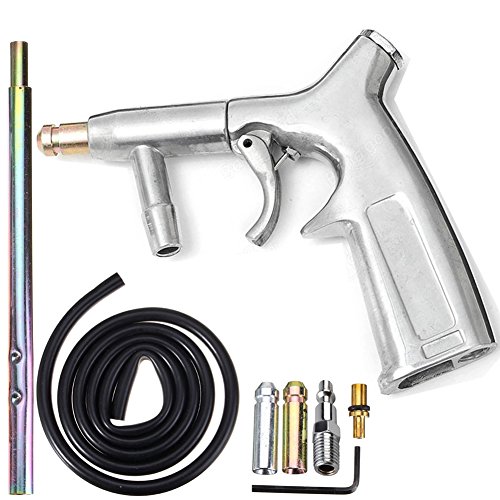 Jewboer Siphon kit with hose
How a cabinet gun pulls in media
Most cabinet guns are siphon (suction) guns. Compressed air rushes through a small air jet inside the gun and creates a low-pressure zone in the mixing chamber. That vacuum draws abrasive up a pickup hose from the hopper, and the air then carries it out through the nozzle.
This matters because suction is delicate. Anything that changes the air jet, the chamber, the nozzle, or the flow of media in the hose can weaken that vacuum. When the pull drops, you get a weak stream of air with little or no abrasive in it.
If you only get air, do not just turn up the pressure. Higher pressure rarely fixes a suction problem and can make a worn gun fail faster.
Start with the media: damp, packed, or the wrong size
Moisture is the most common culprit. Damp abrasive clumps, bridges over the hopper outlet, and will not flow through a small pickup hose. Humid garages, a leaky compressor line that sprays water, and open bags all cause it.
Fine dust is the second problem. As media breaks down, the fine particles build up and can pack tightly around the pickup point. The coarse grains get used first, and what is left behaves more like flour than sand.
Try this quick check:
Squeeze a handful of media. If it clumps or feels cool and damp, it needs to be dried or replaced.
Look at the hopper bottom for a hard cake or a crater where the hose sits.
Compare the grit to what your gun is designed for. Very fine or oddly shaped media can stick, and oversized grains can jam the hose.
- Dry the media in a thin layer in a warm, dry spot, or swap in fresh media.
- Sift out dust and clumps through a screen before refilling.
- Add an inline air dryer or moisture trap on the compressor line if water is the cause.
- Store abrasive in sealed containers.
Check the pickup hose and the path to the gun
Shut off and disconnect the air first, then look at the hose. A kink, a pinched section, or a small piece of debris can choke the flow. Paint chips, rust flakes, and bits of tape from the parts you blasted often end up in the hopper and plug the hose.
Next, check the hose connections. A pickup hose that has cracked, split, or slipped off its fitting lets the gun pull in air instead of media. You can often hear a faint hiss at the leak. The hose end in the hopper also needs to reach the media. If the level is low or the hose has slid up, it will suck air.
Pull the hose off the gun and blow through it or run a thin rod through it to clear a clog. Reconnect it firmly and make sure it sits at the lowest point of the hopper, where media collects.
Inspect the nozzle and air jet for wear or blockage
Abrasive wears out the parts it passes through. A nozzle bore that has grown wider than its original size lets air escape differently and weakens the vacuum. Once a nozzle or air jet wears badly or blows through its housing, suction can disappear completely.
The air jet is a small orifice, so even a tiny bit of debris, oil, or moisture residue can partly block it. A misaligned jet, where it no longer sits correctly in line with the nozzle, produces the same weak pull.
Remove the nozzle and air jet and look at them in good light.
A nozzle opening that looks larger or rounded at the edges is worn and should be replaced.
An air jet with chips, uneven edges, or a clogged hole needs cleaning or replacing.
The gun body should be free of cracks and the parts should seat squarely. Check your gun's manual for the correct jet and nozzle pairing, since mismatched sizes hurt suction.
| Symptom | Likely cause | What to try |
|---|---|---|
| Air only, no media at all | Blocked hose or blown-through jet | Clear the hose, then inspect the jet and nozzle |
| Media comes in surges | Damp or packed media | Dry or replace media, sift out fines |
| Weak, thin stream | Worn nozzle or low air supply | Replace nozzle, check compressor output |
| Hissing near the hose | Cracked or loose pickup hose | Replace or reseat the hose |
| Worked before, fading over time | Gradual wear of jet and nozzle | Replace both as a set |
Make sure your air supply can keep up
Siphon guns need steady airflow, not just a pressure number on a gauge. A small compressor may show the right pressure for a moment, then sag as the tank drains. When airflow drops below what the gun needs, suction drops with it.
Check that the regulator is set within your gun's recommended range, and that the air line is not too narrow or too long. Restrictive fittings and thin hoses starve the gun. Quick-connect couplers with small openings are a common bottleneck.
Also drain your tank and water traps regularly. Water in the line wets the media and fouls the jet at the same time, so one problem can cause two symptoms.
Safety before you open anything up
Always shut off the air supply and bleed the line before you touch the gun, hose, or nozzle. A gun that suddenly releases pressure can blow abrasive into your face.
When you test the blaster after repairs, close the cabinet door and wear safety glasses, since stray media and chipped parts can escape. Hearing protection is smart too, because compressors and blasting are loud over a long session.
Fine dust is harmful to breathe. Use a dust collector or vacuum on the cabinet, and wear a suitable respirator when you empty the hopper or sift media. Some abrasives, such as silica sand, carry serious lung risks, so check the label and choose a safer media where you can.
When it is time to replace the gun
If the media is dry, the hose is clear, and the air supply is solid, but suction is still poor, the gun itself is likely worn out or poorly matched to your cabinet. Cheap guns with soft internal parts wear quickly, and a full replacement can be simpler than chasing parts.
When you shop, look at what the gun uses for its nozzle and jet, whether replacement parts are available, and what air flow it needs. Our best sandblasting gun for cabinet comparison lays out those published specifications side by side, so you can match a gun to your compressor.
If your problem keeps coming back, it can help to see what other guns offer in wear-resistant parts. The cabinet gun comparison is a good place to check before you buy.
Frequently asked questions
Can I fix a blaster that blew through its nozzle?
Replace the nozzle and inspect the air jet and gun body for damage. If the housing around them is worn through, the gun may need replacing.
Does more air pressure help it pick up sand?
Not usually. Suction depends on correct jet and nozzle condition, clear hoses, and enough airflow. Extra pressure just wears parts faster.
How often should I replace the media?
Replace it when it turns dusty, clumps, or cuts slowly. Sifting out fines between sessions extends its life.
Is it safe to use play sand or beach sand?
Not recommended. It is often damp, uneven, and may contain silica. Use abrasive made for blasting cabinets.
Why does it work for a minute, then stop?
That pattern points to moisture or packed fines bridging in the hopper, or a compressor that cannot sustain the airflow.