Why Is My Box Cutter Stuck or Rusting? Fixes
Most stuck box cutters are jammed by cardboard dust, tape adhesive or a blade that has shifted out of its slot, and rust comes from moisture sitting on bare steel. Remove the blade, clean the channel, dry every part and add a very thin film of oil to the metal. If a blade is pitted with rust or bent, replace it instead of trying to save it.
 WORKPRO W013053Best overall
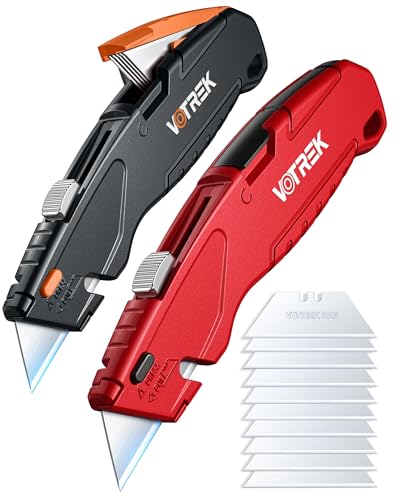 VOTREK UK003Best for one-handed use
 WORKPRO W011047Most blades included
Why a box cutter gets stuck
A box cutter has one job: slide a blade out and back in. Anything that gets into the slider channel can stop that motion. Cardboard produces fine paper dust, and tape leaves sticky adhesive on the blade. Over time that mix packs into the track and acts like glue.
The second common cause is the blade itself. A blade that is not seated in its slot, or one that has been bent by a hard cut, can catch on the inside of the body. On retractable designs, the lock button or slider can also bind if a chip of metal or a bit of plastic wraps works its way under it.
Finally, rust can seize parts. If the body is steel or the internal spring and slider are bare metal, moisture can build up inside the handle and lock moving parts in place. Aluminum bodies do not rust in the same way, but their steel blades and springs still can.
How to free a stuck box cutter, step by step
Work slowly and keep your fingers away from the cutting edge. A stuck blade can release suddenly once it starts to move, so never pull on an exposed edge with bare fingers.
Wear cut-resistant gloves and safety glasses before you start. Rust flakes and spring parts can fly out when a seized part lets go.
- Point the cutter away from your body and set it on a stable surface.
- If the blade is exposed, push it back toward the body with the flat of a pencil or a wooden stick, not your fingertip.
- Press the blade release button, if your model has one, and pull the blade out with pliers.
- Open the body if it comes apart, and tap out loose dust and debris.
- Clean the channel with a dry brush or a cotton swab. Use rubbing alcohol on a swab to dissolve tape adhesive.
- Let everything dry fully, then slide the empty slider back and forth. It should move freely with no blade installed.
- Fit a fresh blade, check that it sits flat in its slot and test the lock before you cut.
Why box cutters rust and how to fix it
Rust forms when bare steel meets moisture and air. A cutter left in a damp truck, a garage, a basement or a coat pocket can pick up condensation. Hand sweat is another common source, because it leaves salt and moisture on the blade and the handle.
Blade steel varies. Some of the cutters on our comparison page use SK5 steel blades, and one lists a triple-ground carbon steel blade. Carbon steel is hard and holds an edge, but it will tarnish and rust if it stays wet. The body finish matters too. The WORKPRO W013053, for example, lists an aluminum alloy body with a rust-free powder coat and weighs 3.2 oz, so the body is not what you worry about there. The blade is.
For light surface rust on a body part, wipe it with a cloth lightly dampened with oil, then scrub gently with a fine abrasive pad and wipe clean. For blades, the honest answer is replacement. A rusty blade is weak, drags through cardboard and can snap. Rust also pits the edge, and sharpening a thin utility blade is rarely worth the effort.
Skip anything aggressive. Heat from a torch can ruin a spring and the temper of the steel, and harsh acids can leave residue in a tool you hold every day.
Quick diagnosis table
Use this table to match what you see with the most likely cause and the safest fix.
| What you notice | Likely cause | What to do |
|---|---|---|
| Slider moves stiffly or gritty | Cardboard dust in the track | Remove the blade, brush out the channel, test the empty slider |
| Blade will not retract | Bent blade or debris at the lock | Release the blade, pull it with pliers, replace it |
| Sticky feel on the blade | Tape adhesive | Wipe with rubbing alcohol on a swab, dry fully |
| Orange spots on the blade | Moisture on carbon or SK5 steel | Replace the blade, wipe the body dry |
| Slider frozen solid | Rust in the spring or slider | Open the body, clean and lightly oil bare metal, or replace the cutter |
| Blade wobbles in the handle | Blade not seated, worn slot | Reseat the blade, and replace the cutter if it still wobbles |
How to snap a box cutter blade
This applies to snap-off blades, the kind with score lines that break away in segments. Standard trapezoid utility blades, like the ones sold in many dispenser packs, are not meant to be snapped. Swap those instead.
Always wear safety glasses, because the broken tip can fly off. Keep the blade extended only a short way, hold the cutter so the tip points away from you and use the built-in snapper at the end of the handle or a pair of pliers to grip the end segment. Bend the segment away from the edge until it breaks along the score line.
Never snap a blade with your bare fingers or by pressing it against a hard surface. Collect the broken piece, put it in a sealed container such as a metal can or a dedicated sharps container, and never throw it loose in the trash.
How to stop it from happening again
A little routine does most of the work. Wipe the blade after cutting wet or taped cartons, keep the cutter dry and replace dull blades early. A dull blade makes you press harder, which bends it and pushes more debris into the body.
Storage matters as well. Spare blades stored in a handle or case stay clean and dry, which is why built-in storage is a real advantage. The VOTREK UK003 lists built-in blade storage and tool-free blade changes, and the EQUIPTZ UK1 stores 10 SK5 blades inside the body. Our best box cutter page puts those specs next to each other.
If yours is worn out, look for a model with a release button you can clean easily. Tool-free changes make it quick to swap a blade the moment you notice rust or drag. You can compare retractable and folding designs, weights and blade counts in our box cutter comparison before you pick a replacement.
Frequently asked questions
Can I use WD-40 or oil on the blade?
A thin film on the blade and body slows rust, but wipe off the excess before use. Oil left on the blade can transfer to boxes and make the handle slippery.
Is a rusty box cutter dangerous?
The main danger is a weakened blade that can snap or slip. Rust itself is not the issue for a small cut, but a rusty blade is more likely to cause an accident, so replace it.
Should I replace the cutter or just the blade?
Replace the blade first. If the slider still sticks, the lock slips or the body is bent or corroded inside, replace the whole cutter.
Where should I store a box cutter?
Keep it in a dry spot, with the blade retracted or folded, and away from damp floors or unsealed toolboxes that collect condensation.