Why Gate Locks on Wooden Gates Keep Breaking (and How to Stop It)
Gate latches on wooden gates usually break because the gate itself moves. Wood swells, shrinks and sags, so the latch and strike stop lining up and the parts bend or wear out. The fix is to correct the gate first, then use a latch that matches your swing direction, resists weather and is mounted with solid screws.
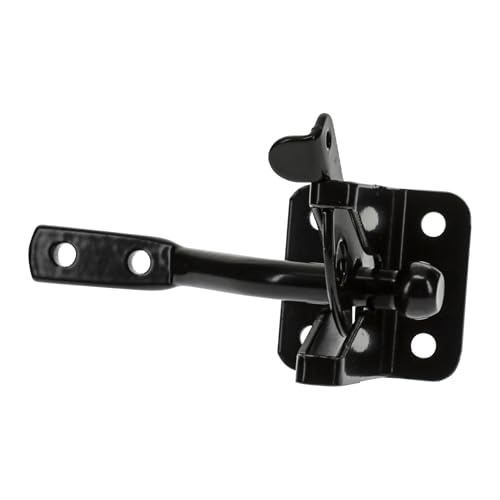 National Hardware N184-861Best overall
 HILLMASTER 3830Long 10 in latch body
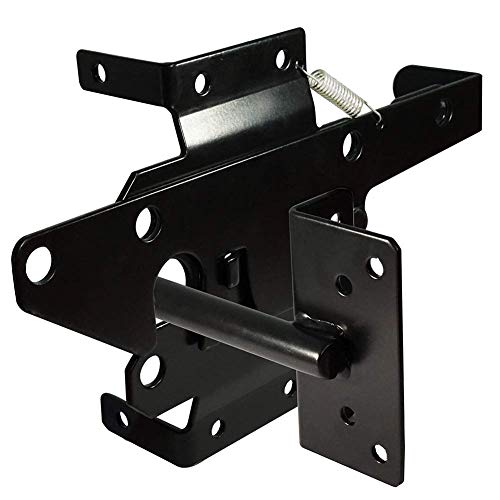 SANKINS 782902358389Mid-length steel gravity latch
The short version: it is usually the gate, not the latch
A latch is a small, simple part. When it fails over and over, the cause is often something pushing on it every day. On a wooden gate, that something is usually movement.
Wood takes on moisture and dries out with the seasons. Posts lean, boards twist and the gate drops a little at the latch end. Each change pulls the latch and strike out of line. You then slam, lift or shove the gate to make it catch, and that is what bends the latch arm or tears the screws loose.
Replacing the latch with an identical one will often give the same result. It helps to work out which of the causes below applies to you first.
Cause 1: Sag and seasonal movement
Sag is the most common culprit. Over time the weight of the gate pulls the latch side downward. The latch bar then sits lower than the strike, or rubs on the strike's edge instead of sliding in.
Seasonal swelling does something similar. A gate that closes fine in a dry month may bind in a damp one, and a latch that was aligned in summer may miss in winter.
You can spot sag by closing the gate slowly and watching the gap along the top. If the gap is wider at the hinge side than at the latch side, the gate has dropped. You may also see scuff marks on the strike or a latch bar that is scratched on one side only.
Cause 2: The latch does not suit how the gate swings
Some latches are built for one swing direction only. The top-ranked latch on our best gate locks for wooden gates page, the National Hardware N184-861, is listed for outswing gates only. On a gate that swings inward, the latch cannot catch the strike properly, and people respond by forcing it.
Other products, such as the HILLMASTER 3830 and the SANKINS self-locking latch, are listed for both inward and outward swing. Check this one spec before anything else, because no amount of adjusting fixes a latch that was made for the opposite direction.
Handedness matters too. Many latches can be set up for a left or right hand gate, but you need to follow the instructions for that setup rather than flipping parts around.
Cause 3: Weather, rust and wear
Wooden gates live outdoors all year. A bare steel latch will rust, and rust makes moving parts stick and weakens thin metal. A black finish only tells you the color. Look for a named coating such as powder coat, zinc plating or a weather-resistant coating, or choose stainless steel.
Wear also builds up from daily use. Self-latching types close every time the gate swings shut, so a gate left to bang closed in the wind puts repeated shock on the latch. A gate stop or a self-closing hinge that slows the swing reduces that shock.
Cause 4: Weak mounting and mismatched screws
Even a strong latch fails if it is held on by loose screws. Wood can split near the end of a board or around the original holes, and screws that have worked loose will not hold a latch that is being yanked.
Check these points:
- Are all screws included with the latch, and are you using them all? Counts differ by product, for example 6 screws with the HILLMASTER 3830 and 12 with the thicker-steel pick on our page.
- Are the screws going into solid wood, not a thin board edge or a rotted spot?
- Is the strike fixed to a post that does not wobble?
- Is the latch body flat against the wood, not twisted on an uneven board?
- If the gate or post is metal, use harder screws made for metal, as some listings advise.
Quick diagnosis: symptom, cause and fix
Use this table to match what you see to the likely cause.
| What you see | Likely cause | What to try |
|---|---|---|
| Latch bar misses the strike or scrapes it | Gate has sagged | Tighten or replace hinges, add an anti-sag brace, then re-set the strike |
| Gate catches only in some seasons | Wood swelling and shrinking | Pick a latch that tolerates a wider post gap and re-check the alignment each season |
| Latch will not catch at all | Wrong swing direction for the latch | Swap to a latch listed for your swing direction |
| Latch sticks or feels gritty | Rust or dirt | Clean it, lightly lubricate, and replace if the metal is corroded |
| Latch wobbles or pulls away | Loose or short screws, soft wood | Use all supplied screws, re-drill into solid wood, and fix the post |
| Latch arm is bent | Gate being slammed or forced | Add a gate stop and slow the closing swing |
How to fix it for good
Fix the gate before you buy anything. Work in this order:
- Check that the posts are firm and plumb. A leaning post will defeat any latch.
- Tighten or replace the hinges. A hinge-and-latch set, such as the HILLMASTER kit on our list with two 6 in hinges, a latch, a handle and 26 screws, can refresh both at once.
- Square up the gate. If it sags, a diagonal brace or an anti-sag kit pulls it back. Note that the anti-sag kit on our page weighs 9.7 lb, the highest listed, and is a gate rebuild kit rather than a simple latch.
- Re-mark the strike position with the gate closed and lifted into its true position, then fix the strike there.
- Fit a latch with the correct swing direction and a weather-resistant finish, and use every screw.
Choosing a replacement that lasts
Gravity latches lock by weight and open with a fingertip release. Self-latching versions lock every time the gate closes, which matters for pets, children and pools. For length, our page lists a 10 in latch body, an 8.5 in steel gravity latch and a compact 4.125 in latch. One pick is listed to cover a gap of up to 1-9/16 in between gate and post, which helps if your gate and post drift apart.
If you want extra security, choose one listed as padlockable. The stainless steel pick at 0.22 lb is the lightest on our list, but it is not listed as self-latching or padlockable, so it suits a different need. You can compare all of these specs side by side on the wooden gate latch comparison page.
Safety notes: wear eye protection when drilling or driving screws, and hearing protection if you use power tools for long. Unplug corded tools when changing bits. For a pool or child safety gate, test the latch after every adjustment, because a latch that fails to catch is a real hazard. If your gate is tall or heavy, get a helper to hold it while you remove hinges.
Frequently asked questions
Can a latch work if the gate is slightly out of line?
Only within its limits. Some latches cover a wider gap or a bit of misalignment, but a badly sagging gate will still make the latch scrape or miss. Correct the sag first.
Should I oil a sticking gate latch?
A light lubricant on the moving parts can help if dirt or surface rust is the problem. If the metal is flaking or pitted, replacement is the better choice.
Why does my latch work in summer but not in winter?
Wood changes size with moisture and temperature, so the gate and post shift slightly. A latch that has some tolerance in its design, or a strike you can re-adjust, copes better.
Is a padlock hole worth having?
If you want extra security, yes, but not every latch lists padlock support. Check the listing before you buy.