Why Does My Well Pump Pressure Switch Keep Cycling?
Most often, a well pump pressure switch cycles because the pressure tank has lost its air cushion (a waterlogged or low-charge tank). Other common causes are a leak, a clogged or worn switch, or a pressure setting that does not match the system. Check the tank's air charge first, then look for leaks, and replace the switch only if it still misbehaves.
 YSD mc-1Best overall
 Square D FSG2J24CPBest known brand
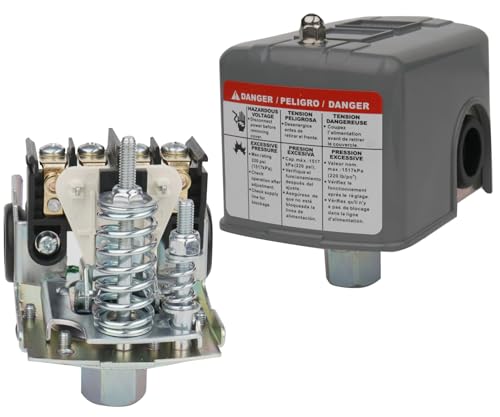 WHK WHK-PS01(40-60PSI)Best wiring flexibility
Safety first
Well pump systems mix water with line voltage, often 230 V. Before you open the switch cover, turn off the breaker for the pump and confirm the power is dead with a non-contact voltage tester. Lock out the breaker or tape over it so no one switches it back on while you work.
Pressurized tanks also store energy. Open a faucet to relieve system pressure before you remove a switch, gauge or fitting. Wear safety glasses, since a fitting that lets go under pressure can throw water and debris. If you smell burning, see scorched wiring, or are unsure about the electrical work, call a licensed electrician or well contractor.
What cycling actually means
The pressure switch watches the pressure in the tank. When it falls to the cut-in setting, the switch closes and the pump starts. When pressure climbs to the cut-out setting, the switch opens and the pump stops. On a common 40/60 psi setup, the pump starts at 40 psi and stops at 60 psi.
Normal cycling means the pump runs for a good stretch, then rests while you use water from the tank. Short cycling is different. The pump starts and stops every few seconds, or the switch clicks repeatedly without settling. That wears the motor, the contacts and the start components, so it is worth fixing quickly.
The clicking you hear is usually the switch contacts opening and closing. A pump that clicks on and off in rapid bursts is telling you the pressure is swinging between cut-in and cut-out much faster than it should.
The most common causes
A pressure tank holds a bladder or diaphragm with an air charge on one side and water on the other. That air cushion lets you draw a decent amount of water before pressure drops to cut-in. When the cushion is gone, even a short glass of water drops pressure fast and the pump has to restart. The table below lists the usual suspects.
| Cause | What you notice | Typical fix |
|---|---|---|
| Waterlogged or low-charge tank | Pump restarts after a few seconds of use, pressure gauge swings quickly | Check and restore the air charge, or replace a failed bladder or tank |
| Air charge set too high | Short run times, pump cuts in right after cutting out | Lower the charge to 2 psi below cut-in |
| Leak in plumbing, toilet or fixture | Pump restarts when no one is using water | Find and repair the leak |
| Failing check valve or foot valve | Pressure bleeds back toward the well | Have the valve checked and replaced |
| Clogged or worn pressure switch | Erratic gauge readings, chattering, contacts pitted | Clean the inlet port or replace the switch |
| Differential set too narrow | Cut-in and cut-out are too close together | Reset the range or replace the switch |
How to diagnose it step by step
Work from the cheapest and most likely cause to the least. Do not replace the switch first. A new switch will start cycling again if the tank is the real problem.
- Watch the pressure gauge while the pump runs. Note the pressure where the pump starts and where it stops.
- Turn off the breaker, then drain the tank by opening a faucet until the water stops flowing.
- With the tank empty, check the air valve on the tank with a tire gauge. It should read 2 psi below the cut-in setting, so about 38 psi on a 40/60 system.
- If air comes out of the valve with water, the bladder has likely failed. A tank that is full of water on its top half is waterlogged.
- Add air with a compressor or pump if the charge is low, then turn the power back on and watch the cycle length.
- Turn off all water use in the house and watch the gauge. If pressure falls steadily, you have a leak or a bleeding check valve.
When the switch itself is the problem
If the tank charge is right and nothing is leaking, the switch becomes the likely culprit. Signs include a gauge that bounces around, a pump that stops at the wrong pressure, or contacts that look burned or pitted when you remove the cover with the power off.
A sediment-clogged inlet is another common issue. The small port under the switch can fill with mineral scale, so the diaphragm sees pressure late and the contacts chatter. Cleaning the port with the power off and the pressure relieved sometimes brings the switch back. If the contacts are worn or the switch still behaves badly, replace it.
Adjusting the nuts on the switch changes the cut-in and cut-out points. Small changes are fine, but big changes can push the pump beyond what the tank and plumbing are built for. Never set cut-out higher than the system's rated pressure.
Choosing a replacement switch
Match what you have now. Most replacement switches are sized by pressure range, motor voltage and horsepower, and the connection thread. Our well pump pressure switch comparison puts the key specifications side by side so you can check each of those quickly.
For example, the YSD, WHK, Merrill MPS4060 and duekvek models in our data are 40/60 psi with an adjustable differential and a 1/4 in NPT female port. The Merrill MPS4060 is listed at 2 HP on 115 VAC, while the Square D FSG2J24CP is listed with a 1 HP maximum, so the motor rating matters when you shop. If your system runs a different range, the same comparison includes 30/50, 50/70 and 60/80 psi options.
Look at the wetted material too. Stainless steel wetted parts, as listed for the YSD and duekvek switches, are meant to resist rust that can clog the inlet. You can see which models offer that on our pressure switch picks.
Keeping it from coming back
Once the cycling is fixed, a little upkeep prevents a repeat. Check the tank's air charge once or twice a year with the tank drained and the power off. Keep an eye on the gauge for changes in how long the pump runs.
Fix dripping faucets and running toilets promptly, since a small leak can restart the pump again and again. If your water carries a lot of sediment, a filter ahead of the tank helps keep the switch port from clogging.
Frequently asked questions
Can a bad pressure switch burn out my pump?
Yes. Rapid cycling makes the motor start many more times than it should, and starts create the most heat and wear. Burned contacts can also weld shut and keep the pump running, so do not ignore the symptoms.
How often should a well pump cycle?
There is no single number, since it depends on tank size and water use. In general, the pump should run for a solid stretch each time and then rest while you use stored water. If it restarts within seconds, something is wrong.
Do I need to drain the tank to check the air pressure?
Yes. Test the air charge only when the tank is empty of water and the pump power is off. A reading taken with water in the tank will be too high and misleading.
Can I just raise the cut-out pressure to stop the cycling?
Usually no. That treats a symptom and can strain the pump, tank and plumbing. Find the real cause first, and keep every setting within the limits printed on your equipment.