Why Does My Toilet Smell Like Urine Even After Cleaning?
A toilet that still smells like urine after cleaning usually has dried urine somewhere the brush never reaches. Common spots are under the rim, behind the seat hinges, around the base, and in the caulk or grout on the floor. Less often, a failed wax ring or a dry drain trap lets sewer odor into the room. Check those spots in order, clean them with the right product, and the smell should fade.
 CASTA DIVA CD-W001Best overall
 Simple Project HT-140Tallest seat listed
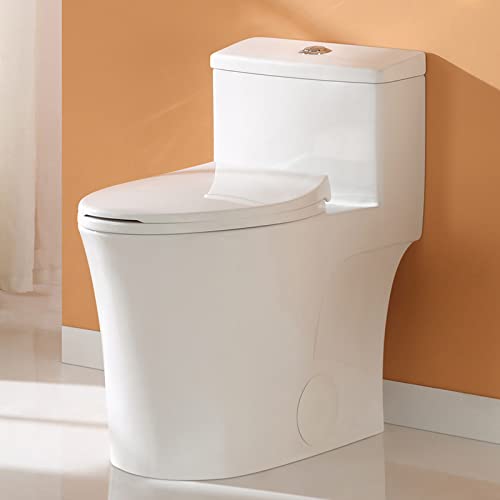 HOROW T0338WShortest depth listed
Why regular cleaning misses the smell
Most people clean the inside of the bowl and wipe the seat. Urine, though, lands in many other places. Fine splashes travel onto the outer bowl, the base, the seat hinges, the tank lid and the floor. Once that moisture dries, it leaves salts and uric acid crystals behind.
Those crystals do not dissolve in plain water or in many all-purpose sprays. They sit in tiny gaps and release odor again whenever the room gets humid. That is why a bathroom can smell fine right after you clean and bad again a day later.
Porous materials make it worse. Unsealed grout, old caulk, a fabric toilet mat and a cloth seat cover can all soak up urine and hold it for months.
Where the smell hides and how to fix it
Start by sniffing around rather than just scrubbing. Get low near the base, then check the hinges and the area behind the bowl. The table below lists the usual hiding places.
| Hiding spot | How to check | What to do |
|---|---|---|
| Seat hinges and bolt caps | Lift the seat and smell the hinge area. Look for yellow or brown residue. | Remove the seat if it unclips, or pop off the caps, and wash the parts with an enzyme cleaner. |
| Underside of the rim | Use a mirror and flashlight to look for crusty buildup or rough spots. | Scrub with a bowl brush and a cleaner made for scale, then rinse well. |
| Outer bowl and base | Run a paper towel along the bowl's outer curve and the base. Smell it. | Wipe with an enzyme cleaner and let it sit before wiping dry. |
| Caulk and grout at the floor | Look for dark or yellow staining. Press on the caulk to check if it feels soft. | Clean with an enzyme cleaner. If the odor stays, replace the caulk. |
| Bath mat or floor behind the toilet | Smell the mat. Check the floor in the corner behind the bowl. | Wash the mat on a hot cycle or remove it. Clean the floor and corner. |
| Wax ring and flange | Look for water around the base or a toilet that rocks. Notice a sewer-like smell. | Reset the toilet with a new wax ring. A plumber can help if you are unsure. |
Use the right cleaner
Enzyme cleaners are made to break down the organic compounds in urine. They tend to work better on old residue than standard bleach or fragrance sprays, which mostly cover the smell. Follow the label and give the product time to sit. Rushing the dwell time is a common reason the odor returns.
Hard water scale can also trap odor, especially under the rim and in the small water holes. A descaling cleaner made for toilets can loosen it. Use one product at a time, rinse, and then follow with the enzyme step if the smell remains.
- Wear rubber gloves and eye protection when you use any bowl cleaner.
- Open a window or run the exhaust fan while you clean.
- Never mix bleach with ammonia or with acidic cleaners. The fumes can be dangerous.
- Do not mix different bowl cleaners together, even if both are sold for toilets.
- Keep products in their original containers and away from children and pets.
A simple step-by-step check
If you are not sure where the smell comes from, work through these steps in order. Stop when the odor is gone.
- Remove the mat and any seat or tank cover and wash them.
- Wipe the seat, hinges, tank lid, outer bowl and base with an enzyme cleaner.
- Clean under the rim and let the product sit before scrubbing.
- Clean the floor, the corner behind the toilet and the baseboard.
- Check the caulk at the base and replace it if it is dark, soft or cracked.
- Run water in every other sink, tub and floor drain in the bathroom. A dry drain trap can let sewer odor in.
- If the smell persists, check the wax ring and the flange for leaks.
Why a toilet bowl grows mold
Mold and similar growth need moisture, organic material and time. A bowl always holds standing water, and the area under the rim stays damp. If a toilet sits unused for days, such as in a guest bathroom, the water goes stagnant and film can form at the waterline.
Pink or orange film is often a type of bacteria rather than mold, but the cause is the same: damp surfaces and little disturbance. Black spots under the rim or around the base point to mold. A humid bathroom with weak ventilation makes it grow faster.
To slow it down, flush rarely used toilets now and then, brush the waterline weekly, and run the exhaust fan during and after showers. Fix small leaks, since a constant trickle keeps surfaces wet.
When the toilet design makes cleaning harder
Some toilets simply collect more grime. Seams between the tank and bowl, exposed bolts and open trapways give urine and dust more places to settle. If you are replacing a toilet, ease of cleaning is a fair thing to compare. Our best toilet page lists one-piece and two-piece models side by side.
One-piece toilets join the tank and bowl, which leaves fewer seams to wipe. For example, the HOROW T0338W is listed as a one-piece model that its maker describes as easier to wipe down around the exterior. The Casta Diva CD-T005 is a one-piece skirted design, described as seamless and easy to clean. A skirted base hides the trapway, so there are fewer nooks around the bottom.
Two-piece toilets keep the tank and bowl separate, so there is a joint to clean. That is not a flaw, but it does add a spot to check. If you want to compare construction, weight and fit before you decide, our toilet comparison shows the specs together.
A new toilet will not fix a leaking seal or a dry drain, so rule those out first. Also, measure your rough-in and depth before you shop. The models on our page list a 12 in rough-in.
When to call a plumber
Call a professional if you see water at the base, the toilet rocks, the floor feels soft, or the smell is like sewer gas and does not go away after you check the drains. Sewer gas can also point to a venting problem, which is not a safe DIY repair for most people. If you smell gas that resembles rotten eggs, leave the room and call your utility company or a plumber right away.
Frequently asked questions
Can a blacklight help me find urine spots?
Yes. In a dark room, a UV flashlight can make dried urine glow faintly. Check the base, wall behind the bowl and floor. Mark the spots, then clean them.
Is pink film in the bowl dangerous?
It is usually harmless bacteria, but it signals persistent moisture. Clean it off with a bowl cleaner, wear gloves, and improve ventilation.
Will pouring bleach in the bowl remove the odor?
It may clean the water in the bowl but it does not reach dried urine on the base, hinges or floor. Never combine it with ammonia or acid cleaners.
Why does the smell come back after a day or two?
Residue remains in porous materials such as grout, caulk or a mat. Humidity wakes the odor up again. Treat those surfaces or replace them.
How often should I clean around the toilet base?
Wipe the outer bowl, seat and base every week or two. In a home with young children, or where several people use the toilet, do it more often.