Why Your Small Shop Dust Collector Is Not Working (and How to Fix It)
Most small shop dust collectors lose suction because of a clogged filter, a full bin, an air leak, or hoses and ducts that restrict airflow. Work through those four in order, since each takes only a few minutes to check. If everything is clean and tight and suction is still weak, the machine may be a poor match for the tool you are connecting it to.
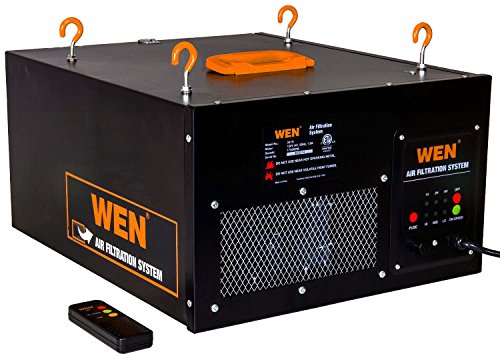 WEN 3410
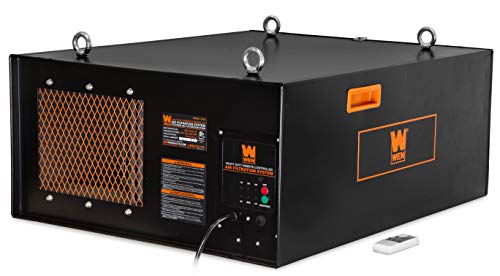 WEN 3417
 WEN DC1300Best overall
Start with the quick checks
Dust collectors move air, and dust rides along with that air. Anything that blocks, leaks or slows the airflow shows up as weak suction. The good news is that the most common causes are also the easiest to spot.
Before you take anything apart, unplug the machine. Then run through this short list:
- Check whether the collection bin or bag is full. Many units lose suction well before the bin looks completely packed.
- Look at the filter for a visible coat of fine dust or a caked, matted surface.
- Make sure every hose clamp, blast gate and port connection is fully seated.
- Walk the hose from the tool to the collector and look for kinks, crushed sections or a clog.
- Confirm the impeller spins freely and in the right direction once the unit is unplugged and safe to touch.
A clogged filter is the top suspect
Fine dust packs into filter media quickly, especially after sanding or working with MDF. A clogged filter acts like a hand over the intake. The motor keeps running and sounds normal, but very little air moves through the system.
Clean the filter according to the maker's instructions. Many pleated filters can be tapped gently or brushed, and some have a built-in cleaning paddle. Do this outdoors if you can, and wear a good dust mask, because the cloud that comes off is the finest and most harmful dust in the shop.
If the filter still looks gray and dull after cleaning, or if dust shows through it, it is worn out and needs replacing. A damaged filter does two bad things at once. It restricts airflow, and it can let fine particles back into the air you breathe.
A full bin chokes the system
On many small collectors, the dust drops into a bin or bag below the filter. When that container fills up, the dust rises to meet the filter and blocks the airflow. This is easy to miss because you may not see inside a sealed bin.
Empty it more often than you think you need to. A good habit is to empty it at the end of each work session, and sooner when you sand or plane large amounts of material. Check that the bin lid or bag collar seals properly after you put it back, because a poor seal here leaks air and kills suction.
Hoses, ducts and leaks
Even a clean machine will struggle if the path between the tool and the collector is wrong. Small shop collectors have modest airflow, so they cannot overcome much restriction.
Common problems include hose that is too narrow for the tool, long runs with many bends, ribbed flexible hose that adds friction, and open blast gates on branches you are not using. Every extra foot of hose and every sharp turn costs you airflow. Keep runs short, use smooth wall duct where you can, and limit flexible hose to the last stretch that connects to the tool.
Air leaks are the other hidden culprit. A loose clamp, a cracked fitting or a gap at a joint pulls in air that should be pulling dust from your tool. Run your hand around the joints while the machine is on and feel for suction. Seal problem spots with clamps or foil tape, not cloth tape, which dries out and lets go.
Is the collector the wrong match for the job?
Sometimes nothing is broken and the setup is simply asking too much. Dust collectors are built to move large volumes of air at low pressure, which suits big, chip-producing tools. Fine dust from sanders and small power tools is a different problem, because it needs strong suction at a small port.
The table below shows how common symptoms usually point to a cause.
| Symptom | Likely cause | What to try |
|---|---|---|
| Weak suction everywhere | Clogged filter or full bin | Empty the bin, clean or replace the filter |
| Suction good at the collector, poor at the tool | Long or narrow hose, restrictive bends | Shorten the run, use smoother and wider hose |
| Suction drops when a second tool connects | Open blast gate or too many branches | Close unused gates, connect one tool at a time |
| Whistling or hissing sound | Air leak at a joint or lid | Reseat clamps, check seals, tape gaps |
| Fine dust still floats in the air | Worn filter or collector not suited to fine dust | Replace the filter, add air filtration or use a vacuum at the source |
When a shop vac or a different collector makes more sense
If you mostly run sanders, routers or other tools that make fine dust, a shop vacuum connected directly to the tool often captures it better than a low-pressure dust collector can. You can compare options on our best small shop vac page.
If your work is mainly chips and shavings from a planer, table saw or lathe, a dedicated collector is usually the better tool. Our best dust collector for small shop page compares published specifications so you can match airflow, port size and filter type to your equipment.
Many small shops end up using both. The collector handles the bulk of the chips, and the vacuum handles the fine dust at hand tools and sanders.
Safety notes
Wood dust is a fire and health hazard, so treat dust collection as a safety system, not just a cleanup tool.
Always unplug the machine before opening it, clearing a clog or touching the impeller. Never reach into a hose or inlet while the motor is connected to power. Wear a dust mask or respirator rated for fine particles when you empty bins and clean filters, and wear eye protection as well. Hearing protection is a good idea if your collector is loud during long sessions.
Keep the collector away from sparks, such as those from grinders, and do not collect metal shavings in a wood dust collector. Fine dust can ignite, so empty bins regularly and do not let dust build up around the motor.
Frequently asked questions
Why does my dust collector run but pick up nothing?
The motor is working, but airflow is blocked or escaping. Check for a clogged hose, a full bin, a closed blast gate or a large leak, such as a lid that is not sealed.
How often should I clean the filter?
It depends on how much and what kind of dust you make. Check it whenever suction drops, and clean it after heavy sanding sessions or work with fine materials such as MDF.
Can I use a longer hose to reach my tools?
You can, but every extra length reduces suction on a small collector. Keep the hose as short and straight as possible, and move the collector closer to the tool if you can.
Does a bigger hose always help?
Not always. A hose that is too large for the collector can lower air speed, which makes it harder to carry chips and dust. Match the hose to the collector port and the tool.
How do I know if my filter needs replacing?
If it stays dull and caked after cleaning, looks torn or lets visible dust through, replace it. Follow the manufacturer's guidance for your model.