Why Does My Small Shop Dust Collector Get So Hot?
A dust collector usually gets hot because its motor is working against restricted airflow. The most common causes are a clogged filter, a full bin, a hose that is too long or too narrow, and too many closed gates. Mild warmth is normal, but a motor too hot to touch comfortably means you should shut it off and find the restriction.
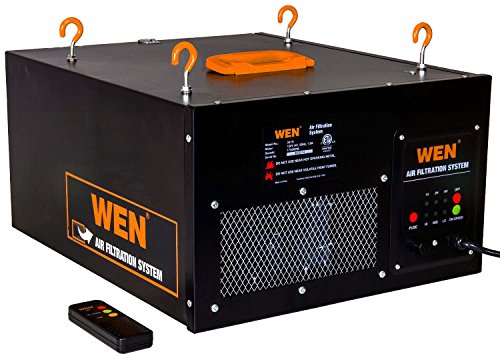 WEN 3410
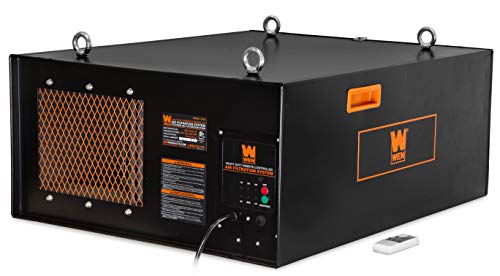 WEN 3417
 WEN DC1300Best overall
Why airflow and heat are connected
Most small dust collectors and shop vacs cool their motors with the same air they move through the machine. When air flows freely, it carries some heat away from the motor. When something blocks that flow, the motor still draws power, but it gets less cooling air.
That is why a clogged system often sounds different too. You may hear a higher pitch or a strained whine, and then notice the housing getting warm. Heat is usually the late symptom of a problem that began earlier, such as a filter that has been loading up for weeks.
Some blockages also make the motor work harder, not just cool less. Others make it work less, but with less cooling. Either way, the fix starts with the airflow path, not the motor.
The most common causes, ranked by how often they show up
Work through these roughly in order. The first few are free to check and solve most cases in small shops.
- A clogged or blinded filter. Fine dust from sanding packs into the filter media and chokes airflow. Pleated cartridges and felt bags both do this.
- A full bin or bag. When the collection container is nearly full, airflow drops and fine dust can pile against the filter.
- Ductwork that is too long, too narrow, or full of tight bends. Every foot of hose and every sharp turn adds resistance.
- Blast gates closed on every branch except one far from the machine, or a collapsed or kinked flexible hose.
- A partial clog inside the hose, often at a reducer or a bend.
- Continuous running in a closed cabinet, closet, or under a bench with no room for air to move around the machine.
Quick symptom guide
Use this table to match what you notice with the likely cause. It is general guidance, since every machine is built differently.
| What you notice | Likely cause | What to try |
|---|---|---|
| Weak suction and a hot motor | Clogged filter or full bin | Empty the bin and clean or replace the filter |
| Hot only with one long hose attached | Too much resistance | Shorten the run or use a larger-diameter hose |
| Hot after a long sanding session | Fine dust loading the filter | Clean the filter mid-job and take breaks |
| Hot in an enclosed spot | Poor ventilation around the unit | Move it to an open area with clear space on all sides |
| Hot with a burning smell | Motor strain, a failing bearing, or an electrical fault | Shut off, unplug, and do not use it until inspected |
How to check and fix it
Always unplug the machine before you open it, empty it, or reach into the hose. Wear a dust mask or respirator and eye protection while you do this, because fine dust is easy to breathe in and hard to see.
Then follow these steps in order:
- Let the machine cool completely before touching the motor housing.
- Empty the bin or bag, even if it is not quite full.
- Remove the filter and inspect it. If it looks gray and caked, clean it following the maker's instructions or replace it.
- Disconnect the hose and look through it toward a light. Clear any plug of chips or dust.
- Check for crushed sections, kinks, and loose clamps that let air leak in.
- Open every blast gate fully, then reconnect and run the machine with a single short hose to see if it still heats up.
When the machine is simply undersized for the job
Sometimes nothing is wrong with the machine. It may just be asked to do more than it was built for. A compact unit running a long duct system with several tools attached will struggle, and a struggling motor runs warm.
If you are choosing a new unit, look at the airflow and filtration ratings in the published specifications and match them to your tools and hose size. Our best dust collector for small shop comparison lays out those specs side by side so you can see which models suit tight spaces and short duct runs.
If your tasks are mostly cleanup and occasional tool hookups, a different type of machine may fit better. Our best small shop vac page compares compact vacuums that handle that kind of work. Shop vacs often run hotter than dust collectors in long continuous use, so they are best suited to short jobs and breaks between them.
Safety: why heat matters more with dust
Wood dust is combustible, and fine dust is easier to ignite than chips. A hot motor surrounded by a thick layer of dust is a fire concern, so keep the machine and the area around it clean.
Never pick up hot embers, sparks, or metal shavings. Grinding sparks and nail-gun debris can start a fire inside a bin or filter. If you work with metal and wood in the same space, keep those streams separate.
Use a properly sized extension cord if you need one, and keep it fully uncoiled. A thin or tightly coiled cord can overheat and starve the motor of voltage.
Wear hearing protection when the machine runs for long periods, since many collectors are loud, and eye protection any time you open the unit. If you smell burning, see smoke, or the machine trips a breaker, unplug it and stop using it.
Habits that keep it cooler
A few routines go a long way. Empty the bin often, clean the filter before it gets caked, and keep hoses as short and straight as practical. Give the machine open space on all sides so the motor can breathe.
Run the unit in shorter stretches when you can, especially during heavy sanding. A few minutes of rest lets the motor cool and gives you a chance to knock dust off the filter.
Frequently asked questions
Is it normal for a dust collector motor to feel warm?
Yes. A warm housing after steady use is expected. It becomes a concern when it is too hot to hold your hand on, when performance drops, or when you smell something burning.
Can a bigger hose make my collector run cooler?
Often, yes. A wider, shorter hose reduces resistance so air moves more freely. Just make sure the fittings match your machine and that suction at the tool stays strong.
Does a dirty filter really affect the motor that much?
It can. A blinded filter restricts airflow, which reduces the cooling air reaching the motor and can lead to strain over time.
Should I buy a dust collector for nails or debris like that?
Collecting nails and sharp debris is a different job with different needs. Our best dust collector for nails page covers options built for that kind of material.
Can I leave my dust collector running while I'm away?
It is better not to. Unattended, a collector with a clogged filter or a failing motor can overheat, and dust makes that riskier. Switch it off when you leave the shop.