Why Does My Shower Head Leak or Drip When Turned Off?
Most shower head drips come from one of three things: leftover water draining out of the head after you shut off the water, a worn seal or loose connection at the shower arm, or a failing valve cartridge behind the wall. A short drip that stops within a few minutes is normal. A steady drip that never stops points to the valve, not the head.
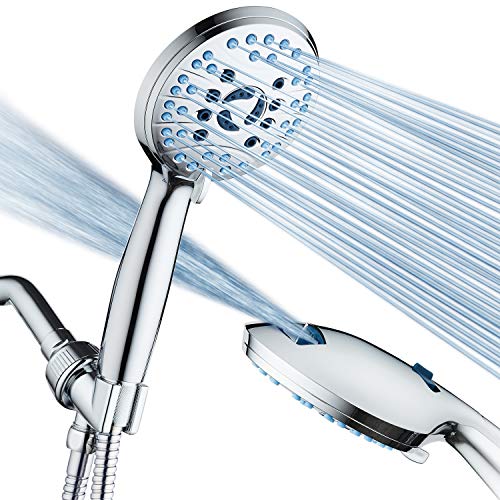 Hotel Spa 2639MBest overall
 BOZYBO 460311Rain head plus 9 settings
 Razime XWYMagnetic dual-head system
Start with how long it drips
Before you grab a wrench, watch the drip. How long it lasts tells you where the problem is.
A shower head always holds some water after you turn the handle off. That water sits in the pipe, the hose and the nozzle chamber, and it drains out slowly. A few drops over the first minute or two is normal and needs no repair.
If the dripping runs for many minutes, never stops, or gets worse over days, something is letting water past a seal. That is the case worth fixing.
The most common causes
Shower leaks fall into a few groups. Some are cheap to fix at the shower head. Others involve the valve inside the wall.
Here are the usual suspects, roughly from simplest to most involved:
- Trapped water draining out of the head, arm or hose after use. This is normal.
- A worn rubber washer or O-ring where the head screws onto the shower arm.
- Thread tape missing or worn on the shower arm threads.
- Mineral buildup in the nozzles, which makes water cling and drip for longer.
- A loose or damaged connection at the hose, handheld or bracket.
- A worn valve cartridge or seat in the shower control, which lets a thin stream through even when the handle is off.
Match the symptom to the likely cause
Use this table to narrow it down. Where the water appears matters as much as when.
Remember that a leak at a connection shows up only while the water is on or just after. A drip from the spray face with the handle fully off is a different problem.
| What you see | Likely cause | Where to start |
|---|---|---|
| A few drops for 1 to 2 minutes after use | Normal draining of trapped water | Nothing to fix |
| Water seeps from the joint at the wall arm while the shower runs | Worn washer or missing thread tape | Remove the head, replace the washer, rewrap the threads |
| Water leaks where the hose meets the head or the wall connection | Loose fitting or damaged hose washer | Hand-tighten, then replace the small rubber washer |
| Drips from the spray face long after use, with uneven spray | Mineral buildup in nozzles | Descale the nozzles |
| Steady drip from the spray face that never stops | Worn valve cartridge or seat | Shut off the water supply, then inspect or replace the cartridge |
| Surge of water minutes after you finish | Water held by surface tension that finally lets go | Usually normal; tilt the head after use to drain it |
Fix a leak at the connection
If the drip comes from where the head screws onto the arm, the fix is usually quick and needs few tools.
Turn the handle off first. Unscrew the head by hand, or with a wrench wrapped in a cloth so the finish does not scratch. Look at the rubber washer inside the head. If it looks flat, cracked or hard, replace it with one the same size.
Then clean the arm threads and wrap plumber's tape (PTFE tape) around them 3 to 4 times, in the direction the head screws on. Thread the head back on by hand, then snug it with a gentle quarter turn. Overtightening cracks plastic and crushes washers, which causes new leaks.
- Turn off the shower and let the pipe drain.
- Remove the head and inspect the washer and threads.
- Replace the washer if it is worn.
- Wrap fresh thread tape clockwise as you face the threads.
- Reattach by hand, then add a light snug turn.
- Run the shower and check the joint with a dry paper towel.
Clear mineral buildup
In hard water areas, scale narrows the nozzle openings. Water then beads up and drips for a long time, and the spray looks uneven.
To clear it, soak the spray face in white vinegar for a few hours, or fill a plastic bag with vinegar and secure it around the head. Rinse well, then rub the nozzles gently with a soft brush or your fingertip.
Some heads use soft silicone nozzles that you can rub clean. Our best shower head comparison lists which models have anti-clog nozzles, which can help if scale is a regular problem in your home. The BESAQUO 9-Function Handheld, for example, lists 63 silicone nozzles, and its maker suggests rubbing them or soaking the face in white vinegar.
When the valve cartridge is the problem
If water keeps dripping from the head even with the handle fully off, the head is probably fine. The cartridge or valve seat inside the wall is most likely letting water slip through.
Fixing it means taking off the handle and trim, and often shutting off the water to the house or bathroom first. Cartridge types differ by brand, so match the replacement to your valve. Take the old cartridge to a store or note the valve brand before you buy.
If you are not comfortable working inside the wall, a plumber can do this quickly. A failing valve wastes water around the clock, so do not leave it for months.
Safety notes and when to replace the head
Work safely while you fix this.
Shut off the water supply before opening any valve or cartridge. Let hot pipes cool first. Wet tubs and tile are slippery, so dry the floor and use a mat. If the arm is out of easy reach, use a stable step stool and never stand on the tub edge. Avoid prying near the wall, since a bent or cracked shower arm can cause hidden leaks.
If the head body is cracked, the hose is split or the finish is flaking, replacement is better than repair. Build quality matters here. Our shower head comparison covers body material and warranty, which range from 1 year to lifetime among the models that list them. Metal and brass connection parts, such as the brass ball joint listed on the BESAQUO model, hold up well to repeated tightening, though no part lasts forever.
Frequently asked questions
Is it normal for a shower head to drip a little after I turn it off?
Yes. Water left in the head, hose and arm drains out for a minute or two. If it continues well beyond that, look for a worn seal or valve.
Why does water drip from my handheld hose?
Check the washers at both ends of the hose first. A cracked or missing rubber washer is a common cause. Also confirm the fittings are snug, but not overtightened.
Will a new shower head stop a constant drip?
Only if the old head is damaged or clogged. If the drip never stops with the handle off, the valve cartridge is the likelier cause and a new head will not solve it.
Does a flow restrictor cause dripping?
Not usually. A restrictor limits flow, but it does not hold back water when the valve is off. Some heads let you remove it, which is worth checking only if you want to change the flow.