Why Does My Shower Head Have Low Pressure?
Low pressure at the shower head is most often caused by mineral buildup in the nozzles, a flow restrictor inside the head, or a partly closed valve. Check whether other faucets in your home are weak too. If only the shower is weak, start with the head itself, because cleaning it is quick and costs almost nothing.
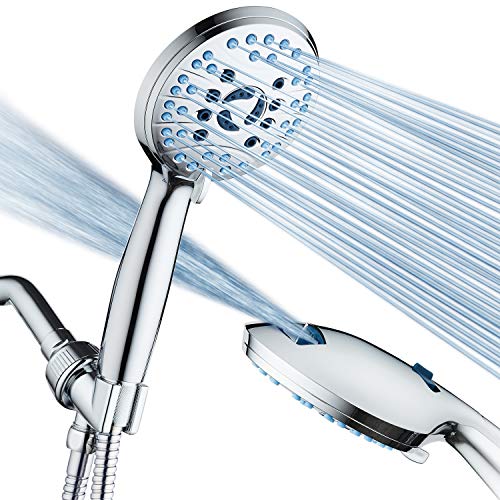 Hotel Spa 2639MBest overall
 BOZYBO 460311Rain head plus 9 settings
 Razime XWYMagnetic dual-head system
Start by finding where the problem is
Before you take anything apart, figure out how wide the problem is. Run the bathroom sink and a kitchen faucet. If they flow strongly and only the shower is weak, the cause is almost always in the shower: the head, the arm, the hose or the shower valve.
If every faucet is weak, look at the whole house instead. Common causes are a partly closed main shut-off valve, a failing pressure regulator, corroded pipes or a supply problem from your water utility. Those are different repairs, and some need a plumber.
Also note whether hot and cold feel different. If pressure drops only on hot water, the water heater or its shut-off valve is the likely suspect.
Cause 1: Clogged nozzles from mineral buildup
This is the most common reason a shower head weakens over time. Minerals in hard water leave scale on the spray face and inside the nozzles. The openings shrink, some spray holes stop working, and the water that does come out sprays unevenly or sideways.
A quick check: look at the spray face. White or tan crusty spots and holes that spit at odd angles point to scale. Soft silicone nozzles resist this and can be rubbed clean with a fingertip, which is why our best shower head page tracks which models list anti-clog nozzles.
How to clean a clogged shower head
A vinegar soak is the standard fix and works on most finishes. Check your maker's care notes first, because harsh acids can damage some plated finishes.
Here is the basic routine:
- Unscrew the head from the arm or hose. Turn it by hand, or wrap a cloth around it and use pliers gently if it is stuck.
- Soak the spray face in white vinegar for 30 minutes to a few hours, depending on how heavy the buildup is.
- Rub the nozzles with a soft brush or your fingertip. A toothpick can clear a stubborn hole, but do not use anything sharp on silicone.
- Rinse well, then run water through the head backward to flush loose debris.
- Check the small screen washer where the head meets the arm. Rinse off any grit and put it back before you reattach.
- Wrap fresh plumber's tape on the arm threads and screw the head back on by hand.
Cause 2: A flow restrictor is limiting the water
Many shower heads have a small disc or insert that caps how much water passes through. It saves water and keeps flow within common limits. It also makes a shower feel gentle, especially if your home pressure is on the low side.
Some heads let you remove that part. For example, the Hotel Spa 2639M and the BESAQUO NY102022SH both list a removable flow restrictor in their specs. If you take one out, you may use more water, and the result depends on your home's supply pressure. Follow the maker's instructions, and keep the part in case you want to put it back.
Flow rate is worth knowing when you compare heads. On our comparison page, the models that list a flow rate range from 1.8 GPM to 2.5 GPM, and only 6 of 13 products list it. If a head does not publish its flow rate, you cannot judge its output from the spec sheet.
Other causes to check
If a clean head and an open restrictor do not help, look further back in the system.
A kinked or twisted hose can pinch flow on a handheld setup. Straighten it and check for creases near the fittings. Also confirm the diverter on a combo set is fully switched, since a half-engaged diverter splits water between two heads and weakens both.
Inside the wall, a worn shower valve cartridge or a partly clogged valve can cut flow no matter which head you use. Old galvanized pipes can corrode and narrow over the years. A leak somewhere in the line can also reduce what reaches the shower.
A pressure regulator at the main line can drift or fail and lower pressure to the whole house. If you suspect this, a plumber can measure your pressure with a gauge and tell you for sure.
Quick troubleshooting guide
Use this table to match what you see to the likely cause.
| What you notice | Likely cause | What to try |
|---|---|---|
| Spray is uneven, some holes dead | Mineral scale in nozzles | Vinegar soak and rub nozzles |
| Weak since you installed a new head | Flow restrictor or low-flow design | Check if the restrictor is removable |
| Only the handheld is weak | Kinked hose or diverter issue | Straighten hose, check diverter position |
| Only hot water is weak | Water heater or hot-side valve | Check the heater shut-off valve; call a pro if unsure |
| All faucets in the house are weak | Main valve, regulator or supply issue | Check the main valve; call a plumber or utility |
| Pressure dropped slowly over months | Buildup in head or old pipes | Clean the head first, then have pipes inspected |
When a new shower head makes sense
If your head is old, cracked or scaled beyond cleaning, replacing it is reasonable. Look for anti-clog nozzles, a flow rate you can verify and a spray pattern that suits you. Our shower head comparison puts these specs side by side so you can see which ones publish them.
Keep expectations realistic. A new head cannot add pressure that your plumbing does not supply. Some makers describe air-assisted designs that mix air with water for a stronger feel at low pressure, for example the BESAQUO listing, but that is a manufacturer claim, not something we measured.
A heavy rain head also needs a secure shower arm. If you add a large, heavy head, make sure the arm and its wall connection are solid.
Safety notes
Turn off the water at the shower valve or main before working on the valve, arm or pipes. If you work on a pressure regulator or the water heater, shut off the supply first. For a gas water heater, call a licensed professional rather than adjusting gas parts yourself.
Wear eye protection when soaking or scrubbing scale, since vinegar and descaling products can splash. Never mix cleaning products, especially bleach with vinegar or ammonia, because the fumes are dangerous.
Use a stable step stool for tall shower arms, and keep the tub or floor dry so you do not slip.
Frequently asked questions
Can I clean a shower head without removing it?
Yes. Fill a plastic bag with white vinegar, tie it around the head so the spray face is submerged and leave it for a while. Then rinse and run the water to flush the nozzles.
Will removing the flow restrictor always raise pressure?
Not always. It can increase flow if your home supply is healthy, but it will not fix clogs, leaks or low supply pressure. It may also raise water use.
How often should I descale my shower head?
There is no fixed schedule. Clean it when you see white buildup or uneven spray, and do it more often if you have hard water.
Does a bigger head mean weaker pressure?
It can feel that way. The same water spreads over a larger face, so a wide rain head feels softer than a small, focused one.
When should I call a plumber?
Call one if every faucet is weak, if pressure drops suddenly, if you see leaks or stains, or if the problem involves the valve, regulator or water heater.