Why Does My Seat Creeper Keep Breaking? Causes and Fixes
Most seat creepers break because they are used past their limits. The usual causes are too much weight (especially in seat mode), worn casters, loose pins and bolts, and rough floors. Check the rating, inspect the hardware, and pick a model built for how you use it.
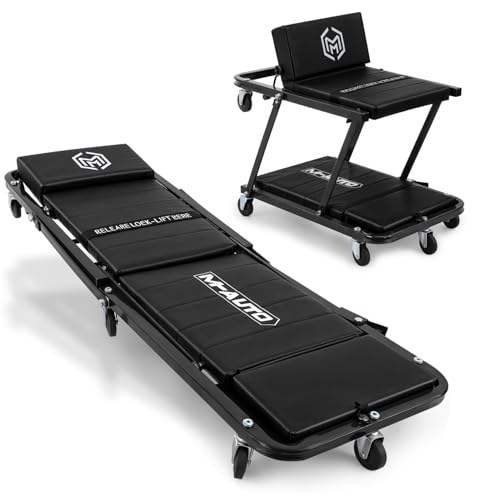 M-AUTO M-AUTO A03-CP-003-48-BK-BKBest overall
 DNA MOTORING TOOLS-00493Low-slung and compact
 Pro-LifT PL9450Highest weight rating
The most common reasons a seat creeper fails
A seat creeper does two jobs, and each job stresses it differently. Flat, your weight spreads along the whole frame. Folded into a seat, all of it sits on a small part of the frame, the hinge and the locking pin.
Most failures trace back to a short list of causes. Some are about how the creeper is used, and some are about how it was built.
- Overload: your body weight plus tools and parts can exceed the rating.
- Seat-mode limits: some creepers carry less weight when folded into a seat than when flat.
- Worn or cracked casters: they take the most abuse, from cracks, cords, bolts and debris.
- Loose or bent locking pins: the conversion pin is a key part and a common weak spot.
- Loosened fasteners: bolts and hinges work free with repeated folding and rolling.
- Rough use: dropping into the seat, leaning back hard or dragging the creeper by one end.
Check the weight rating, especially in seat mode
Add up your body weight and any tools you keep on the creeper. That total should sit below the rating, with some room to spare. Ratings in our lineup run from 300 lb to 450 lb, so the gap between models is large.
Seat mode deserves a closer look. The IRONMAX lists 300 lb in seat mode and 330 lb in the flat reclining position. That is the same split noted for the three-position design on our best seat creeper page. If you sit on your creeper often, the lower number is the one that counts.
If you are close to the limit on either number, a higher-rated model is the better fix than repairs. The Pro-LifT PL9450 is rated for 450 lb and has 3 in casters, the largest listed.
Casters, wheels and floors
Casters are the part that wears out first on most creepers. Small wheels catch on cracks, zip ties, drain grooves and loose bolts, and a sudden stop can strain the caster mount or crack the wheel.
Caster size and material both matter. Among the products we list, only three publish caster diameter, from 2 in to 3 in. Polyurethane casters are described as non-marring, which suits a finished floor. Six or seven swivel casters spread the load, so each one carries less.
Sweep the floor before you work, and clear cords and small parts from your rolling path. If a wheel wobbles, binds or leaves a flat spot, replace it before it damages the mount. The WheelX listing notes that replacement wheels are available, which is worth checking before you buy any model.
Pins, hinges and the folding mechanism
The conversion pin does the most work in a seat creeper. It holds the frame in a position, and it takes your weight when you sit. A bent, worn or half-seated pin can let the frame shift or collapse.
Fold and unfold the creeper slowly, and always confirm the pin is fully seated before you put weight on it. Do not sit on a creeper that is only partly locked.
- Look at the pin and its hole for bends, wear or rust.
- Tighten any loose bolts or nuts at the hinges.
- Check the frame tubes and welds for cracks or bends.
- Look for torn vinyl or crushed padding that exposes the frame.
- Spin each caster by hand and listen for grinding.
A quick troubleshooting guide
If your creeper is not working right, match the symptom to the likely cause. This table covers the common ones.
Safety note: stop using a creeper with a cracked frame, bent tube or pin that will not lock. A failure under a vehicle can drop you or let tools fall on you. Wear safety glasses when working under a car, and never rely on a creeper in place of jack stands.
| Symptom | Likely cause | What to do |
|---|---|---|
| Frame sags or bends | Overload or seat-mode limit | Retire it and choose a higher rating |
| Will not lock in seat mode | Bent or worn pin, loose hinge | Inspect and tighten, replace if damaged |
| Wheels stick or wobble | Debris, wear or loose mount | Clean, tighten or replace the casters |
| Creeper tips back in seat mode | Uneven floor or leaning too far | Use on a flat surface and sit upright |
| Wheels leave marks | Hard wheel material | Look for non-marring polyurethane |
Choosing a replacement that lasts
If yours keeps breaking, the cause may be a mismatch between the creeper and the job. Start with a rating well above your load, then look at the casters, the frame material and the pin design.
Our best seat creeper page puts several models on one spec sheet, so you can compare ratings, caster sizes and heights line by line. If you work flat on your back for long jobs and rarely sit, our best creeper page may suit you better.
Remember that the listed specs are published figures. They do not guarantee the product will outlast regular use, so treat the rating as a ceiling, not a target.
Frequently asked questions
Can I fix a bent creeper frame?
It is safer not to. Bending steel back weakens it, and a repaired frame can fail without warning. Replace a bent or cracked frame.
Why does my creeper tip backward when I sit?
Leaning back too far or using it on an uneven floor can shift your weight behind the casters. Sit upright on a flat surface, and check that the pin is fully locked.
Do more casters help a creeper last longer?
They can. Six or seven casters share the load, so each one carries less weight. Caster size and material still matter.
How often should I inspect my creeper?
A quick look before each use is a good habit. Check the pin, hinges and wheels, and look for cracks in the frame.