Why Does My Miter Saw Stand Keep Breaking?
Most miter saw stands break because the saw, the workpiece or the way the stand is set up asks more of it than it was built for. The common culprits are overloading, tipping from long boards, loose hardware, uneven floors and rough folding or transport. Matching the stand to the saw and fixing your setup habits usually stops the repeat failures.
 EVOLUTION 005-0002Best overall
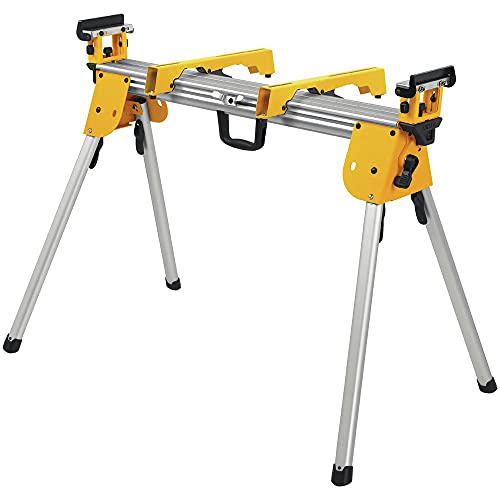 DEWALT DWX724500 lb aluminum stand
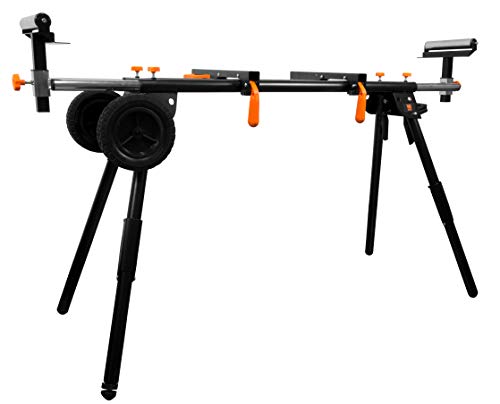 WEN MSA330Longest board support
The short list of why stands fail
A miter saw stand looks simple, but it carries a heavy, top-heavy tool that pushes and pulls on it with every cut. Small weaknesses show up fast under that kind of load.
When a stand keeps breaking, the cause is rarely bad luck. It is usually one of a handful of repeating problems:
- The saw is heavier than the stand is rated to hold, or the weight is mounted off center.
- Long boards hang off one side and tip the whole stand.
- Bolts, wing nuts and locking pins work loose from vibration.
- The floor is uneven, so one leg carries more load than the others.
- The stand is folded, dragged and tossed into a truck often, which bends hinges and latches.
- Material supports are used as shelves for heavy stock they were not designed to hold.
Check the saw and stand match
Start with the label. Every stand lists a maximum load, and your saw's weight should sit well under it once you add accessories like a dust bag, a clamp or a laser guide. If the numbers are close, the stand is working at its limit every time you use it.
Saw type matters too. A sliding compound saw moves its motor and rails forward and back, which shifts the center of gravity during a cut. A stand that handles a fixed-head saw may feel unstable under a slider. If you are shopping for a larger saw, our best 12 sliding compound miter saw comparison lists published weights so you can check them against a stand's rating before you buy.
Also check the mounting. Many stands use brackets or rails that need to fit the saw's base holes. If the saw is held on by only two bolts, or the brackets are bent, the stand will wobble and wear out fast.
Match the symptom to the likely cause
Use this table to narrow down what is going wrong. It covers the problems people report most often.
| Symptom | Likely cause | What to try |
|---|---|---|
| Stand rocks or wobbles | Uneven floor or one leg not fully extended | Reset the legs on flat ground and adjust the leveling feet if present |
| Stand tips toward one end | Long board unsupported on one side | Add a roller stand or support at the same height on the other side |
| Hinges or latches bend | Rough folding, or folding with the saw attached | Remove the saw before folding and lock each latch fully |
| Bolts keep loosening | Vibration with no thread lock or washers | Add lock washers or nylon lock nuts and recheck often |
| Frame bends or cracks | Overload or a drop | Stop using it and replace the damaged part or the stand |
| Saw slides on the stand | Brackets not tight or the wrong mounting points | Use all mounting holes and tighten evenly |
Setup habits that protect the stand
Even a solid stand wears out early with poor habits. A few changes in how you set up and cut can add a lot of life.
Work through this routine each time you set up:
- Pick a flat, firm spot. Concrete is better than soft ground or a sloped driveway.
- Open the stand fully and confirm every locking pin or latch is engaged.
- Bolt the saw down at every mounting point, not just one or two.
- Tighten the hardware again after the first few cuts, since vibration can settle bolts.
- Support long stock on both sides at the height of the saw table, using a separate support that is not part of the stand.
- Let the blade reach full speed before the cut and ease through it, rather than forcing the saw down.
Safety checks after a fall or a failure
If a saw has tipped or dropped, treat it as a safety issue, not just a repair. A saw that looks fine can have a bent guard, a cracked housing or a shifted fence, and the blade guard may no longer move freely.
Unplug the saw before you touch it. Check that the blade guard swings and returns on its own, the blade is not bent or loose, and the fence and table are still square. Look closely at the stand too. Cracks near welds, bent tubes and stretched holes mean the stand has lost strength, and bending it back does not restore it.
Wear eye and hearing protection every time you cut. If a stand shifts mid-cut, the saw can kick or twist, so keep your hands well clear of the blade path and never hold the offcut with your free hand near the blade. Do not lean on a folding stand to reach something overhead, and do not stack tools on the saw table.
Choosing a better stand next time
If your stand is bent or the hinges are worn, repair is rarely worth the effort. A replacement that fits your saw is a better fix. Our best miter saw stand page compares published load ratings, folded sizes and support features side by side, which makes it easier to see which options suit your saw.
When comparing, look for these points:
- A load rating comfortably above your saw's weight plus accessories.
- Wide, adjustable mounting brackets that fit your saw's base.
- Leveling feet or a design that stays stable on slightly uneven ground.
- Extendable material supports, so long boards do not tip the stand.
- Latches and hinges that feel solid and lock without play.
If the saw itself is the problem
Sometimes the stand is fine and the saw is a poor fit for your space. A very heavy saw on a lightweight folding stand will always be a strain. If you are still deciding on a saw, our best miter saw for beginners guide can help you weigh size and weight against the work you plan to do, so the saw and stand suit each other from the start.
Frequently asked questions
Can I fix a bent miter saw stand?
Minor issues like loose bolts or a stuck latch are worth fixing. A bent leg, a cracked weld or a stretched mounting hole means the frame has lost strength, and it is safer to replace the stand.
Is it safe to leave my saw on the stand when I fold it?
Check the stand's manual, but in general it is better to remove the saw first. Folding with the saw attached puts extra stress on hinges and latches and can cause the saw to shift.
Do I need to bolt the saw to the stand?
Yes, if the stand has mounting points. Using all of them keeps the saw from sliding or rocking during a cut and spreads the load across the stand.
Why does my stand tip when I cut long boards?
A long board hangs weight off one side and pulls the stand over. Support the other end of the board with a separate stand or support set to the same height as the saw table.