Why Does My Lawn Edger Keep Stopping? Causes and Fixes
Most edgers that keep stopping have a simple cause: a blade that is jammed or bogged down, a weak power supply (a low battery or an undersized extension cord), or, on gas models, stale fuel or a clogged spark arrestor. Start by unplugging the tool or removing the battery, clearing the blade area, and checking the power source. If it still cuts out, work through the checks below by power type.
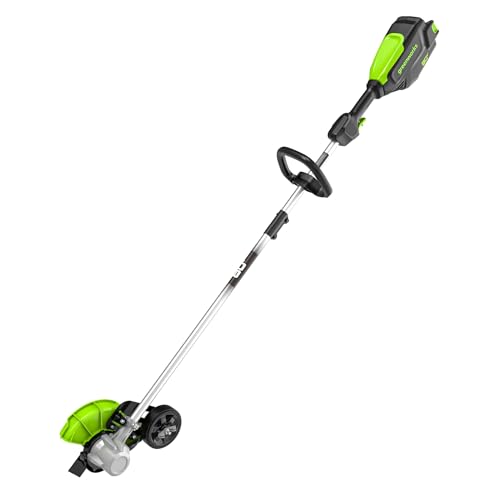 Greenworks ED80L02Deepest cut, most settings
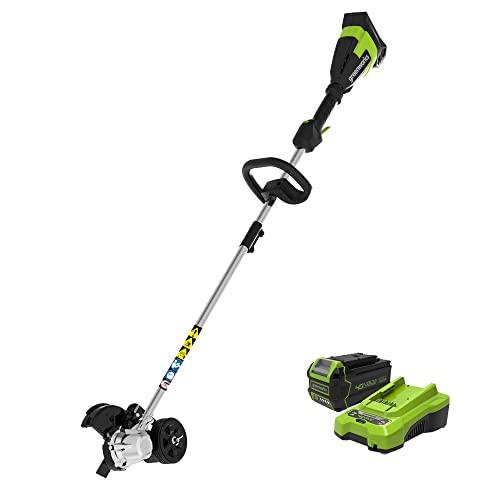 Greenworks ED40L410Battery and charger included
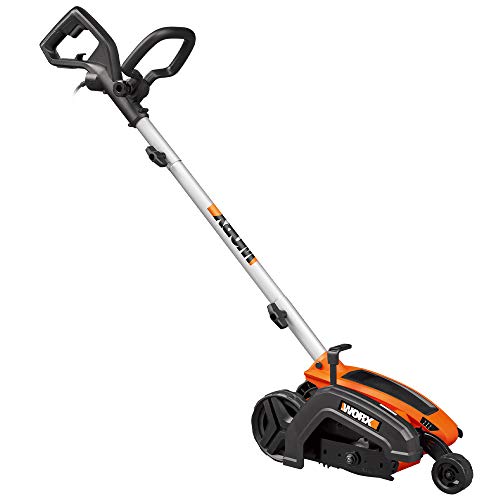 WORX WG896Corded with trenching mode
Start with the quick checks
Before you assume the edger is broken, rule out the easy problems. Most stopping and not-working complaints come from the blade, the power supply or the settings, not from a failed motor.
Always make the tool safe first. Unplug a corded edger, remove the battery from a cordless one, or shut off a gas engine and let it cool. The blade is sharp and can move if the switch is bumped, so never reach in while the tool is live.
- Remove the battery or unplug the cord.
- Look for grass, roots, string or dirt packed around the blade and guard.
- Spin the blade by hand. It should turn freely without grinding.
- Check that the depth setting is not set too deep for the soil.
- Confirm the power source is charged, plugged in or fueled.
Blade jams and overload shutoffs
The most common reason an edger cuts out mid-border is that the blade is working too hard. Packed grass clippings, thick roots, buried stones and hard clay all add load. Many electric and battery edgers have overload protection that shuts the motor off to protect it, then lets it restart after a short pause.
If your edger stops when you push into a tough spot, back off the depth setting and take a shallower first pass. Then make a second pass at the depth you want. Pushing forward slowly and letting the blade do the work also helps. Forcing it faster is a common way to trigger a shutoff.
A dull or bent blade makes the problem worse because it drags instead of slicing. Inspect the blade for chips, bends and wear. Replace it with the correct part for your model rather than trying to straighten it.
Corded edgers: power supply problems
Corded models need steady power. The WORX WG896 on our spec sheet, for example, has a 12 Amp motor and a built-in 1 ft power cord, and the listing says it requires an extension cord. That means the cord you add matters.
A long, thin extension cord drops voltage under load, and the motor can stall or trip protection. Use a heavy-duty outdoor cord rated for the tool's amperage, and use the shortest length that reaches. Uncoil the cord fully so it does not overheat.
Also check the outlet. If it is a GFCI outlet, damp grass or a wet connection can trip it. Press the reset button and keep plug connections off wet ground. Never use a damaged cord, and never edge in the rain.
Battery edgers: charge, contacts and compatibility
Cordless edgers stop when the battery cannot deliver enough current. A partly charged or aging battery may run fine at idle and then cut out as soon as the blade meets soil. Charge the pack fully and try again.
Check the contacts for dirt, bent terminals or loose seating. Click the battery in firmly. Heat and cold matter too: a pack that is very hot after a long job, or very cold from a shed in winter, may shut down until it returns to a normal temperature.
Compatibility is another cause. Several models on our page ship without a battery or charger. The Greenworks 80V edger (ED80L02) uses Greenworks 80V batteries sold separately, the WORX 20V edger (WG898.9) is listed without a battery and charger, and the worksky edger is listed as compatible with Milwaukee 18V batteries. If you pair a tool with a smaller or mismatched pack, it may run weakly or stop under load. You can compare what is in the box on our best lawn edger page.
Gas edgers: fuel and spark arrestor
If you have a gas edger that starts and then stalls, suspect the fuel first. Gas left in the tank for months can turn stale and leave sticky deposits that restrict flow. Drain old fuel, refill with fresh mix as your manual specifies, and replace the fuel filter if the tool has one.
A clogged spark arrestor screen or a dirty air filter can also make the engine run rough and die. Let the engine cool, remove the screen, and clean it with a wire brush. Tap out or replace a dirty air filter.
Gas safety matters. Refuel outdoors with the engine off and cool, keep fuel away from flames and sparks, and store it in an approved container. If the engine still stalls after fresh fuel and clean parts, the carburetor may need service.
Match the symptom to the likely fix
Use this table to narrow things down fast. Start with the first fix in each row.
If the problem keeps returning after these steps, stop using the tool and check the manufacturer's manual and warranty terms. Published warranties on our page run from 3 years to 4 years for the models that list one, so a repeat failure may be covered.
| Symptom | Likely cause | What to try |
|---|---|---|
| Stops when cutting deep | Overload or hard soil | Use a shallower depth and make two passes |
| Dies, then restarts after a pause | Thermal or overload protection | Let it rest, clear the blade, reduce load |
| Corded unit cuts out or hums | Thin or long extension cord, tripped GFCI | Use a heavy-duty short cord, reset the outlet |
| Cordless unit shuts off under load | Low or hot battery, dirty contacts | Charge fully, cool down, clean terminals |
| Will not start at all | No power, safety lock or dual-action start not engaged | Check power, then follow the start sequence in the manual |
| Gas unit starts then stalls | Stale fuel, clogged spark arrestor or air filter | Replace fuel, clean the screen and filter |
Safety and when to replace the tool
Wear safety glasses, since edgers can throw dirt and stones. Add hearing protection for gas models and sturdy boots and long pants for any model. Keep bystanders and pets well away while you work.
Know where buried hazards may be. Sprinkler heads, low-voltage lighting cables and irrigation lines sit close to many borders. Hitting them can jam the blade and damage the tool.
If you have cleaned the blade, confirmed power and fuel, and the edger still stops, the motor, switch or battery may be worn. A repair or a replacement is then reasonable. When you shop, look at depth range, weight and what is included. Our spec sheet lists blade sizes from 7 in to 9 in and weights from 7.06 lb to 14 lb, which helps you pick a tool that suits your soil and strength.
Frequently asked questions
Why does my edger start and then die right away?
On gas models, stale fuel, a dirty air filter or a clogged spark arrestor are the usual causes. On electric models, a safety lock not fully engaged or a weak power supply can cut the tool out as soon as the blade is under load.
Can a dull blade make an edger stop?
Yes. A dull or bent blade drags through soil and raises the load on the motor, which can trigger overload protection or drain a battery faster. Inspect it for wear and replace it with the correct part for your model.
Is it safe to reset an edger that keeps tripping the outlet?
Only after you find the cause. Unplug the tool, check the cord for damage, and keep connections dry. If the outlet trips again, stop and have the cord, tool or outlet inspected before using it.
Should I fix it myself or replace it?
Simple fixes like clearing the blade, charging the battery or refreshing fuel are safe to try at home. Internal motor, switch or carburetor repairs are better left to a service shop, especially if the tool is under warranty.