Why Does My Hose Reel Keep Tripping the Breaker?
A spring-driven hose reel has no electrical parts, so it cannot trip a breaker by itself. The cause is almost always an electric reel motor, a wet or faulty outlet, an extension cord, or another tool sharing the circuit. Work through the checks below with the power off and unplugged, and call an electrician if the breaker still trips with nothing connected.
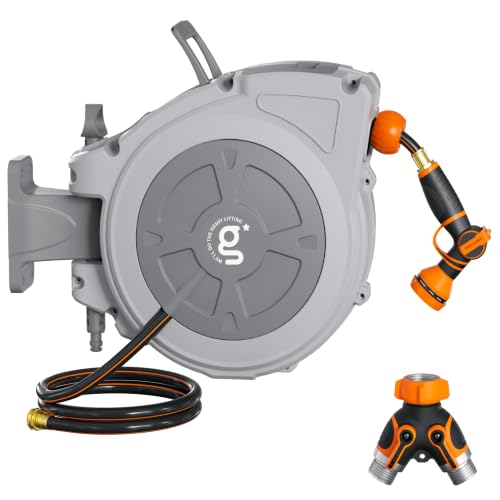 Giraffe Tools MWBest overall
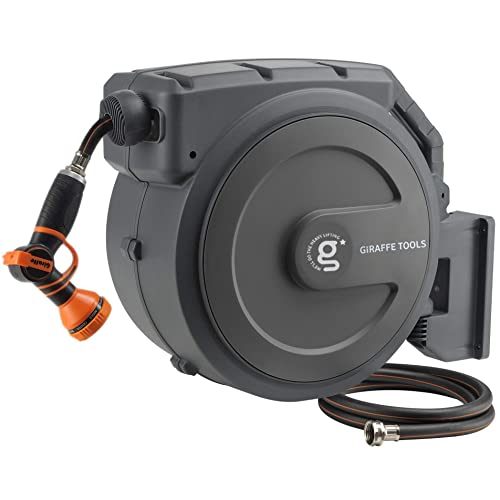 Giraffe Tools AW40-1/2Most retractable hose
 Liberty Garden 712Lightest, widest swivel
First, figure out what kind of reel you have
Most garden hose reels are mechanical. Retractable models rewind with a spring, and manual or box styles use a hand crank or a simple frame. None of these draw power, so if your breaker trips while you use one, the reel is probably not the culprit.
Trouble usually starts when something electrical is nearby or attached. That can be a motorized or powered reel, a pressure washer fed through the hose, a pump, or an outdoor outlet that has gotten damp. Our best hose reel page covers only mechanical reels, which is one reason they are a simple choice if you want to rule electricity out.
If you have a powered reel, such as a shop or RV unit with a motor, the motor is the first suspect. Strain on the motor during rewinding can make it draw more current than the circuit allows.
The most common causes
A breaker trips when the current is too high, when a fault sends current to ground, or when the breaker itself is worn. Here is how each of those shows up around a hose reel.
- Wet outlet or plug: Outdoor outlets protected by a GFCI trip when moisture lets current leak. Rain, spray from the hose or a cover that does not seal can all do it.
- Motor strain: A powered reel that is fighting a kinked, twisted or overly stiff hose pulls more current and can trip the breaker.
- Shared circuit: A reel motor, a pressure washer and a garage freezer on one circuit can add up past the breaker's limit.
- Long or thin extension cord: A cord that is too light for the load heats up and adds resistance, which can contribute to tripping.
- Damaged cord or motor: Cracked insulation, a pinched cable or worn motor windings can leak current to ground.
- Tired breaker: Repeated tripping can leave a breaker weaker, so it may trip at lower and lower loads over time.
Step-by-step checks
Do these in order. Stop and call a licensed electrician if you see scorch marks, smell burning or feel heat at the outlet or panel.
- Unplug the reel and everything else on that circuit, then reset the breaker or GFCI. If it trips with nothing plugged in, the problem is the circuit, not the reel.
- Plug in only the reel and run it briefly with no hose pulled out. If it holds, the reel is fine unloaded.
- Inspect the cord, plug and any connections for cracks, nicks, green corrosion or moisture. Dry everything fully before testing again.
- Straighten the hose and remove kinks or twists. Run the reel with a light load to see whether strain was the trigger.
- Swap the extension cord for a shorter, heavier one rated for outdoor use, or plug straight into the outlet.
- Move the reel to a different circuit. If the trip stops, the first circuit was overloaded or has a fault.
Quick symptom guide
This table matches what you see to the likely cause. It is general guidance, not a diagnosis of your exact setup.
| What happens | Likely cause | What to do |
|---|---|---|
| Trips the moment you plug in | Short or ground fault in cord or motor | Stop using it and have it repaired or replaced |
| Trips only when it rains or after watering | Moisture in outlet or plug | Dry it, use a weatherproof cover, check the GFCI |
| Trips when the motor rewinds | Hose kink or motor strain | Clear the kink, reduce load, check the hose path |
| Trips when other tools run | Overloaded shared circuit | Use a separate circuit or run one tool at a time |
| Trips with nothing plugged in | Worn breaker or wiring issue | Call a licensed electrician |
Why a reel keeps turning off or breaking
If your question is really about the reel stopping or failing, the causes are mostly mechanical. A retractable reel can stop rewinding when the hose twists inside, when the lock catches or when the spring wears out. Pulling the hose at a sharp angle instead of straight out puts extra stress on the guide and swivel.
Mounting matters too. A reel on weak backing can wobble and loosen over time. The Giraffe Tools listings recommend a post larger than 4 x 6 inches, or larger than 4x4 for the 130 ft model, for stability. That model also uses a two-point bracket, which is meant to hold more firmly than a single anchor.
Weight is another factor. The retractable reels on our best hose reel page run from 18.08 lb to 31.75 lb, and the heaviest of those, the VEVOR NW-S40, lists a slow rewind of 10 to 11.5 seconds for up to 98 ft of hose. A slower rewind means less snap at the end of the pull, which is easier on parts and on your hands.
Pressure can wear a hose and fittings as well. Two of the listings, Giraffe Tools and VEVOR, cite 200 PSI pressure tests and 600 PSI burst tests, so check what your own hose is rated for before connecting it to a pressure source.
If the problem is an air hose reel
Air reels have their own electrical story. The compressor behind them, not the reel, usually trips the breaker. Long hoses, undersized extension cords and a compressor starting under pressure can all pull a heavy surge of current at startup.
If you are shopping for a reel for compressed air, see our best air hose reel comparison. Match the reel's air rating to your compressor and hose, and keep the compressor on a circuit that can handle its starting load.
Safety notes
Water and electricity do not mix, so treat every trip as a warning rather than a nuisance.
- Unplug the reel and turn off the breaker before touching cords, plugs or the motor.
- Never bypass or tape over a GFCI, and do not replace a breaker with a larger one to stop it tripping.
- Keep plugs and connections off wet ground, and use outdoor-rated cords and covers.
- Wear eye protection when working with pressurized hoses, since a fitting can let go.
- Anchor wall reels to solid backing, and use a stable ladder when mounting at height.
When to replace instead of repair
If a powered reel trips the breaker with a clean, dry outlet and a short direct connection, the motor or wiring is likely failing. Repair costs and safety risk can make replacement the better move.
If you only want a reel that moves water, a mechanical one avoids the problem entirely. Compare capacity, hose diameter, weight and swivel angle on our best hose reel page, and choose mounting that suits your wall or post.
Frequently asked questions
Can a hose reel trip a GFCI outlet?
A plain mechanical reel cannot, but a powered reel or any plugged-in device nearby can if moisture or a damaged cord leaks current to ground.
Is it safe to keep resetting the breaker?
Resetting once after removing the load is fine. If it trips again, stop. Repeated tripping points to a fault or overload that should be fixed first.
Does a longer hose make a retractable reel work harder?
Yes, a full length of hose adds weight and friction. Pick a reel rated for at least your hose length so the spring is not overloaded.
Should I call an electrician?
Yes, if the breaker trips with nothing plugged in, if you smell burning, or if the outlet or panel feels hot.