Why Does My Home Tool Kit Not Work? Common Causes and Fixes
Most of the time, a home tool kit that "doesn't work" is the wrong kit for the job, not a faulty one. Many large kits are mechanics sets built around sockets, with no hammer or tape measure, and none of the kits on our spec sheet include a power tool. Check what is in the case, match the tool to the fastener, and use the fixes below before you decide the kit is defective.
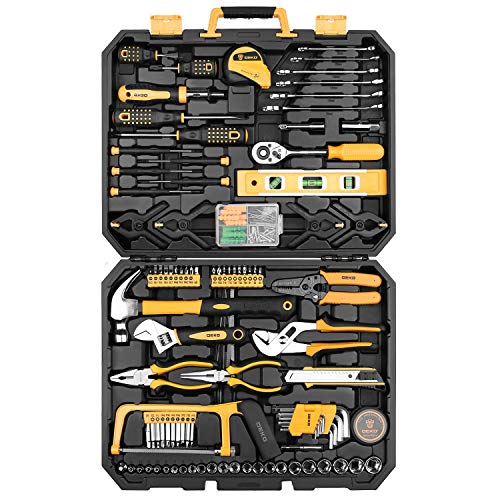 DEKOPRO ET00654Best overall
 DEWALT DWMT75049Three drive sizes
 DEKOPRO DKMHTK094BMC-OrangeClosest to a basic kit
Start with what is actually in the case
Piece count is the most common source of confusion. A listing that says 200 pieces sounds like a full workshop, but a big share of those pieces can be sockets, adapters and bits. If you bought the kit to hang shelves or assemble furniture, you may find the pieces you reach for most are missing.
Our best home tool kit page makes the same point: look for screwdrivers, pliers, a hammer and a tape measure in the listing. Several kits in that comparison are mechanics sets with ratchets and sockets but no hammer or tape measure. They are fine tools, but they suit car work and bolts better than picture hanging.
A small example of a basic kit: one 94-piece kit in our comparison lists a 4 oz steel claw hammer, 5.5-inch combination pliers, a utility knife, a 6.56-foot tape measure, hex keys, 10 screwdriver bits and four 1/4-inch sockets. That covers light household fixes. It is not meant for stubborn bolts or heavy framing.
Match the symptom to the likely cause
Before blaming the kit, find the symptom that matches your problem. Most issues fall into a few groups.
| What you notice | Likely cause | What to try |
|---|---|---|
| Screwdriver slips or chews the screw head | Wrong bit type or size for the screw | Try another bit style or size until it seats fully in the head |
| Socket spins on a bolt without gripping | Wrong size, or metric and SAE mixed up | Test-fit by hand, and use a 6-point socket if you have one |
| Ratchet will not turn the fastener | Direction switch set wrong, or the job needs more leverage | Check the switch, then try a longer handle or a larger drive size |
| Can't reach the fastener | Tool too bulky or too short for the space | Add an extension bar or use a lower-profile ratchet head |
| No hammer, level or tape in the case | Kit is a mechanics set, not a household set | Add the missing basic tools separately |
| Kit cannot drill or drive many screws quickly | No power tool is included | Hand tools only, so consider a drill or driver kit |
| Rust or sticky parts | Damp storage | Wipe dry, add a light coat of oil, and store somewhere dry |
Work through a quick check
If something seems wrong, go step by step. This takes a few minutes and usually finds the cause.
- Read the contents list for your kit and confirm the tool you need is actually included.
- Check the size markings on the tool and on the fastener. Hand-stamped sizes are easier to read, but metric and SAE sizes can look almost the same.
- Seat the bit or socket fully before turning. A partly seated tool is the most common reason for slipping or rounding.
- If the ratchet seems stuck, check the small direction switch. A 72-tooth ratchet, as listed on several kits we compare, has a 5-degree arc swing, which suits tight spaces but still needs the switch set correctly.
- Look for dirt, rust or a bent part. Clean and lightly oil moving parts.
- If the tool still fails, check the warranty terms in the listing before you throw anything away.
When the problem is the wrong kind of kit
Sometimes nothing is broken. The kit simply was built for another purpose. A heavy mechanics set can weigh a lot. Among the products on our page that list weight, the range runs from 5.07 lb to 39.19 lb, so a bulky kit can be a poor fit if you want something to pull off a closet shelf for quick jobs.
Case size also matters. Listed case lengths run from 6.97 in to 17.9 in. A larger case holds more, but a compact one is easier to store and carry around the house.
If your real frustration is speed, such as driving a lot of screws or drilling holes, a hand tool kit will feel slow no matter how good it is. In that case, look at a cordless option. Our best power tool combo kit for the money page compares kits that pair a drill and driver with other power tools. Many people keep a small hand kit for the basics and add a power kit for bigger jobs.
Check the materials and build
Tool quality does affect how well a kit holds up, though not as much as fit and size. Chrome vanadium steel and a corrosion-resistant finish help tools last through occasional use and damp garages. Soft-grip handles add comfort on pliers and hammers.
Not every maker publishes the steel type. Treat a missing spec as unknown, not as a flaw. If a tool bends, cracks or rounds off fasteners every time, that points to a real defect or a size mismatch, so contact the seller with the model number.
Six-point sockets, which a few of the DEWALT sets in our comparison list, grip the flat sides of a fastener and reduce the risk of rounding compared with 12-point sockets.
Safety notes
A few habits prevent injuries while you troubleshoot.
- Wear safety glasses when hammering, prying or using a ratchet on rusty bolts. Metal chips and sudden slips can send debris toward your face.
- Never use a hand tool on live electrical wiring. Turn off the power at the breaker and confirm it is off before touching outlets or switches. Standard screwdrivers are not rated for live work unless they are marked as insulated.
- Do not use a socket as a hammer or slip a pipe over a ratchet handle for extra leverage, as this can break the tool and cause injury.
- Keep your free hand away from the path of a screwdriver or utility knife.
- When you work on ladders or step stools, keep tools in a belt or bucket instead of carrying them in your hands.
Choosing a better kit next time
If you decide the kit is not right, pick the next one by the jobs you do most. For shelves, furniture and picture hanging, a compact kit with bits, a hammer and a tape measure is usually enough. For car work or larger bolts, choose a set with a 72-tooth ratchet and several drive sizes, and only if you will use the sockets.
You can compare piece count, ratchet teeth, bits, case type, weight and warranty side by side on our best home tool kit page. Read each listing's contents before you decide.
Frequently asked questions
Can a new kit arrive with missing tools?
It can happen. Compare the contents list in the listing with what is in the case. If something listed is missing or a part is damaged, contact the seller with your order details.
Why do my screws keep stripping?
Usually the bit does not match the screw head, or it is not pushed in far enough. Use the correct bit type and size, press firmly, and turn slowly.
Do I need a mechanics set for home repairs?
Not usually. Most household jobs need screwdrivers, pliers, a hammer and a tape measure. Sockets matter more for car work and larger bolts.
How should I store my kit to keep it working?
Keep it in a dry spot, close the case after each use, and wipe tools clean. Damp garages can cause rust, so a corrosion-resistant finish helps but does not replace dry storage.