Why Does My Home Garage Air Compressor Keep Running or Shutting Off?
A garage compressor that keeps running usually has an air leak, a worn or dirty valve, or a pressure switch that is not cutting out. One that shuts off or trips too soon is most often dealing with overheating, a tripped breaker, a weak power supply, or a faulty pressure switch. Start with the simple checks below before you open anything up.
 Klutch 203001005001Best overall
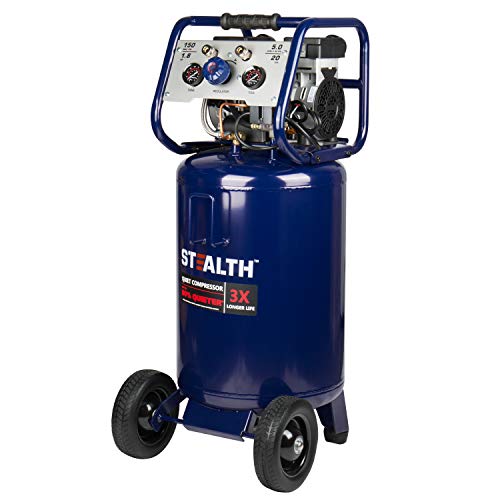 Stealth SAQ-12018
 ECOMAX 0210673ACompact pancake with hose
First, figure out which problem you have
Two different symptoms get lumped together. In the first, the motor runs and runs, and the tank gauge never reaches the cut-out pressure or the compressor never stops once it does. In the second, the compressor stops or will not start, often with a click, a hum, or a tripped breaker.
Write down what you see: how long it runs, what the tank gauge reads when it stops, and whether the breaker or the motor's thermal reset button has popped. Those notes point to the cause quickly.
Why it keeps running
Compressors are built to cycle. The motor fills the tank to a set pressure, shuts off, and restarts after the pressure drops. If it never gets to shut off, air is leaving as fast as it comes in, or the pump is not making as much air as it should.
Most of the time the culprit is on this list:
- Air leaks in hoses, fittings, quick couplers, or the drain valve. Even a small leak can make the motor restart again and again.
- A tool that is using more air than the compressor can supply, such as a sander or grinder on a small unit.
- A worn or stuck check valve, inlet valve, or reed valve inside the pump, so the pump cannot build pressure properly.
- A pressure switch that is set wrong or has failed, so it does not signal the motor to stop.
- A clogged air intake filter that starves the pump of air.
- A regulator set very high, or a safety valve that is leaking.
Check for leaks first
Leaks are the easiest fix, so start there. Fill the tank, turn the compressor off, and unplug it. Then listen for hissing and brush soapy water on fittings, hose ends, the drain valve, and the tank seams. Bubbles show you where air is escaping.
Tighten loose connections, and replace worn couplers or cracked hose. Thread sealant tape on tapered threads helps a lot. If you are replacing parts, our guide to the best air compressor fittings explains which types suit most garage setups.
Also watch the tank gauge after you shut off and unplug the unit. If pressure drops noticeably over a short time with nothing connected, there is a leak in the tank fittings, the check valve, or the drain.
Why it shuts off or will not stay on
If the compressor stops too early, trips, or hums without starting, think power and heat first. Many garage compressors draw a lot of current when the motor starts, and a weak supply can cause trouble.
Common causes include:
- A tripped household breaker, or a circuit shared with other tools.
- A long or thin extension cord that causes a voltage drop. Use a short, heavy-gauge cord rated for the compressor, or plug directly into the wall.
- The motor's thermal overload tripping because of heat, dust, or poor airflow around the unit.
- A failed start capacitor or worn motor, which shows up as humming without turning.
- A pressure switch that opens too early or has burned contacts.
- Pressure still in the head when you try to restart, which can stall the motor if the unloader valve is not working.
Quick troubleshooting guide
Use this table to match what you notice to the most likely cause and the first thing to try.
Always work with the compressor unplugged and the tank pressure released before touching anything other than the outside controls.
| What you notice | Likely cause | First thing to try |
|---|---|---|
| Runs constantly, tank never fills | Leak, worn valve, or clogged filter | Soap test fittings, clean or replace the filter |
| Runs past the cut-out pressure | Faulty pressure switch | Inspect the switch, or replace it |
| Restarts every few minutes with nothing connected | Leak in tank, check valve, or drain | Check the drain valve and check valve for hissing |
| Shuts off, then restarts later | Thermal overload from heat | Let it cool, improve ventilation |
| Trips the breaker | Overloaded circuit or bad motor or capacitor | Use its own circuit, skip extension cords |
| Hums but will not start | Low voltage, capacitor, or trapped pressure | Release tank pressure and try direct wall power |
Safety notes before you open anything
A compressor stores energy two ways: electricity and compressed air. Unplug the unit and open the drain valve or relieve tank pressure before you remove any cover, fitting, or valve. Never loosen a fitting while the tank is pressurized.
Do not adjust or bypass the safety relief valve, and never weld or drill the tank. Wear safety glasses when releasing air or testing for leaks, since debris can fly. Compressors are loud, so wear hearing protection if you work close to one for long. If you are not comfortable with electrical parts such as the pressure switch or capacitor, have a qualified repair person handle them.
When it is time to upgrade
If you have fixed leaks and the compressor still cannot keep up, the unit may simply be too small for the tools you use. Air tools that run continuously need more output than a unit meant for tire inflation and nail guns.
Compare the air requirements listed for your tools with the output listed for the compressor. Our best air compressor for home garage page lines up published specifications side by side. If you work on cars often, the best air compressor for automotive shop comparison covers larger options, and the best air compressor for home shop page helps if you also do woodworking.
Frequently asked questions
Is it normal for a compressor to restart on its own?
Yes, within limits. When pressure drops to the restart setting, the motor starts to refill the tank. If that happens often while you are not using air, you likely have a leak.
Can a bad check valve make the compressor run nonstop?
Yes. A failing check valve lets air flow back from the tank, so the pump has to work against that pressure and the compressor may struggle or leak air from the unloader.
Should I drain the tank?
Yes. Draining water from the tank after use reduces rust and keeps the drain valve working. Do it with low pressure in the tank and wear eye protection.
Can I use an extension cord?
Only if it is short and heavy-gauge for the compressor's current draw. A thin cord can cause voltage drop, hard starts, and tripped breakers.