Why Does My Drill Driver Bit Set Keep Breaking?
Drill driver bits usually break because of a mismatch: the wrong bit type for the tool, a loose fit in the screw, too much force or speed, or steel that is too brittle for the job. Match the bit to the fastener, keep it straight, let the tool do the work, and use impact-rated bits in an impact driver. Most repeat breakage comes down to one of those habits.
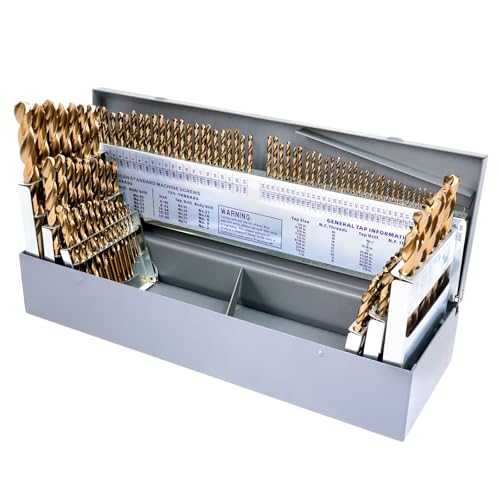 SEDIANAS 115 PCS Cobalt Drill Bit Set
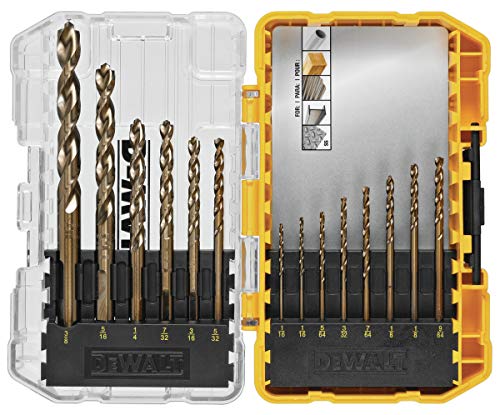 DEWALT DWA1240Cobalt set with adjustable case
 CRAFTSMAN CMAM2214Best overall
Start by looking at how the bit broke
The break itself tells you a lot. A bit that snapped clean in half behaves differently from one with a rounded, chewed tip, and both differ from a drill bit that turned blue or black near the end.
Pick up a broken bit and compare it with the table below. Often one cause stands out right away, and you can fix it without buying anything new.
| What you see | Likely cause | What to change |
|---|---|---|
| Snapped clean across the shank | Brittle bit under sudden torque, often in an impact driver | Use impact-rated bits and a lower speed setting |
| Rounded or chewed tip | Wrong size or profile, or cam-out from too little pressure | Match the bit exactly to the screw and press firmly |
| Twisted or spiraled shaft | Torque beyond what the bit can handle, or a stuck fastener | Drill a pilot hole and lower the clutch setting |
| Blue or black, dull cutting edge | Heat from high speed or a dull bit | Slow down, back out to clear chips, replace dull bits |
| Snapped drill bit stuck in the hole | Side pressure, bent bit or clogged flutes | Keep the drill straight and clear the flutes often |
Using the wrong kind of bit for the tool
A standard drill driver turns steadily. An impact driver adds short, hard rotational hits on top of that turning force. Bits made for a drill driver can be harder and more brittle, so those hits can snap them, especially thin or long ones.
Impact-rated bits are designed with a flex zone or tougher steel to absorb those shocks. If you drive a lot of screws with an impact driver, a set built for that job will last longer. Our best impact driver bit set page compares what is in each set so you can see which ones are built for impact use.
The reverse mistake also happens. Drilling holes with a bit that is not meant for the material, such as a wood bit in metal, wears the cutting edges quickly and pushes you to press harder. That extra force is what finally breaks the bit.
A poor fit between bit and screw
Many broken driver bits start as a bad fit. A Phillips bit in a Pozidriv screw, or a size 2 bit in a size 3 recess, wobbles and slips. Each slip rounds the tip a little more until it can no longer grip, or it snaps when it finally bites.
Check these before you drive the next screw:
Also keep the drill in line with the screw. Driving at an angle puts side load on a thin tip, and that is one of the quickest ways to snap it.
- Confirm the screw head type: Phillips, Pozidriv, square, Torx or hex.
- Seat the bit fully in the recess before you pull the trigger.
- Press firmly along the screw axis so the bit does not climb out.
- Swap in a fresh bit once the tip looks rounded or shiny.
- Use a bit holder or a short bit for tight spots, not a long bit that can flex.
Too much speed, pressure or heat
With drill bits, speed and heat do more damage than most people expect. High speed in hard material makes friction heat, which softens the cutting edge. A softened edge dulls fast, and a dull bit needs more force, which makes more heat. That loop ends with a snapped or burned bit.
Large holes and hard materials call for lower speed. Small holes in softer materials can take more. Let the bit cut at its own pace. If you have to lean your weight into the drill, the bit is dull, the speed is wrong, or the bit is the wrong type.
Clogged flutes are another common culprit. Chips pack into the spiral grooves, the bit binds, and the drill twists it past its limit. Back the bit out every so often to clear the chips, especially in deep holes.
For driving screws, use the clutch. A lower clutch setting stops the drive before torque gets high enough to twist the bit or strip the screw. Drilling a pilot hole also helps a lot in dense wood, since it takes load off both the screw and the bit.
Steel quality and set type
Some sets are simply made from steel that is too soft, which dulls and bends, or too hard and brittle, which snaps. Coatings and finishes can change how a bit wears, but they do not fix a poor fit or poor technique.
Look at what the set actually contains. A set with the right sizes and profiles for your work is more useful than one with a huge number of pieces you will never use. Compare contents, bit lengths and the case design on our best drill driver bit set page.
Your tool matters too. A drill with poor chuck grip lets bits wobble, and a wobbling bit breaks sooner. If your drill is old or the chuck slips, see our best drill comparison, or look at a complete kit on the best drill driver set page.
Specialty bits have their own limits. Large wood-boring bits, for example, need slow speeds and steady pressure. Our best forstner bit set page covers what to look for there.
Safety while you work
A bit that snaps can throw fragments, so wear safety glasses every time. Hearing protection is wise for long sessions, and more so with an impact driver, which is loud.
Clamp the workpiece instead of holding it in your hand, because a bit that binds can spin the material or twist the drill out of your grip. Keep your free hand away from the bit path. Unplug a corded drill or remove the battery before changing bits or working on the chuck. Used bits can be hot, so let them cool before you touch them.
Before drilling into walls, check for hidden wiring and pipes. Hitting a live wire with a metal bit is a shock hazard.
A simple routine to stop the breakage
Run through these steps each time you start a job:
- Choose the bit that matches the fastener or material.
- Use impact-rated bits in an impact driver, and standard bits in a drill driver.
- Set the clutch low and raise it only if needed.
- Start slow, keep the tool straight, and press steadily.
- Clear chips often when drilling deep.
- Replace bits that are rounded, bent or discolored.
Frequently asked questions
Can I use regular drill bits in an impact driver?
Not safely in most cases. Standard bits can be brittle and may snap under the repeated hits. Choose bits marked as impact-rated, and use the right shank type for your tool.
Why do my small drill bits break more often than large ones?
Thin bits flex easily and have little strength against side load. Keep the drill perfectly straight, use light pressure, and clear chips often so the bit does not bind.
Should I use oil or lubricant when drilling metal?
Yes, cutting oil helps reduce friction and heat when drilling metal, which protects the cutting edge. Use it sparingly and wipe up any drips from the work area.
Is it worth sharpening dull drill bits?
It can be for larger bits if you have the right tool and know-how. For small or cheap bits, replacing them is usually simpler. Either way, do not keep using a dull bit, as it overheats and breaks.