Why Does My Cordless Hammer Drill Keep Stopping?
A cordless hammer drill that keeps stopping is most often protecting itself. It is reacting to a weak or hot battery, an overloaded motor, or a stuck bit. Check the battery and contacts first, then your bit, mode and pressure, and only then suspect a worn trigger or motor.
 Hammerhead HAHD075Best overall on specs
 DEWALT DCD806BLightest in the lineup
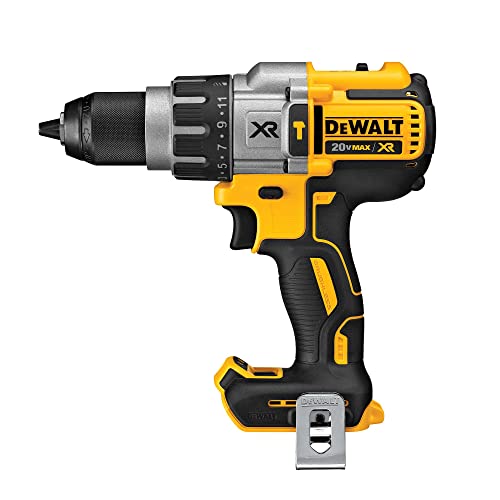 DEWALT DCD996BCordless with BPM listed
Start with the quick symptom check
Most cutting-out problems come from a short list of causes. Match what your drill does to the table below, then jump to the matching section.
Before any checking, remove the battery. A drill that starts unexpectedly while you poke at the chuck or trigger can injure your hand.
| What you see | Likely cause | First thing to try |
|---|---|---|
| Stops under load, restarts after a rest | Overload or heat protection | Let it cool, lighten pressure, check the bit |
| Dies after a few seconds, even with no load | Weak battery or dirty contacts | Charge fully, clean contacts, try another battery |
| Stops and a light flashes | Built-in protection tripped | Release the trigger, wait, restart, read the manual |
| Cuts out when you jiggle the tool | Loose battery fit or worn trigger | Reseat the battery, inspect the pack latch |
| Hammer action works, rotation stalls | Bit jammed or wrong mode | Back the bit out, clear dust, switch modes |
| Nothing at all | Dead battery, charger fault, or tool only listing without a battery | Confirm you actually have a charged battery |
Check the battery and charger first
A tired battery is the top suspect. Hammer drilling pulls far more current than light drilling or screwdriving. A battery that runs a screw gun fine can still sag and shut off the moment the hammer starts striking.
Charge the pack fully, then try it. If you have a second battery from the same system, swap it in. If the drill runs well on the other pack, the first battery is the problem. If it behaves the same, look at the tool.
Also look at the metal contacts on both the battery and the tool. Dust from masonry is fine and conductive in the wrong places, and it can interrupt power. Wipe the contacts with a dry cloth or a soft brush with the battery removed.
- Make sure the battery clicks fully into place.
- Look for cracks, swelling or a warm, damaged case. Stop using a damaged pack and dispose of it at a battery recycling point.
- Charge in a dry spot at room temperature, away from anything flammable.
- Check that your battery matches the tool's voltage class.
Overload and heat protection
Many modern drills have electronics that cut power when the motor draws too much current or gets too hot. That is a feature, not a fault. Hammer drilling into concrete with a dull bit, or leaning hard on the drill, can trip it quickly.
Some tools also shut down on purpose when the body twists too far. The DEWALT DCD806B listing describes an anti-rotation system that senses excessive rotational motion and shuts the tool down, with a red LED showing when it is engaged. If your drill stops when the bit binds, that kind of protection may be the reason.
A bit that binds can twist the whole drill in your hands. Hold the tool with a firm grip and use a side handle if your drill has one. Keep your body out of the line of a sudden twist, especially on a ladder or at height.
Look at the bit, the mode and your technique
The cheapest fix is often at the end of the drill. A dull masonry bit, or a bit that is clogged with dust, makes the motor work harder and trips protection or drains the battery fast.
Use the right bit for the material. Masonry bits with carbide tips belong in hammer mode. Wood and metal bits belong in drill-only mode. Running a hammer action with a wood bit just wastes energy.
- Pull the bit out every so often to clear dust from the hole.
- Let the hammer action do the work. Pushing harder rarely speeds things up.
- Start at a lower speed to set the hole, then increase.
- Check that the chuck is tight. A keyless chuck that slips can feel like stalling.
- Wear safety glasses and hearing protection, and a dust mask when drilling masonry.
When the tool itself may be worn
If the battery is good, the bit is sharp and the drill still cuts out, look at the tool. A worn trigger switch can lose contact and make the drill stop and start. A loose battery latch can do the same when the tool vibrates.
Brushed motors have carbon brushes that wear over time, which can cause cutting out and weak power. Brushless designs do not have brushes, but they still depend on their electronics and switches. The DEWALT DCD996B and DCD806B in our lineup are listed as brushless, as is the DCK kit.
Do not open a drill while the battery is attached. If your drill is under warranty, contact the maker rather than taking it apart. If it is out of warranty and the trigger or switch is the likely fault, a repair shop is safer than guessing.
If you are shopping for a replacement
Sometimes the drill is fine and the job is simply too big for it. Our best hammer drill cordless page compares blows per minute, speed, weight and chuck type. Among the models that list it, BPM runs from 25500 to 52700, so there is a wide range of hammer action.
Read the listing carefully. Several top-ranked products there are corded, and some listings are tool only. The DEWALT DCD806B, for example, is listed as tool only, so you would need to buy a battery and charger separately. The Craftsman V20 kit lists included batteries, though its 1500 RPM and 25500 BPM trail the other cordless models on the page.
If you only drive screws and drill small holes, a standard drill may suit you better. See our best cordless drill comparison. If you regularly drill large holes in masonry and keep running into limits, a corded tool removes battery problems altogether. Our best hammer drill corded page lists those options, including the Hammerhead HAHD075 at 48000 BPM.
Frequently asked questions
Is it bad to keep restarting a drill that stops from heat?
Not in small doses, but it is better to stop and let it cool. Repeatedly forcing a hot tool wears the motor and battery faster.
Can a cold battery cause stopping?
Yes. Lithium-ion packs deliver less power when cold, so a battery stored in a cold garage may cut out under load. Let it warm to room temperature before use.
Should I use hammer mode on wood or metal?
No. Hammer mode is meant for masonry. For wood and metal, switch to drill-only mode and use matching bits.
Can I use any battery in my drill?
Only use batteries made for your tool's system and voltage class. A mismatched or damaged pack can cause poor performance or a safety hazard.