Why Does My Chainsaw Chain Keep Coming Loose?
A chainsaw chain that keeps coming loose is most often a new chain stretching during its first cuts, a chain tightened while hot, or bar nuts that were not fully secured. If it keeps happening, look for a worn guide bar, a worn sprocket or a chain with the wrong drive link count. Work through the checks below in order, because the simple causes are the most common.
 KAKEI 18" 3/8"LP .050" 62DL- German Steel *3Best overall
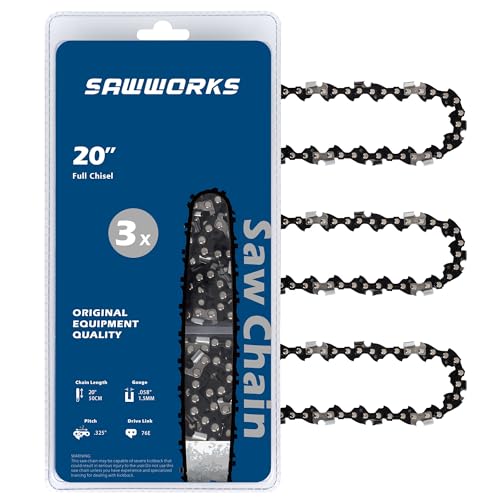 SawWorks 20" 76DL .325" .058"-GermanSteel *3PcsBest for big saws
 GSSHBR 18Inch 3/8 050 62 5PackBest 18 in value pack
The quick answer: start with the simple causes
Most loose chains come from a handful of ordinary causes. A new chain stretches a little as the links seat in and the rivets settle. A chain adjusted while the bar is hot will look right, then slacken as it cools. And bar nuts that are snug but not fully tightened let the bar creep backward under load.
If none of those fit, the cause is usually wear in the bar, the sprocket or the chain itself. The sections below explain how to tell them apart so you fix the real problem instead of tightening the chain again and again.
Why a chain loosens: the most common causes
Chain tension changes for mechanical reasons. Knowing which one applies saves a lot of guesswork. Here are the usual suspects, roughly from most to least common.
- New chain break-in: a fresh chain stretches during its first few tanks of use, so it needs rechecking often at first.
- Tensioning when hot: metal expands with heat, so a chain set tight when warm can hang loose once cool, and one set loose when cold can bind when warm.
- Loose bar nuts: if the nuts holding the side cover are not fully tightened after adjusting, the bar shifts and the chain slackens.
- Worn guide bar: the groove and rails wear down over time, which lets the chain sit lower and feel slack.
- Worn drive sprocket: a chewed sprocket does not grip the drive links properly and can let the chain walk off.
- Stretched or worn chain: an old chain that has been run dry or dull will keep lengthening.
- Wrong chain size: a chain with too many drive links will never tension correctly.
How to set tension the right way
Good tension is a matter of technique. Always shut the saw off first. For a gas saw, let it cool and wear heavy gloves. For an electric or battery saw, unplug it or remove the battery before touching the chain. Make sure the chain brake is off so the chain can move by hand.
Follow these steps each time you adjust:
- Loosen the bar nuts just enough that the bar can slide, but do not remove them.
- Lift the nose of the bar slightly while you turn the tensioning screw.
- Tighten until the chain just touches the underside of the bar with no sag.
- Keep the nose lifted and snug the bar nuts firmly.
- Pull the chain by hand around the bar. It should move freely but not droop.
Match the symptom to the likely cause
Where and when the slack shows up is a useful clue. Use this table to narrow it down before you replace anything.
| What you notice | Likely cause | What to do |
|---|---|---|
| Slack in the first hour of use | Normal break-in stretch | Recheck tension after the first cuts and a few more times |
| Fine when warm, loose when cool | Tensioned while hot | Adjust again with the saw at normal working temperature |
| Chain slackens in one session after setting | Bar nuts not tight | Retighten the nuts firmly with the bar nose lifted |
| Chain sags even when freshly tightened | Worn bar or wrong drive link count | Inspect the bar groove and check chain specs |
| Chain jumps or walks off | Worn sprocket or loose chain | Check the sprocket and replace if worn |
| Chain gets hot and stretches quickly | Low bar oil or dull cutters | Refill oil, check the oiler and sharpen or swap the chain |
Check the chain and bar for wear
If tension keeps slipping after you tighten the nuts properly, look closely at the parts. Pull the bar off and check the groove. If the drive links ride on the bottom of the groove, or the rails are uneven or flared, the bar is worn and a new chain will not solve it.
Look at the sprocket too. A cupped or chewed sprocket can wear a new chain quickly. Also inspect the chain itself. Links with loose or worn rivets, or cutters ground down to stubs, mean the chain is near the end of its life. When you replace it, a fresh chain from our list of the best chainsaw chain options is a simple way to rule out an old, stretched one.
Lack of lubrication speeds all of this up. A dry bar makes heat and friction, which stretches the chain and wears the bar. Check that the oil reservoir is full and that oil is reaching the bar when the saw runs.
Make sure the chain is the right size
A chain that is the wrong size can seem to loosen constantly, because it never seats correctly. Four numbers must match your saw: bar length, pitch, gauge and drive link count. They are usually stamped on the guide bar, and the owner's manual lists them too.
A drive link count that is too high leaves extra slack that the tensioner cannot take up. Pitch and gauge need to match as well, or the chain will not ride properly in the groove. For example, listings in our comparison show different combinations, as the table below shows.
Always check these numbers against your own bar before you buy, rather than assuming a length alone is enough. Our chainsaw chain comparison lists these specs side by side so you can match them.
| Chain (from our comparison) | Bar length | Pitch | Gauge | Drive links |
|---|---|---|---|---|
| KAKEI 18 in 3-pack | 18 in | 3/8 LP | 0.050 in | 62 |
| SawWorks 20 in 3-pack | 20 in | 0.325 | 0.058 in | 76 |
| Fifchall 14 in 4-pack | 14 in | 3/8 LP | 0.050 in | 52 |
| JINFFR 10 in 5-pack | 10 in | 3/8 LP | 0.050 in | 40 |
Keep it from happening again
A few habits prevent most chain slack. Recheck tension often with a new chain. Adjust at working temperature when you can, and always retighten the bar nuts fully. Keep the bar oiled and the cutters sharp, since dull chains work harder and heat up faster.
Having a spare chain on hand also helps. Some listings in our comparison, such as the KAKEI pack, include 3 chains, and others include up to 5, so you can swap one in while the other rests or gets sharpened. Some listings also mention hardened rivets, which are described as helping reduce tension changes, though that is the maker's claim based on published specifications.
For safety, wear eye protection, hearing protection, cut-resistant gloves and sturdy footwear whenever you handle or run the saw. Never adjust a chain on a running saw, and never keep using a chain that is badly slack, because it can derail and strike you.
Frequently asked questions
How often should I check chain tension?
Check before each use, and again after the first few minutes of cutting. With a new chain, check more often during break-in.
Is a slightly loose chain dangerous?
Yes. A loose chain can jump off the bar, damage the saw and cause injury. Stop and fix the tension before continuing.
Should the chain touch the bar when I pull it?
It should sit snug against the underside of the bar and pull around freely by hand. A visible gap with links hanging out of the groove means it is too loose.
Can a dull chain cause it to loosen?
Indirectly. A dull chain makes you push harder and creates more heat and friction, which can stretch the chain and loosen it faster.