Why Does My Automotive Multimeter Not Work? Causes and Fixes
Most automotive multimeters that seem dead or inaccurate have a simple cause: a weak battery, a damaged test lead, a blown internal fuse or the wrong dial setting. Work through those four in order before you suspect the meter itself. If the basics check out, the problem is usually a function-specific setup issue, such as RPM, dwell or current measurement.
 allsun EM133AWidest RPM range
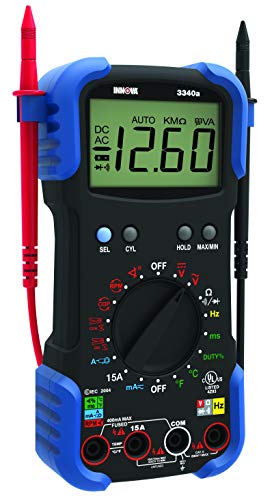 Innova 3340Lightest and simplest
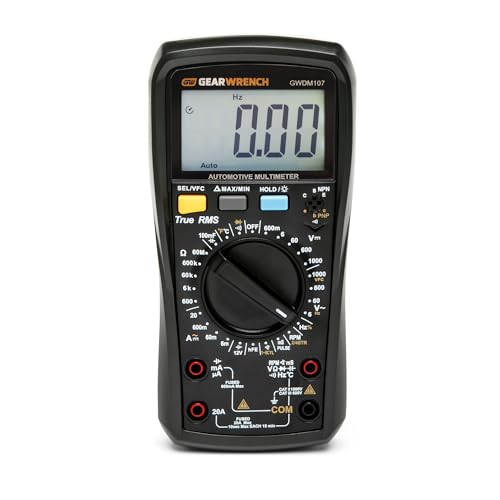 GEARWRENCH GWDM107_1Highest safety rating
Start with the quick checks
Before you open the meter or blame the car, spend two minutes on the checks below. They fix the large majority of complaints, and they cost nothing.
Go in this order, because each step rules out a cause that could fool the next one:
- Confirm the display turns on and the low battery icon is not showing.
- Look at the test leads for cracked insulation, bent tips or a loose plug at the meter end.
- Make sure the leads sit in the right jacks for what you are measuring.
- Set the dial to the correct function and range, then test on a known source such as a healthy 12V car battery.
- If current or continuity readings fail, check the internal fuses.
The display is blank or flickering
A blank, dim or flickering screen almost always points to power. Weak batteries can also cause readings that drift, jump or lock up, so do not trust a meter that shows the low battery indicator.
Meters in our data use different power sources. The GEARWRENCH GWDM107 ships with two AAA batteries, the Innova 3340 runs on a battery, and the FROGBRO 20000 count analyzer is rechargeable. If yours is rechargeable, charge it fully before deciding it has failed.
Also check the auto shutoff. Many meters power down after a period of inactivity, and the AIOMEST AN-770K lists auto power-off after 15 minutes. A meter that seems to die in the middle of a long diagnosis may simply be shutting itself off. Turn the dial off and on again to wake it.
It reads zero, OL or nothing on current or continuity
If voltage readings look fine but amps, continuity or resistance do not work, suspect a blown fuse or a bad lead. This is common after someone measures current with the leads in the amps jack and then touches them across a battery or a live circuit. The meter is built to blow a fuse in that case to protect itself and you.
Many automotive meters use two fuses, one for low current and one for the high-amp jack. The allsun EM133A, for example, lists a 630mA/1000V fuse and a 20A/1000V fast fuse. Replace a blown fuse with the exact type and rating printed on the meter. Never use a wire, foil or a higher-rated fuse, since that removes the protection.
To test a lead, set the meter to continuity, touch the two probe tips together and listen for the beep. Then flex the lead near each end. If the beep cuts in and out, the lead is broken inside and needs replacing.
Wrong settings cause most odd readings
Automotive work adds extra modes, and it is easy to leave the dial on the wrong one. The table below covers common symptoms and what usually causes them.
If a reading is stable but does not match what you expect, check the range and whether the meter is set to AC or DC. Car circuits are DC unless you are testing an alternator ripple or a charger.
| Symptom | Likely cause | What to try |
|---|---|---|
| Display shows OL | Reading is above the selected range, or the circuit is open | Switch to a higher range or auto-range, and check the connections |
| Reads zero volts on a good battery | Dial on AC, leads in the wrong jacks, or a poor ground | Set to DC volts, check jacks, clean the contact points |
| No current reading | Blown fuse or leads in the voltage jack | Check the fuse and move the red lead to the amps jack |
| Readings drift or jump | Low battery or loose lead | Replace the battery, reseat or replace the leads |
| No RPM reading | Pickup not connected or wrong cylinder setting | Check the RPM clamp or lead and the engine type setting |
| Strange dwell or duty cycle numbers | Wrong cylinder count or wrong signal wire | Match the setting to your engine and recheck the wiring |
Engine-specific functions that do not work
RPM, dwell angle, duty cycle and pulse width are what separate an automotive meter from a basic one. They also need the right setup, so a meter that measures volts perfectly can still seem broken on these tests.
RPM is the one people trip over most. Some meters need an inductive clamp that picks up the signal from a spark plug wire. The Innova 3340 lists an inductive RPM clamp in the package, while the AIOMEST AN-770K listing says its inductive clamp is optional and not included. If your RPM mode shows nothing, check that you actually have the pickup your model requires.
Range also matters. The tach ranges in our data run from 0 to 10,000 RPM on the Innova 3340 up to 60 to 20,000 RPM on the allsun EM133A, and the FROGBRO lists 300 to 19,999 RPM. A signal outside the stated range will not read properly. Dwell settings are tied to cylinder count, so set the meter to match the engine, for example the 4, 5, 6 or 8 cylinder options listed for several models.
Current tests need care too. Parasitic drain checks need the meter in series with the circuit, using the high-amp jack. Our guide to the best multimeter for automotive explains why 10A or more of current capability matters here. Meters in our data range from 15A to 20A, and exceeding the limit is a quick way to blow a fuse.
Signs the meter really is the problem
After the battery, leads, fuses and settings all check out, the meter may have failed. Warning signs include a reading that is wrong against a known source, a display that stays blank with fresh power, or physical damage from a drop.
A simple test is to measure a healthy car battery, which should read in the low to mid 12V range when rested, and compare with a second meter if you have one. If your meter disagrees by a large amount on a stable source, stop relying on it.
If you do need a replacement, match it to your work rather than buying on features alone. Our automotive multimeter comparison lists counts, current limits, tach range and safety ratings side by side. A meter with a CAT III or CAT IV rating, like the GEARWRENCH GWDM107 with CAT IV, adds protection against voltage spikes. Many of the meters in our data also list a 1-year or 2-year warranty, so check whether yours is still covered before you replace it.
Safety notes before you probe anything
Never measure resistance or continuity on a powered circuit. Disconnect power first and discharge any capacitors, as one of the listings above also advises.
Do not put the leads across a battery while they are in the amps jack. That creates a near short circuit that can damage the meter and cause burns or sparks.
Keep leads and probes away from belts, fans and hot exhaust parts when the engine is running. Wear eye protection when working around the battery, and remove rings and metal jewelry. Replace any lead with cracked insulation instead of taping it.
Frequently asked questions
Can a dead car battery make my meter seem broken?
No, the meter has its own power source. But a very low car battery can give low readings that look wrong, so compare against another known source if a result seems odd.
Why does my meter work on voltage but not amps?
Voltage uses a different input from current. A blown fuse or leads in the wrong jack is the usual reason, so check the fuse first.
Is a high input impedance meter less likely to give wrong readings?
It is less likely to disturb sensitive modules. A 10 MegOhm input, listed on the Innova 3340, is designed to protect the vehicle's ECU, though it does not fix blown fuses or bad leads.
Can I replace the fuse with any fuse that fits?
No. Use the exact type and rating printed on the meter. A wrong fuse can leave the meter and you unprotected.