Why Does Hardware on White Kitchen Cabinets Turn Yellow?
Hardware on white cabinets usually turns yellow because of cooking grease, heat, sunlight and aging plastic or paint, and the white background makes any shift in color easy to see. Brown, black and green marks come from tarnish, corrosion and worn finishes on metal parts, while fading comes from light and harsh cleaners. Regular gentle cleaning, good ventilation and a durable finish slow all of these down.
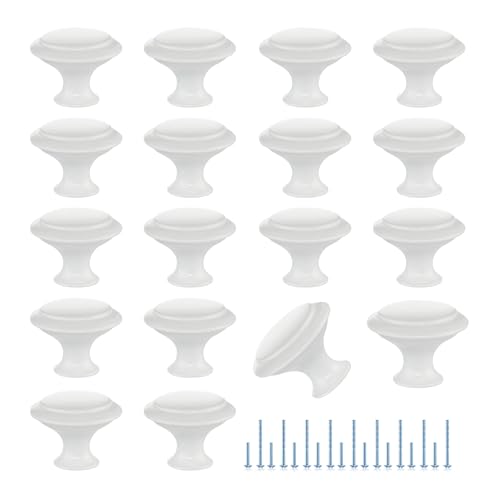 JOY DECOR JDKXYN1BSBest overall
 SWZHAI SW20230525-002Most compact listed knob
 HANIHUA 101AWHSmall aluminum starter pack
Why white hardware and cabinets turn yellow
Yellowing is the most common complaint, and it usually has more than one cause working together. The hardware itself can change, and the cabinet next to it can change, which makes the knob look worse by comparison.
The biggest culprit in a kitchen is airborne grease. Cooking sends tiny oil droplets and smoke into the air, and they settle on surfaces near the stove. Over time that film darkens and turns amber, especially on textured or glossy surfaces where it clings. Hands add skin oils to the same spots every day.
Light and age matter too. Ultraviolet light from windows can slowly change the color of plastic, resin and some paints. Older oil-based paints are known for yellowing in low-light areas, and a painted knob or a painted door can both shift over the years. Heat near the oven or range speeds up these changes.
- Cooking grease and smoke settling as a sticky film
- Skin oils and food residue on frequently touched knobs
- Sunlight and UV exposure on plastic, resin and paint
- Heat and steam near the range and dishwasher
- Aging of the paint or clear coat underneath the hardware
Why hardware turns brown, black or green
Color changes on metal are a different story from yellowing. Here the metal or its coating is reacting with air, water or skin oils.
Brown spots are often early rust or tarnish. Plain steel and iron parts rust when moisture gets past a thin coating, and screws are a frequent starting point. Some brass and bronze finishes also darken to a brown tone as they age.
Black marks usually mean tarnish on brass, copper or silver-toned finishes, or a worn coating that exposes the base metal. Rubbing from fingers can also leave gray or black streaks when a soft metal meets a hard surface.
Green is the classic sign of copper corrosion. Brass and bronze contain copper, and when the protective lacquer wears through, moisture and acids from food or hands can leave green or blue-green deposits. This is most common near sinks and in humid kitchens.
Material matters here. In the product data we compare, the top picks include stainless steel, zinc alloy, aluminum and ceramic. None of the top five lists a formal finish durability rating, so a published material name is a hint about how a part may age, not a guarantee.
Why hardware fades
Fading is different from yellowing. The color gets lighter, patchy or dull rather than warmer. Painted and powder-coated finishes can lose pigment from UV light. Plated and coated metals can wear thin where fingers grip, so the base metal or a lighter layer shows through.
Cleaning habits cause a lot of fading. Abrasive pads, scouring powders, bleach and strong degreasers can strip a coating or dull a glossy surface. A cleaner that works on a ceramic tile may be too harsh for a coated knob.
Quick diagnosis: what you see and what it likely means
Use this table as a starting point. Always test any fix on a hidden spot first, such as the back of a knob.
| What you see | Likely cause | First thing to try |
|---|---|---|
| Yellow or amber film | Grease, smoke and skin oils | Warm water with mild dish soap, then dry |
| Even yellow tint that will not wipe off | Aging plastic, resin or paint | Replace the part; cleaning rarely reverses it |
| Brown spots | Rust or early tarnish | Wipe dry, check screws and coating, replace if flaking |
| Black streaks or patches | Tarnish or worn coating | Gentle cleaning; replace if the finish is gone |
| Green or blue-green crust | Copper corrosion on brass or bronze | Clean gently and keep dry; replace if the lacquer is worn |
| Dull or patchy color | UV exposure or harsh cleaners | Switch to mild cleaners and soft cloths |
How to clean and slow the damage
Start with the gentlest method and move up only if you need to. Harsh products can turn a fixable film into permanent damage.
- Turn off any nearby appliances and let the area cool before cleaning.
- Mix warm water with a few drops of mild dish soap.
- Wipe knobs and pulls with a soft cloth, then rinse with a clean damp cloth.
- Dry everything right away so water does not sit in the screw area.
- Wipe the hardware and the door around it weekly in the cooking zone, and monthly elsewhere.
- Run the range hood during and after cooking, and keep a window or exhaust fan going when steam builds up.
Choosing hardware that holds up
If your hardware is already yellowed, brown or worn, replacing it is often easier than restoring it. When you shop, look at the material, the finish and what the maker actually says about durability. Our best hardware for white kitchen cabinets page puts several options on one spec sheet so you can compare them.
On that page, the leading pack has 18 stainless steel knobs, and the SWZHAI set uses zinc alloy. Both list a white finish with no durability rating stated. Some ceramic listings, such as the Joyangy knobs, describe their surface as non-fading and pair it with rust-resistant brass nuts. That is a seller claim rather than a rating, so treat it as a point to weigh, not proof.
Top Knobs says its finishes withstand daily use and backs them with a lifetime warranty. A written warranty is one of the clearer signals you can find when ratings are missing.
The cabinet matters as much as the knob. If the doors themselves are yellowing, new hardware will not fix the contrast. Our best paint for kitchen cabinets page is a useful place to compare coatings before you repaint. If you are thinking about a warmer, wood-toned kitchen instead, see our best hardware for honey oak cabinets guide.
Safety notes
Never spray cleaner on or near outlets, switches or the range hood's electrical parts, and switch off nearby appliances first. Do not mix cleaning products, especially bleach with ammonia or acid-based cleaners, because the fumes are dangerous. Ventilate the room and wear gloves when using anything stronger than dish soap.
If you remove old hardware, use a stable step stool for upper cabinets, and wear safety glasses if you drill new holes or cut screws to length.
Frequently asked questions
Can I restore yellowed plastic knobs?
Surface grease usually wipes off with mild soap and water. If the plastic itself has changed color from age or light, cleaning will not reverse it and replacement is the practical fix.
Does white paint on knobs yellow faster than white paint on doors?
Not always, but knobs get more skin oil and handling, and any film shows up quickly on them. The cause is usually the paint type and the amount of grease, light and heat around it.
Is it okay to use bleach on white hardware?
It is best to avoid it. Bleach can dull or strip finishes and can corrode some metals. Start with mild dish soap and water.
Will a clear coat protect hardware from tarnish?
A clear lacquer can slow tarnish on some metals, but it wears away where fingers touch. Once it breaks down, tarnish can appear unevenly, so check the maker's care advice first.