Why Gate Hardware Stops Working and How to Fix It
Most gate hardware fails for one of four reasons: the gate has sagged and the latch no longer lines up, the screws have loosened, rust or dirt is jamming the parts, or the latch was never the right type for your gate. Yes, gate hardware can often be repaired. Realign it, tighten or replace the screws, and clean and lubricate the moving parts. Replace it if the metal is bent, badly rusted, or built for the wrong swing direction.
 HTHOOOOOME N-Gate Latch-1Best overall
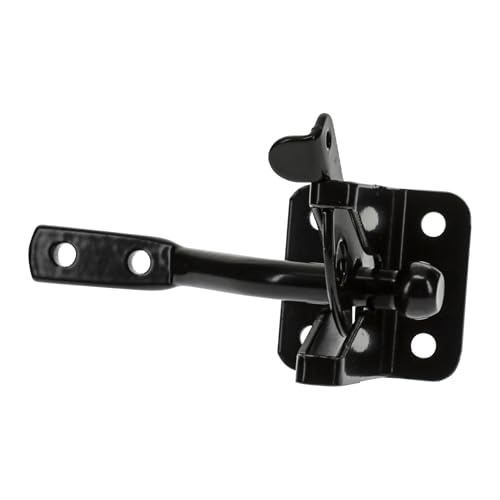 National Hardware N184-861Outswing farm gates
 SANKINS Powder-coated, screws listed
Start with a quick diagnosis
Before you touch a tool, open and close the gate a few times and watch what the latch does. The symptom usually points straight at the cause.
Here is a simple way to match what you see to the likely problem:
- The latch bar hits the post or strike below or beside the catch: the gate has sagged or the parts are out of line.
- The latch catches but wobbles or pulls away from the wood: the screws are loose or the screw holes are stripped.
- The lever sticks, or does not drop back by itself: dirt, rust or a bent part is blocking movement.
- The latch never worked well from day one: it may not match your swing direction, mounting side or gate material.
- The gate swings open on its own: the latch is not fully engaging, or the gate is hanging at an angle.
Fix alignment and sag first
Alignment is the most common cause. A gate that has dropped even a little means the latch and the catch no longer meet in the same spot. Gravity-type latches need the bar to fall cleanly into the catch, so small gaps matter.
Loosen the screws on the latch or the catch, move the part until the bar drops in smoothly, and tighten the screws again. If the gate is sagging, fix that too. Otherwise the latch will drift out of place again within weeks.
Sagging usually comes from loose hinge screws, a sagging post or a gate frame that has racked out of square. Tighten the hinge screws first. If the gate still hangs low, an anti-sag kit with corner brackets can pull the frame back into shape. Our best gate hardware page lists one anti-sag double gate kit with hinge and corner brackets and 2 latches.
Check screws, wood and gate material
Gate hardware takes a lot of small shocks from slamming and wind. Over time the screws work loose, and in soft or old wood the holes strip out. A latch that rattles or leans is often a screw problem rather than a latch problem.
For stripped holes, you can fill them with wood glue and a few slivers of hardwood, let it dry, and drive the screw back in. Or move the latch slightly and drill fresh pilot holes. Using slightly longer screws can help, as long as they do not poke through the other side.
Metal gates need extra care. Several listings on our comparison page say metal or aluminum gates may need harder screws than the ones supplied, and the HILLMASTER 3830 and SANKINS listings both suggest swapping in professional hard screws for those gates. Check the screw count too. One SANKINS listing includes 12 mounting screws, while another SANKINS model and the HILLMASTER 3830 list 6.
Deal with rust, dirt and stiff parts
Outdoor latches live in rain, sun and dust. Rust and grit make the lever stick, and a latch that no longer drops under its own weight will not lock.
Here is a basic cleanup routine:
1. Open the latch fully and brush away dirt, spider webs and loose rust with a stiff brush.
2. Work a little penetrating oil or a silicone-based spray into the pivot point, then move the lever back and forth.
3. Wipe off the extra so it does not collect dust.
4. Check that the bar sits straight and is not bent. A bent bar will not seat in the catch.
Surface rust on a coated latch can often be cleaned and touched up. Deep rust, flaking metal or a bent bar means it is time to replace the part. When you shop, look for a stated finish. The HTHOOOOOME latch lists a black anti-rust coating, the SANKINS and HILLMASTER 3830 latches list black powder coat, and the National Hardware N184-861 lists black plated steel with a WeatherGuard coating. Some listings leave the finish blank, so you cannot judge rust resistance from the specs.
Make sure the latch fits your gate
Sometimes the hardware is not broken at all. It was just the wrong match. The first thing to confirm is the swing direction. Most latches on our comparison page list both inward and outward swing, but the National Hardware N184-861 is listed for outswing gates only. On an inward-swinging gate, it will not work as intended.
Next, check left or right mounting. Many gravity latches are reversible, but not every listing says so. Then check the gap between the gate and the post. The reach of a latch matters here. For example, one listing on our page handles post gaps up to 1-9/16 in. A short latch may not reach across a wide gap.
Size also matters for how the gate is used. The compact SANKINS xy301 is listed at 4.125 in and for pool and baby gates, while the HILLMASTER 3830 is listed at 10 in and can also be worked with a pull string. If the latch is hard to reach, a longer body or a pull-string option can solve the problem.
Repair or replace: a quick guide
Repair is usually the right first move when the hardware is intact. Replace when the damage is structural or when the type was wrong from the start.
This table sums up the choices:
- Replacing a latch is usually a small job. If you want a full set, check the contents list. Only some listings include hinges, such as the HILLMASTER kit with 2 hinges and a latch.
- Our gate hardware comparison puts the specs side by side so you can match swing direction, finish and mounting before you buy.
| Problem | Try this | Replace when |
|---|---|---|
| Latch misses the catch | Loosen, realign, retighten | The catch or bar is bent |
| Loose or rattling latch | Tighten or replace screws, fill holes | Wood around the holes is rotted |
| Sticky lever | Clean and lubricate the pivot | Rust has eaten into the pivot |
| Gate sags | Tighten hinges, add anti-sag brackets | Frame or post is failing |
| Wrong swing or side | Check if latch is reversible | Latch only fits the other swing |
Safety notes
Wear safety glasses when drilling, hammering or brushing rust, since metal flakes and wood chips can fly. Use work gloves on rusty or sharp parts.
If you use a power drill, keep the cord and battery away from wet ground. Do not work on a tall or heavy gate alone. A gate can twist or drop when the hinge screws come out, so have a helper support it or prop it up first.
If the gate guards a pool, play area or a pet fence, test the latch after every repair. A latch that does not close on its own is a safety risk, so do not leave the gate in use until it locks reliably.
Frequently asked questions
Can I use a padlock if the latch keeps failing?
A padlock adds security, but it will not fix a latch that is misaligned or loose. Several latches on our comparison page list padlock support, so use that as an extra layer after the latch works properly.
How often should I check my gate hardware?
A quick look every season is a good habit. Check for loose screws, rust, sag and a latch that drops smoothly into the catch.
Why does my latch work in the morning but not later in the day?
Wood and metal can expand and shift with heat and moisture, which can nudge the gate out of line. If it only fails at certain times, adjust the catch position slightly and check for sag.
Do I need a new gate if the post has moved?
Not always. You can often move the catch to match the new post position. If the post leans badly or is loose in the ground, fix or reset the post first.