Why Does a Light Bulb Get So Hot and Burn Out?
A light bulb gets hot because no bulb turns all its electricity into light. The rest becomes heat, and old-style incandescent bulbs waste the most. Bulbs burn out when heat, voltage spikes, vibration, loose connections or the wrong bulb type wears down the part that makes light. If bulbs keep blowing in one fixture, the fixture or the wiring is often the cause, not the bulbs.
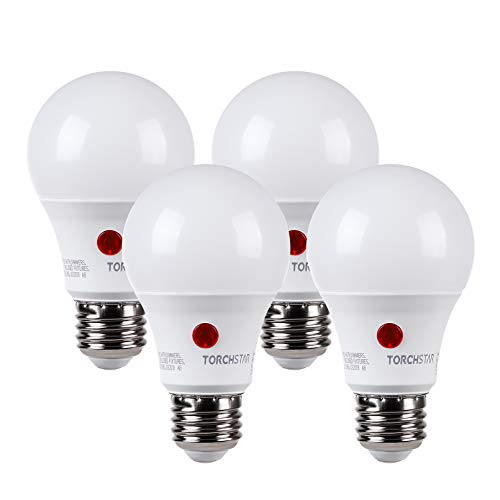 TORCHSTAR A-50408Top-ranked outdoor sensor bulb
 TJOY QASN83+85Best fit for eye comfort
 SETEN LED BULB 10WBrightest A19 in top ten
Why a bulb gets hot in the first place
Every bulb takes in electrical energy and sends out two things: light and heat. Heat is the part you do not want, but you cannot avoid it completely. The only question is how much of the energy ends up as heat instead of light.
In an incandescent bulb, current flows through a thin metal filament until it glows white hot. The glow is the light, but the filament has to get extremely hot to make it, and most of that energy leaves as heat. That is why you can burn a finger on one. Halogen bulbs work the same way at even higher temperatures, so they can run hotter still.
LED bulbs make light in a different way, with a small chip that glows when current passes through it. They produce far less heat for the same light, but they still produce some. That heat gathers at the chip and the electronics in the base, so a good LED bulb moves it away through its housing. An LED can feel warm to the touch, which is normal.
How the main bulb types compare
The table below shows how each common type makes light, how much heat it gives off and what usually kills it. These are general patterns, not specs for a single product.
| Bulb type | How it makes light | Heat output | Common cause of failure |
|---|---|---|---|
| Incandescent | Glowing metal filament | High, most energy becomes heat | Filament thins and snaps |
| Halogen | Hotter filament in gas | High, bulb glass gets very hot | Skin oil on glass, voltage surges, heat |
| CFL | Gas lit by electricity | Moderate | Electronics wear out, frequent switching |
| LED | Chip that glows | Low, but the base can get warm | Driver electronics overheat |
Why bulbs burn out
In an incandescent bulb, the filament slowly evaporates as it glows. Over time it gets thinner in spots, and eventually one spot breaks. That is the normal end of life, and you can see it as a dark patch on the inside of the glass.
In an LED bulb, the chip itself lasts a long time. The part that usually fails first is the small driver circuit in the base that converts household power to the right level. Heat is the main enemy of that circuit. If the bulb sits in a closed fixture where heat cannot escape, the electronics wear out sooner.
Rated lifespans are a guide, not a promise. For example, the TJOY A19 9W bulbs in our lineup list a 15,000 hour lifespan, and the SETEN 10W dusk to dawn bulbs list 25,000 hours. Those numbers assume suitable conditions, so a hot, cramped or badly wired fixture can cut them short.
Why bulbs keep blowing in the same spot
One bulb failing is normal. Bulbs failing again and again in the same socket points to a problem with the setup. Work through these checks, from easiest to hardest:
- Wrong wattage: a bulb that draws more power than the fixture is rated for creates extra heat. Check the maximum wattage label near the socket.
- Enclosed fixture: glass domes and sealed globes trap heat. Use a bulb listed for enclosed fixtures, or switch to a lower-heat LED.
- Vibration: fixtures near a garage door opener, ceiling fan or slamming door shake the filament or the solder joints. Look for bulbs sold for rough service, and check the listing details.
- Loose or worn socket: if the center tab in the socket has flattened, the bulb may not make solid contact. Contact that flickers creates arcing and heat.
- Voltage problems: if bulbs fail across several rooms, or lights dim and brighten when large appliances start, the cause may be in your home wiring. Have an electrician look at it.
- Wrong bulb for the dimmer: older dimmers can clash with LED bulbs and cause flicker or early failure. Use a bulb labeled dimmable and a matching dimmer, or use a plain switch.
- Outdoor moisture: a bulb that is not rated for damp or wet locations can fail when water gets in. Check for a damp or wet rating on the package.
Safety when a bulb is hot or keeps failing
Switch the light off and let the bulb cool for several minutes before you touch it. Halogen and incandescent bulbs can stay hot enough to burn skin well after you turn them off. If the bulb is high up, use a stable ladder on level ground and have someone hold it.
Never use a bulb above the wattage printed on the fixture. This is a fire risk, since the wiring and socket are not built for the extra heat. Also keep fabric, paper and lampshades clear of any hot bulb.
Turn off power at the switch before you touch the socket, and ideally at the breaker if you are looking inside it. If you see scorch marks, smell burning plastic or hear buzzing, stop and call a licensed electrician. Do not keep trying new bulbs.
Picking a bulb that runs cooler and lasts longer
The easiest fix for a hot bulb is to swap it for an LED of the same brightness. Look at the watts and lumens together. The TJOY A19 in our lineup gives 800 lumens from 9 watts and is listed as a 60W equivalent. The Sunco PAR38 flood gives 1250 lumens from 15 watts and is listed for temperatures from minus 4 to 104 degrees F, which suits an outdoor fixture.
If you want comfortable light as well as a cooler bulb, our best light bulbs for health page compares flicker claims, color temperature and CRI side by side. It also notes which bulbs are meant for outdoor use only, so you do not put a sensor bulb in the wrong place.
For a fixture that shakes, such as an opener, see our best light bulb for garage door opener comparison. Match the base type, size and wattage limit to your opener's manual, since some openers have a maximum bulb size.
Frequently asked questions
Is it normal for an LED bulb to feel warm?
Yes. LEDs make much less heat than incandescent bulbs, but the base still warms up while it runs. If it is too hot to hold for a moment, check that the fixture is not enclosed and that the bulb is not above the wattage limit.
Does turning a light on and off shorten bulb life?
It can, mostly for incandescent and CFL bulbs. The sudden jump in temperature or current adds stress. LEDs handle switching better, though every bulb still wears out eventually.
Can I touch a halogen bulb with my fingers?
Avoid it. Oil from skin can leave a spot on the glass that gets extra hot and can make the bulb fail early. Use a clean cloth or the packaging when you install one.
Why do dusk to dawn bulbs seem to fail sooner?
They run every night, so they log many more hours than a normal bulb. Their sensors also need to see daylight, so do not cover them. Check that the bulb is rated for your fixture and location.