Why Does a Garage Fire Extinguisher Smell So Bad?
A sealed, healthy fire extinguisher should have little or no smell. A sharp, chemical or ammonia-like odor usually means dry powder has escaped, either from a leak or a past discharge, or the smell is coming from something else in the garage. Check the pressure gauge and look for powder residue first, then rule out fuel, damp and wiring.
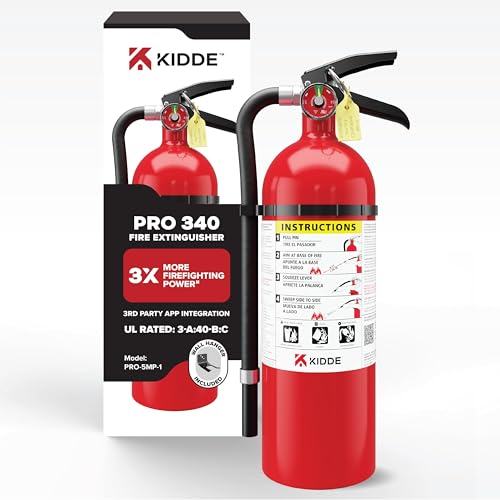 Kidde PRO-5MP-1Best overall
 Kidde FA110GLightest in the lineup
 Kidde KD143-210ABC12-year life with mount
The short explanation
Most garage extinguishers are ABC dry chemical units. They hold a fine powder under pressure, and that powder is what you smell when it gets into the air. Our comparison data lists monoammonium phosphate for the Kidde Living Area 4 lb model and sodium bicarbonate for the First Alert Garage 10-B:C. Several other models list the agent only as "Other."
Monoammonium phosphate can give off a sharp, acrid, ammonia-like odor when it is airborne or damp. Sodium bicarbonate is less pungent, but a cloud of it still smells dusty and chemical. If you notice the odor near your extinguisher, powder is probably escaping or has already been released.
The other possibility is that the extinguisher is innocent. Garages hold gasoline, oil, paint, damp cardboard and overheated electrical parts, and any of them can smell bad. The sections below help you sort out which one you have.
Common reasons the extinguisher itself smells
Dry powder only reaches the air when the pressure seal is broken in some way. Here are the usual causes.
- A past discharge: Someone may have pulled the pin or bumped the handle, even briefly. Fine powder can settle on shelves, tools and the floor and keep smelling for days.
- A slow leak: A worn valve, a damaged hose or a dented cylinder can let small amounts of powder or propellant escape. Check the pressure gauge. If the arrow is outside the green zone, the unit has lost charge.
- Powder residue around the valve: A white, yellow or tan crust near the nozzle or hose is a sign that agent has been escaping.
- Age and wear: Our comparison data lists service lives of 12 years for the Kidde Basic 110 and the Kidde 4 lb model, and a six-year guarantee on some others. An old unit with a worn seal is more likely to leak.
- Damage from heat, cold or impact: An unheated garage swings between extremes. Our data lists operating ranges such as -22°F to 140°F for some models, and a unit stored outside its range may stress its seals.
When the smell is not the extinguisher
Before you blame the extinguisher, step back and think about what the odor reminds you of. A garage is full of other sources, and some of them matter more than a leaky cylinder.
Gasoline, solvent or paint fumes smell sweet and heavy. Damp or moldy smells are musty and earthy. Overheated wiring or a failing outlet gives a sharp, hot-plastic or fishy smell, and that one is serious.
The table below compares the common smells and what to do about each.
| What it smells like | Likely source | What to do |
|---|---|---|
| Sharp, acrid, ammonia-like or dusty | Dry chemical powder from the extinguisher | Check the gauge and valve for residue, ventilate, and get the unit serviced or replaced |
| Sweet, heavy, strong fumes | Gasoline, solvents or paint | Remove or seal containers, ventilate, and keep ignition sources away |
| Musty, earthy | Damp, mildew or wet cardboard | Find the moisture source and dry the area |
| Hot plastic, burning or fishy | Overheating wiring, outlet or charger | Switch off power at the breaker if it is safe to do so, and call an electrician or 911 if you see smoke |
| Rotten egg or sulfur | Natural gas or propane leak | Leave the area, avoid switches, and call the gas utility or 911 from outside |
What to do if the extinguisher is the source
Start by looking, not touching. Read the pressure gauge. Most of the units in our comparison use a color-coded gauge, and a green arrow means the unit is charged. A needle outside the green zone means the extinguisher should not be trusted.
Next, look for powder on and around the unit. Do not squeeze the handle to see whether it still works. A test discharge empties the cylinder and fills the garage with powder.
- Open the garage door and let fresh air move through before you handle the unit.
- Check the gauge, the pin, the valve and the hose for damage or residue.
- Carry the unit out gently if it needs to move, holding the cylinder rather than the handle.
- Clean up loose powder with a damp cloth or a vacuum designed for fine dust, and wear a dust mask and gloves while you do it.
- Replace the extinguisher if the gauge is out of the green, the body is dented or the pin is missing.
- If your unit is rechargeable, have a certified technician service it. Models such as the Kidde Pro 340 and the Amerex B500 are described as rechargeable after professional servicing.
Safety notes for powder and fumes
Dry chemical powder is not meant to be breathed. Inhaling it in a small or poorly ventilated space can irritate the nose, throat and lungs, and it can bother the eyes and skin. People with asthma or other breathing problems should stay out of the area until it has aired out.
Wear safety glasses and a dust mask when cleaning up powder. Keep children and pets away from the affected area.
If the odor smells like burning wiring, treat it as a possible electrical fire. Do not poke at the outlet or charger. Cut power at the breaker if you can reach it safely, leave the garage, and call 911 if you see smoke or heat. If you smell gas, do not flip switches or use a phone inside. Go outside first.
Never try to repair a pressurized cylinder yourself. Pressure can release suddenly if the valve is tampered with.
How to keep a garage extinguisher from smelling in the first place
Good placement and basic upkeep prevent most problems. A wall mount keeps the unit off the floor, away from bumps and moisture, and away from kicked-over paint cans. Several units in our comparison include a mount, though the material differs. The Kidde Pro 340 lists a metal wall hanger, while the Kidde 4 lb lists a plastic one.
Mount it near the exit at a height you can reach, and check the gauge once a month. A quick look takes seconds and catches a slow leak early. Also make sure the extinguisher fits your garage conditions. If your garage gets very cold or very hot, check the label or listing for an operating temperature range before you buy.
If you are replacing a unit that has lost charge, a rating of Class A, B and C is the right match for wood and paper, fuel and oil, and live wiring. Our best fire extinguisher for garage page lays out agent weight, UL rating, size and mount details side by side, so you can see which models fit your space.
Keep in mind that a 10-B:C unit has no Class A rating, so it leaves wood and paper fires uncovered. If you want a deeper look at ratings and sizes, our garage extinguisher comparison covers it in one place.
Frequently asked questions
Is the smell from a fire extinguisher toxic?
The powder is not meant to be inhaled and can irritate the nose, throat and eyes, especially in a closed space. Ventilate the area and avoid breathing it in. If someone has trouble breathing, get medical help.
Can I keep using an extinguisher that has a faint chemical smell?
Not until you check it. A smell suggests powder may be escaping, so inspect the gauge and valve. If the arrow is outside the green zone or you see residue, replace or service the unit.
Does a rechargeable extinguisher smell less?
Not by itself. Rechargeable means a technician can refill it after use. Smell depends on whether the seal and valve are holding pressure.
How do I get the powder smell out of my garage?
Open the doors, run fans, and wipe surfaces with a damp cloth. Vacuum fine dust with a suitable vacuum rather than sweeping, and wear a dust mask and eye protection while you work.