Why Does a Cordless Caulk Gun Not Work? Causes and Fixes
Most caulk gun problems come from a blocked nozzle, an unpunctured cartridge seal, a rod that is not engaged, or a thrust ratio that does not suit the material. Also check whether your gun is really cordless: none of the top ten guns on our comparison page run on a battery, so the problem may be a manual gun that was never meant to power itself. Work through the checks below in order and most guns start flowing again.
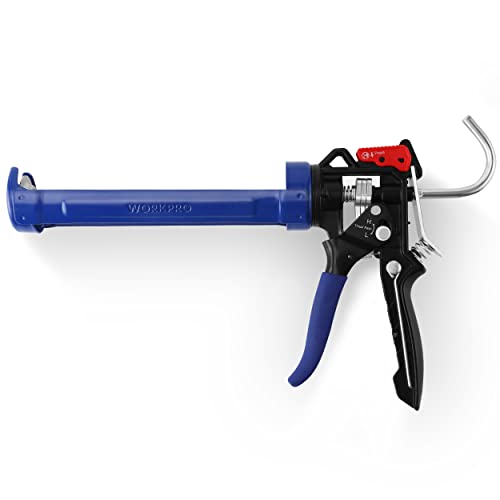 WORKPRO W024006Best overall
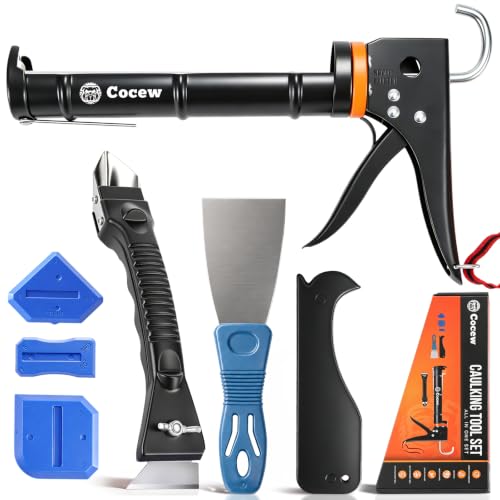 Cocew scraper varKit with scraper included
 Newborn 250Steel frame, 18:1 thrust
First, confirm what kind of gun you have
Many guns sold or described as "cordless" are actually manual. A true cordless caulk gun has a battery and a motor that pushes the plunger for you. A manual gun needs hand squeezing every time. If nothing happens when you press a button, there may be no motor at all.
This is a common mix-up. On our best cordless caulk gun page, none of the top ten products run on a battery. They are all manual guns. If you expected a motor and the gun has only a trigger and a rod, you have a manual model, and the fixes below apply.
Quick checks when nothing comes out
Before you blame the gun, rule out the cartridge. Most no-flow problems start there, not in the tool.
Try these steps in order:
- Cut the nozzle tip at an angle. A tip cut too small makes the gun feel stuck.
- Puncture the inner foil seal with the long wire or seal puncture tool. Without this step, the sealant has no way out.
- Check that the cartridge sits flat in the frame with the rod behind it, not tilted.
- Make sure the plunger plate is pushing on the back of the cartridge and not on the cartridge edge.
- Squeeze slowly and steadily rather than in short jerks.
- Look for dried caulk inside the nozzle. If the tube is old, the sealant may have cured inside it.
Why a caulk gun jams
A jam usually means the rod is not moving freely or the sealant is too thick for the gun. The rod is the metal shaft that pushes the plunger. If it bends, collects dried caulk, or fails to grip, the gun stops working.
On a ratchet rod gun, the teeth can slip or catch. Cured caulk packed in the rod path adds to the trouble. On a smooth rod gun, the spring-loaded thumb release must be set correctly or the rod will not advance. Several guns on our comparison page use a smooth rod, which the listings say needs less effort and makes less noise than a ratchet rod.
Thrust ratio also plays a part. It describes how much force the trigger turns into pushing power. A low ratio on a thick adhesive makes the trigger feel locked. For example, the Red Devil 3989 lists a 26:1 thrust ratio and 950 pounds of force for thick materials. A gentler gun with an 8:1 ratio suits thin sealants better and is less suited to thick adhesives.
Why a caulk gun leaks or keeps dripping
Caulk keeps flowing after you stop squeezing because pressure is still on the cartridge. Releasing that pressure is the job of the thumb release or drip control. Leaks around the back of the tube can also point to a cartridge that is loaded wrong or a damaged plunger plate.
Use the table to match the symptom to the likely cause.
| Symptom | Likely cause | What to try |
|---|---|---|
| Caulk oozes after you stop | Pressure still on the cartridge | Release the thumb latch or use the drip control setting |
| Caulk leaks at the back of the tube | Cartridge loaded crooked or plate damaged | Reload the cartridge flat and check the plate |
| Caulk comes out in thick blobs | Nozzle cut too large | Use a new tube or cut a smaller opening next time |
| No flow, trigger feels hard | Seal not punctured or tip clogged | Puncture the seal and clear the nozzle |
| Rod will not advance | Dried caulk or bent rod | Clean the rod path and replace the gun if bent |
If you really do have a battery-powered gun
A battery gun that will not run has different suspects. Check that the battery is charged and seated fully in the handle. Look at the contacts for dirt or corrosion. Make sure any speed or direction switch is in the forward position, since a reverse setting will pull the plunger back.
Safety note: take the battery out before you clear a jam, change a cartridge or clean the gun. A motor that starts unexpectedly can pinch fingers or spray sealant. Wear safety glasses, because pressurized sealant can spurt when you free a clog, and never point the nozzle at your face or anyone else.
Keep in mind that we compare published specifications, so for a specific battery model, follow the maker's manual for resets and troubleshooting steps.
Cleaning and storing your gun to avoid repeat problems
Wipe the rod and plunger plate after each job, before the sealant cures. Store the gun without a half-used tube loaded, since the sealant can harden around the plunger. If you stop mid-job, release the pressure first so the tube does not keep leaking.
Work in a ventilated space, since some sealants give off strong fumes. Wear gloves, and use a stable ladder when you caulk overhead. A ladder hook, which several guns list, keeps the tool within reach so you do not climb with it tucked under an arm.
When to replace the gun instead of fixing it
A bent rod, a cracked frame or a worn plate is usually a sign to replace the gun. Use the specs to choose one that fits the work you do.
Here are the ones that matter most:
- Thrust ratio: pick a higher ratio, such as 26:1, for thick adhesives, or a lower one for thin sealants.
- Switchable thrust: the WORKPRO W024006 lists 18:1 and 9:1 settings, and the DEKOPRO lists 20:1 and 10:1, so one gun covers more materials.
- Drip control: look for a button or lever that stops flow between passes. The Dripless ETS2000 lists a 12:1 ratio and retracts after each trigger pull to prevent dripping.
- Weight: the WORKPRO W024006 lists 0.625 lb, which helps on ceilings and trim.
- Built-in tools: a spout cutter and seal puncture tool cover the first two quick checks, and the Newborn 250 lists both.
Final tips
Start with the simple checks: nozzle cut, seal punctured, cartridge seated. Then look at the rod and the thrust ratio. If your gun is a manual model sold as cordless, no amount of troubleshooting will add a motor.
If you want to compare manual guns by thrust, weight and drip control, see our cordless caulk gun comparison. It puts the specs on one sheet so you can pick a gun that suits your sealant.
Frequently asked questions
How do I clear a clogged caulk gun nozzle?
Remove the cartridge, then push a long wire or nail through the nozzle to break up cured caulk. If it stays blocked, cut off the tip further back or fit a new nozzle. The Cocew kit lists a through-needle for this job.
Why does the trigger feel very hard to squeeze?
The sealant may be thick for the gun's thrust ratio, the tip may be cut too small, or the seal may still be intact. Check those first, then consider a higher ratio gun for thick materials.
Can I fix a bent plunger rod?
Light bends sometimes straighten by hand, but a rod that stays crooked will keep sticking. Replacing the gun is usually the safer choice.
Is a smooth rod better than a ratchet rod?
Listings for the smooth rod guns on our page say they need less effort and run quieter than ratchet rods. Ratchet guns can still work well when clean and undamaged.