Why Does a Bench Grinder Vibrate or Make Noise?
Most bench grinder vibration and noise comes from the grinding wheels (out of round, glazed, loaded with metal, or mounted badly), worn bearings, or a loose mounting. Pull the wheels off and run the motor alone to learn whether the wheels or the machine are at fault. Then fix the cause, or replace the part, before you grind again.
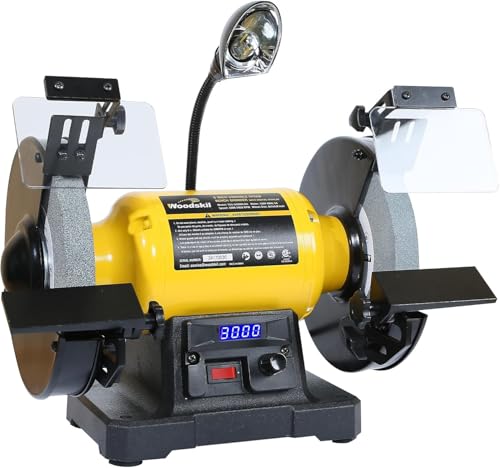 Woodskil TDS-G200VLGABest overall
 WEN BG625VVariable speed with warranty
 Greteefor NS-SLJ-01-3Cast iron variable speed
The short list of likely causes
A bench grinder is a simple machine: a motor shaft with a wheel on each end. Because the wheels spin fast, even a small imbalance shows up as shaking or a loud hum. Almost every problem traces back to one of a few spots.
Here are the usual suspects, roughly in the order most people find them:
- A wheel that has worn out of round or has a groove cut into its face
- Glazed or clogged wheel surfaces, where metal or gunk has built up
- Wheel not seated properly on the shaft, or flanges and nuts that are loose or dirty
- A cracked or damaged wheel (this one is dangerous)
- Worn motor bearings
- A loose bench, stand, or mounting bolts
- A bent shaft or damaged motor, which is less common but possible
- A work rest or spark guard set too close and touching the wheel
Step 1: Work out if it is the wheels or the machine
The quickest way to narrow things down is to remove the variable. Wheels are the most common culprit and the cheapest to fix, so check them first.
Unplug the grinder before you touch anything. Then follow these steps:
- Unplug the grinder and let everything stop completely.
- Remove the eye shields, spark guards, and wheel covers as needed to reach the wheel nuts.
- Take the wheels off, noting which way the flanges and any paper blotters sit.
- Plug the grinder in, stand to the side, and run the motor with no wheels for a short time.
- Listen and feel. If it runs smooth and quiet, the wheels or their mounting were the problem. If it still shakes or rumbles, the problem is in the motor, bearings, shaft, or the bench.
Wheel problems and how to fix them
Wheels wear unevenly. Grinding in one spot, pressing hard, or using the side of the wheel can cut grooves and leave the wheel out of round. Once that happens, each rotation hits the work with a bump, and you feel it as vibration.
A wheel dresser can restore a worn but sound wheel by trimming the face flat and round again. Dressing also removes glazing and loaded-in metal, which cause chatter and burn your workpiece. If dressing does not smooth things out, or the wheel has become very small or thin, replace it.
Never use a wheel that is chipped, cracked, or has been dropped. To check a wheel, hang it loosely from a finger or a dowel and tap it gently with a non-metal handle. A sound wheel gives a clear ring. A dull thud suggests a crack. When in doubt, throw it out.
Mounting matters too. The wheel bore must match the shaft, the flanges should be clean and flat, and the nut should be snug but not overtightened. Overtightening can crack a wheel. A wheel that sits slightly off-center will wobble no matter how good it is.
Machine problems: bearings, shaft, and mounting
If the grinder still shakes without wheels, look at the machine itself. Worn bearings are the classic cause on older grinders. You will often hear a rumble, grinding, or squeal that gets worse over time, and you may feel play if you try to wiggle the shaft side to side with the power off and unplugged.
Bearing replacement is possible on many grinders, but it takes the right tools and care. Depending on the model, replacing the motor or the whole grinder can make more sense than repairing it. If you are shopping for a replacement, our best bench grinder comparison lays out published specifications side by side so you can see what fits your work.
A bent shaft is harder to spot. Spin the shaft by hand (unplugged) and watch the end for wobble. A visible wobble means the shaft or motor needs professional repair or replacement.
Also check the basics: loose bolts on the motor housing, a loose base, or a cooling fan that has shifted or is rubbing the cover. These are quick checks that sometimes solve the whole problem.
What different noises usually mean
Sound can tell you a lot. Use this table as a starting point, then confirm with the checks above.
| Sound or feeling | Likely cause | What to try |
|---|---|---|
| Rhythmic thumping or wobble | Out-of-round or grooved wheel | Dress the wheel or replace it |
| High-pitched squeal while grinding | Glazed wheel or wrong wheel for the metal | Dress the wheel, use the right wheel type |
| Rumbling or growling with no load | Worn bearings | Inspect and replace bearings or the unit |
| Rattling or buzzing | Loose guards, rests, or bolts | Tighten everything, check clearances |
| Scraping or ticking | Wheel touching a guard or work rest | Reset the gaps, unplug first |
| Whole bench shakes | Poor mounting or light bench | Bolt down firmly, add a mat or heavier base |
Calming vibration through the bench
Sometimes the grinder is fine and the surface is amplifying the motion. A light or hollow bench, a table on an upper floor, or a loose stand can turn minor vibration into a loud drone.
Bolt the grinder to a solid bench or a dedicated stand. A rubber mat or vibration-damping pad under the base can help absorb some of the energy, as long as the grinder stays firmly secured and does not rock. Keep the bench itself stable by tightening its legs and joints, and avoid placing the grinder on a thin or springy top.
A heavier base also helps. If your setup moves around when you push work against the wheel, fix that first. A stable grinder is easier to control and safer to use.
Safety notes before you fix anything
Always unplug the grinder before removing guards, wheels, or covers. A grinder that starts by accident while your hands are near the wheel can cause serious injury.
Wear safety glasses or a face shield and hearing protection whenever the grinder runs. Sparks, grit, and wheel fragments can fly, and the noise can be tiring and harmful over time. Keep sleeves and long hair secured, and avoid gloves that could catch.
After mounting a new wheel, stand to the side and let the grinder run for a short time before you start working. This lets any hidden flaw show itself away from your body. Keep the work rest close to the wheel, with a small gap, so work cannot get pulled in.
If you find a cracked wheel, a bent shaft, or damage you cannot explain, stop using the grinder. If you are considering a replacement, check the specifications on our bench grinder comparison for wheel size, motor details, and included safety features.
Frequently asked questions
Is it normal for a new bench grinder to vibrate?
A little hum is normal, but strong shaking is not. A new wheel that is poorly seated, or a loose bench, can cause it. Recheck the mounting and the wheel, and dress the wheel if needed.
Can I balance a grinding wheel myself?
Dressing the wheel to be round often helps. For serious imbalance, replace the wheel. Some setups use balancing accessories, but a damaged wheel should never be kept in service.
Does the type of wheel affect noise?
Yes. A wheel that is too hard or too soft for the metal can glaze or wear quickly, which leads to squealing and chatter. Match the wheel type to the material you grind.
How often should I dress my wheels?
Dress them whenever the face looks grooved, glazed, or clogged, or when the grinder starts to chatter. There is no fixed schedule, since it depends on how much and how hard you grind.