Why Do Work Gloves Have a Cancer Warning?
Most work glove cancer warnings come from California's Proposition 65, a law that requires businesses to warn buyers when a product may expose them to listed chemicals. The warning does not mean the gloves are unsafe to wear. It means the maker either found a listed chemical in the product or chose to warn to stay on the safe side.
 HANDLANDY 5972Best overall
 JUMPHIGH Washable mechanical work pick
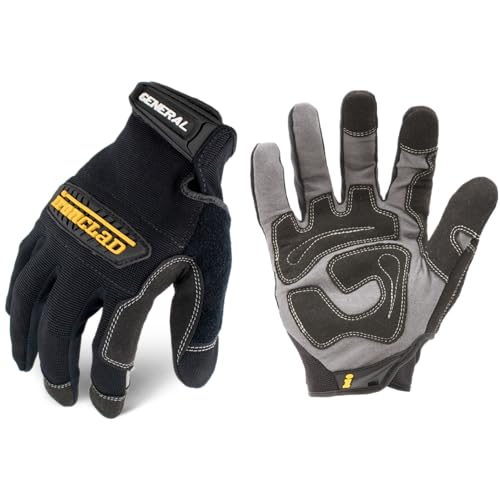 Ironclad GUG-04-LDouble-stitched shop glove
What the warning usually says
You will typically find it on the package, a hang tag or a sticker. The wording is close to this: the product can expose you to a chemical known to the State of California to cause cancer, birth defects or other reproductive harm. Many labels add a yellow triangle with an exclamation mark and a link to the state's warning website.
Notice the phrase "can expose you." That is a statement about possibility, not a measurement of how much of anything is in your gloves or how much reaches your body. The label also does not say which glove material, dye or coating is involved unless the maker chooses to name the chemical.
Where the warning comes from: Proposition 65
Proposition 65 is a California law passed by voters in 1986. The state keeps a public list of chemicals it links to cancer, birth defects or reproductive harm, and it updates that list over time. A business that sells products in California must give a clear warning if its product exposes people to a listed chemical above the law's safe levels.
There is an important catch. Companies can skip the warning only if they are confident exposure stays below those levels. Proving that takes testing and paperwork, and a mistake can lead to lawsuits. Many manufacturers find it simpler to print the warning on everything they ship nationwide. That is why you can see the same label on gloves bought in any state.
So the warning is partly a chemical alert and partly a legal precaution. The label alone cannot tell you which of the two applies to the pair in your hand.
Why gloves in particular
Work gloves are made from several materials, and each step of manufacturing can involve chemicals that show up on regulators' lists. The exact source depends on the glove, but these are the usual areas of concern:
- Leather and synthetic leather: tanning, finishing and the plastic layers in synthetic leather can use chemicals that appear on the list.
- Coatings: polyurethane and nitrile coatings on knit gloves are applied using solvents and additives. Some solvents used in polyurethane production have drawn attention from regulators.
- Dyes and pigments: colored fabric, printed logos and rubberized grips can carry trace chemicals.
- Plastics and rubber: foam padding, thermoplastic rubber knuckle guards and stretch panels can contain additives such as plasticizers.
- Packaging and adhesives: glues used on labels, stitching reinforcements and boxes can add to the total.
Does the warning mean your gloves are dangerous?
Not by itself. The law sets its warning triggers very low on purpose, so a label can appear even when exposure is small. A warning also does not rank one product as worse than another. A glove without a label may simply be sold by a company that decided not to print one, or one that is not sold to California buyers.
That said, the label is not meaningless. It tells you a listed chemical is a possibility, and gloves touch your skin for hours, often while hands are sweaty or cut. Skin contact is the main route here. Some people also get irritation or rashes from coatings and dyes, which is a separate issue from cancer risk but worth watching for.
The warning data is also not part of the published specifications we compare. Our listings cover things like palm material, padding and washability, so we cannot say which gloves carry a warning. Check the packaging or the maker's website for that.
How to lower your exposure
You do not need to give up wearing gloves. Their job of preventing cuts, scrapes and burns is real, and a few habits keep chemical contact low:
- Air out new gloves before first use if they have a strong smell, and follow the maker's washing directions. One washable glove listing in our data says to machine wash cool and air dry to keep the size consistent.
- Wash your hands with soap and water after you take the gloves off, and before you eat, drink or touch your face.
- Do not chew, wipe your mouth with or store food near work gloves.
- Stop using any glove that causes redness, itching or a rash, and ask the maker what it is made from.
- Replace gloves that are cracked, shedding coating or falling apart, since worn material releases more particles.
- Keep gloves away from children and pets, and do not reuse worn-out work gloves for other jobs.
What to check when you shop
If you want fewer surprises, read the product page and packaging before you buy. Our best mechanic gloves page lines up palm material, coating, closure and washability, which makes it easier to see what each glove is built from. For example, one listing there describes a polyurethane coated nylon knit palm, while others use synthetic leather or synthetic suede.
Use the table below as a quick checklist. It covers what a spec sheet can and cannot tell you about this topic.
| What to look at | What it tells you | What it leaves out |
|---|---|---|
| Palm material | Whether the glove is leather, synthetic leather, suede or coated knit | Which chemicals were used to make or finish it |
| Coating type | Polyurethane or nitrile on knit gloves | Solvents or additives in the coating process |
| Washability | Whether the maker allows machine washing and how | How much residue is already present |
| Warning label | Whether the maker flagged a listed chemical | Which chemical, or how much exposure there is |
| Maker contact info | A way to ask about materials | Nothing, unless the company answers |
Safety notes for real work
A work glove with a cancer warning is not a chemical glove. Do not assume any mechanic or utility glove will protect you from solvents, fuel, brake cleaner or strong acids. Those jobs need gloves rated for the specific chemical, and the glove maker's guidance comes first.
If you handle fluids often, pair gloves with good ventilation and read the safety data sheet for the product you are using. Another example: one coated glove in our data is listed as not recommended for heavy oily or wet conditions, so check each pair against how you actually use it. You can compare other options on our mechanic gloves comparison page.
Frequently asked questions
Is the warning only for California buyers?
The law applies to products sold in California, but many makers print the label on all packaging because separate versions cost more to produce. You may see it anywhere in the country.
Should I throw away gloves that have the warning?
Not necessarily. The label signals a possible exposure, not proof of harm. Follow the maker's care directions, wash your hands after use, and replace gloves that are worn or cause skin reactions.
Do gloves without a warning contain none of those chemicals?
Not always. A missing label can mean the maker judged exposure to be low, or that the product is not sold in California. It does not guarantee the absence of listed chemicals.
Who can tell me what is in my gloves?
The manufacturer is the best source. Contact the company with the model name and ask for material information or a safety data sheet. A reputable maker should be able to answer.