Why Do Wood Gate Hinges Come Loose or Break?
Wood gate hinges usually come loose because the screws lose their grip in the wood, either from rot and swelling or from constant leverage under the gate's weight. They break when the hinges are too small or too weak for the gate, or when rust eats into the metal. Fixing the cause, not just tightening screws, is what keeps them from failing again.
 Ajingff MJMJL02Best overall
 Weigreat WGZXMJL03Matches top load and length
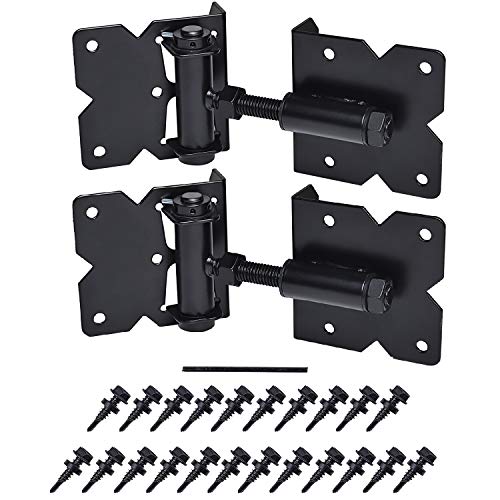 SANKINS SANKINS_B0897CH8RHAdjustable self-closing spring
The short version: weight, leverage and weather
A gate hangs off its hinges like a lever. The weight pulls down, and the top hinge is pulled away from the post while the bottom hinge is pushed in. Every swing, slam and gust of wind adds to that load.
Wood also changes over time. It swells when wet, shrinks when dry and can soften as it ages. Screws that were tight in spring can be sitting in a looser hole by the following winter.
Most failures come down to a few causes: screws that lost their bond with the wood, hinges that are too small, a frame that has pulled out of square, or metal that has rusted or bent. The sections below take each one in turn.
Screws pulling out of the wood
This is the most common reason hinges come loose or come off. The screw hole gets wider, the threads have less to grip, and the hinge starts to wobble. Once it wobbles, it works the hole even wider.
Several things cause it. Rot or deteriorating wood around the screw is one. Screws that are too short for the board are another, since they only grab the surface. Using metal screws in timber is a third. Some hinge packs include self-tapping metal screws meant for vinyl, so you need to buy wood screws separately. Our best wood gate hinges page flags which listings include wood screws and which do not.
Hinges fixed near the end of a board or into end grain also hold poorly, because the wood can split along the grain.
Hinges that are too small or too weak for the gate
A short hinge puts all of the gate's weight on a small patch of wood. A longer strap spreads that weight over more of the board, so each screw carries less. In the listings we compare, the longest hinges are 13 in, while the shortest are 3.5 in. Those short ones suit light gates and small doors, not heavy timber.
Load rating matters too. Only four products on our wood gate page list a load capacity per pair, and the listed range is 70 lb to 1000 lb. If a maker does not publish a rating, you cannot judge it against your gate's weight. Weigh your gate first, then pick hinges with a rating well above it.
For example, two of the 13 in carbon steel models we compare list 1000 lb per pair, and one 4-piece 10 in T strap set lists 70 lb. Those are very different jobs. If your gate is big or solid, our best gate hinges heavy duty page is a better place to start.
Rust, wear and metal fatigue
Outdoor hinges face rain, snow and sun all year. Once the finish wears through, rust starts and can weaken the metal around the pin and screw holes. Rust stains on the wood are an early warning.
Finish and material both matter. Powder coating, paint and galvanizing all appear among the products we compare, and carbon steel, galvanized steel and stainless steel are the named materials. Several listings say only "other" for material, so read the full listing text.
Moving parts wear as well. Some hinges list ball bearings, which are meant to reduce friction and wear on busy gates. A dry, gritty pin on a plain hinge can slowly wear and let the gate drop.
Installation mistakes and a gate out of square
Even good hinges fail if they are set up poorly. A gate that sags will pull on its hinges, and the hinges then pull on the screws. Often the real problem is the frame, not the hardware.
Common installation errors include the following:
Check the opening direction before you drill. Some hinges give 180° from the face, and a different swing when side mounted, so a wrong choice can strain the hardware.
- Hinges mounted too close together, which increases leverage on both.
- Screws that are too short, or not driven straight.
- A post that leans or moves, so the hinges are always under strain.
- A gate that drags on the ground or latch, forcing the hinges to carry extra load.
How to fix and prevent loose hinges
Start by finding out which cause you have. Check the screws, the wood around them, the post and the gate frame. Wear safety glasses when drilling or removing old screws, and use a stable ladder or step if the gate is tall. If your gate is heavy, get a helper to hold it while you work, so it does not fall on you.
Then work through these steps:
- Support the gate so its weight is off the hinges.
- Remove the hinge and inspect the screw holes and the wood around them.
- If the wood is sound, fill worn holes with glue and wooden dowels or plugs, let it set, then redrill pilot holes.
- If the wood is soft or rotten, move the hinge to solid timber or replace the board or post.
- Use wood screws long enough to bite deep, matched to the board thickness.
- Consider a longer strap or a hinge with a higher listed load rating.
- Check that the gate swings freely and the latch lines up before you finish.
Quick comparison of common causes
Use this table to match what you see with the likely cause. Our general best gate hinges page can help if you decide the whole set needs replacing.
| What you see | Likely cause | What to do |
|---|---|---|
| Hinge wobbles, screw spins | Worn or rotted screw hole | Fill and redrill, or move to solid wood |
| Gate sags at the latch side | Loose screws or undersized hinge | Tighten, then upgrade to a longer strap |
| Rust streaks and flaking | Finish has worn through | Replace with galvanized, stainless or coated hinges |
| Hinge bends or snaps | Overloaded hinge | Check load rating against gate weight |
| Gate drags or binds | Post or frame out of square | Realign the post and frame first |
Frequently asked questions
Can I just use longer screws?
Longer screws can help if the wood behind the hinge is sound and thick enough. They will not help if the wood is rotten, and they should not be so long that they poke through the other side.
Should I use self-closing hinges on a wood gate?
They can work, but spring hinges add extra force on every swing. Check that the listing is made for wood and includes wood screws. Some self-closing models in our lineup list no load capacity, so confirm the gate's weight is within what the maker allows.
How many hinges does a gate need?
Two is common for most gates. A very tall or heavy gate may need a third, but spacing and post strength matter as much as the count.
Do ball bearings stop hinges from breaking?
Not on their own. Ball bearings can reduce friction and wear, but they do not fix weak screws, rotten wood or a hinge that is rated too low for the gate.