Why Do Tool Sets Skip Sizes and Does It Matter?
Tool sets skip sizes mainly to keep cost and case size down, and because some sizes are rarely needed or have a close neighbor. For most home jobs like furniture assembly, hanging shelves and basic bike work, a few gaps will not matter. They matter more if you work on cars or one specific project that needs an odd size.
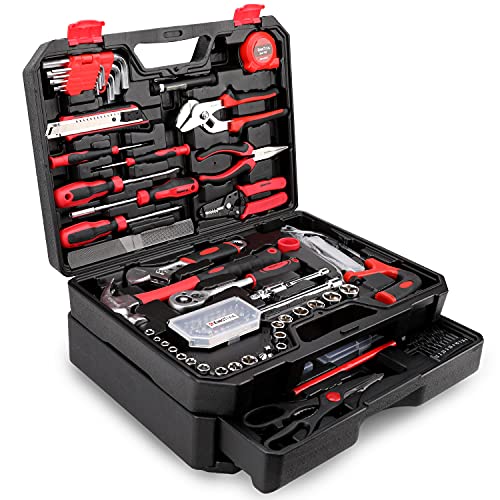 KingTool DS-HDT001Best overall
 CRESOLVIA RD105328Most pieces
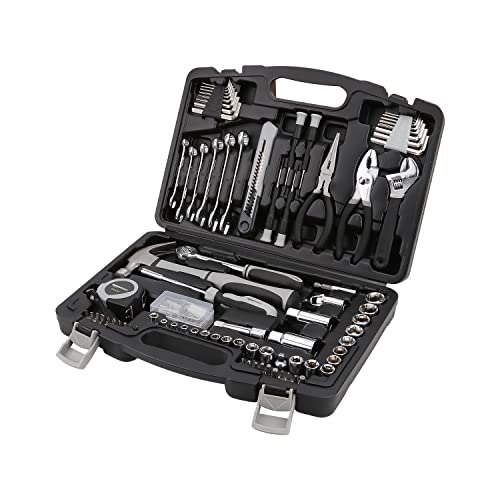 Amazon Basics DS-JYAMZ0002Best basic set
Why sets leave some sizes out
A socket set is a bundle of many similar pieces, and every extra socket adds steel, machining and case space. Makers decide which sizes to include based on what most buyers reach for, then drop the rest. The result is a tidy row of common sizes with a few holes in it.
Metric fasteners are a good example. A handful of sizes show up again and again on furniture, appliances, bikes and cars, while others appear only on specific parts. Sets tend to include the busy sizes and skip the quiet ones. Some sizes also sit very close to an inch-based (SAE) equivalent, so a maker may treat one as a stand-in for the other.
The usual reasons behind the gaps
Skipped sizes are rarely random. Here are the most common reasons a set ends up with a gap:
- Cost: fewer pieces means less material and less machining.
- Rarely used sizes: a socket that fits only a few fasteners earns little space in a mass-market kit.
- Near duplicates: where two sizes are almost the same, one may be left out.
- Case layout: molded cases and drawer trays have fixed slots, so the size list is built around the tray.
- Marketing: piece counts look bigger when small items such as bits and fasteners are counted, so the maker has less reason to add more sockets.
Does a skipped size matter?
It depends on what you do with the set. For a renter hanging pictures, assembling a bookshelf and tightening a loose cabinet hinge, the common sizes cover nearly everything. A missing size you would use once every few years is not a real flaw.
It matters more when you do repeated work on one system. Car and bike repairs use a wider spread of sizes, and a single missing socket can stop a job halfway. If you know you will work on a vehicle, look closely at the size range rather than the headline piece count.
Our best tool set page makes the same point about piece counts: bits and small parts inflate the number, so check what is actually inside before you decide.
What the spec data shows
Published specs rarely list every socket, so you often have to read the listing. Here is what the product data tells us about a few kits.
The CRAFTSMAN 57-piece mechanics set has 72-tooth ratchet and sockets in a hard case. It is a small, focused kit built for mechanical work. The DEKOPRO 94-piece kit lists four 1/4 inch sockets in 7 mm, 8 mm, 9 mm and 10 mm, plus hex keys from 2 mm to 6 mm. That is enough for small furniture fasteners, but the listing shows no socket larger than 10 mm. The KingTool 325-piece, CRESOLVIA 328-piece and Prostormer 259-piece kits list both 1/4 inch and 3/8 inch drive metric sockets, which usually means a wider spread of sizes.
The Amazon Basics 131-piece set takes a different approach. Its listing highlights 16 hex keys and 6 combination wrenches rather than a socket set, so its coverage comes from wrenches and keys.
| Kit | Piece count | What the listing says about sizes |
|---|---|---|
| KingTool 325-Piece | 325 | 1/4 inch and 3/8 inch metric sockets, 72-tooth ratchet |
| CRESOLVIA 328-Piece | 328 | Full sets of 1/4 inch and 3/8 inch sockets, 40 screwdriver bits |
| Prostormer 259-Piece | 259 | 1/4 inch and 3/8 inch drive metric sockets, 72-tooth ratchet |
| Amazon Basics 131-Piece | 131 | 16 hex keys, 6 combination wrenches |
| DEKOPRO 94-Piece | 94 | Four 1/4 inch sockets (7 to 10 mm), 5 hex keys |
| CRAFTSMAN 57-Piece | 57 | Socket set with 72-tooth ratchet |
How to check a set before you buy
You do not need to memorize sizes. A quick check of the listing will show whether a set fits your jobs.
- Find the size list. Good listings name each socket or wrench size. If none is shown, treat the set as a basic kit.
- Look for both drive sizes. A 1/4 inch drive covers small fasteners, and a 3/8 inch drive handles larger ones.
- Check for gaps in the middle. A set that jumps over a size you use often is a poor match.
- Count real tools. Dozens of bits or a bag of fasteners can account for much of a piece count.
- Think about your jobs. Furniture and picture hanging need fewer sizes than car work.
What to do when you hit a missing size
The easiest fix is to buy the single socket or wrench you need. Individual sockets are sold separately, so a gap in your set does not mean you must replace the kit. An adjustable wrench can also cover a size in a pinch on a plain nut or bolt head.
Do not force a close-fitting socket onto the wrong fastener. A socket that is slightly too large can round off the corners of a bolt, and a socket that is too small can crack or slip. Both make the job harder.
Some safety points apply here. Wear safety glasses when hammering or when a fastener may snap, and note that the Amazon Basics listing carries a warning to wear safety goggles when using the hammer. If you work on a car, support it with proper jack stands and never rely on a jack alone. Keep tools away from live electrical wiring, and switch off power at the breaker before working near outlets or fixtures.
Frequently asked questions
Are metric and SAE sizes interchangeable?
Not safely. Some sizes are close, but a near fit can round a fastener. Use the exact size when you can.
Is a bigger piece count a sign of more sizes?
Not always. Bits, small fasteners and accessories can make up a large share of the count, so read the contents list.
Do I need both 1/4 inch and 3/8 inch drive sockets?
For most homes, having both is handy. The smaller drive suits light jobs and tight spots, while the larger one fits bigger bolts.
Should I buy a set or single sockets?
A set suits most households because it bundles the common tools in one case. Add single pieces later if you find a size you need.