Why Do Outdoor Light Bulbs Not Work or Keep Going Out?
Outdoor bulbs usually stop working or keep going out because of a power or switch problem, moisture in the socket, a loose connection, or a bulb that does not suit the fixture. A dusk-to-dawn bulb can also look dead in daylight because it is supposed to be off. Work through the checks below from simplest to most involved, and turn the power off before you touch anything.
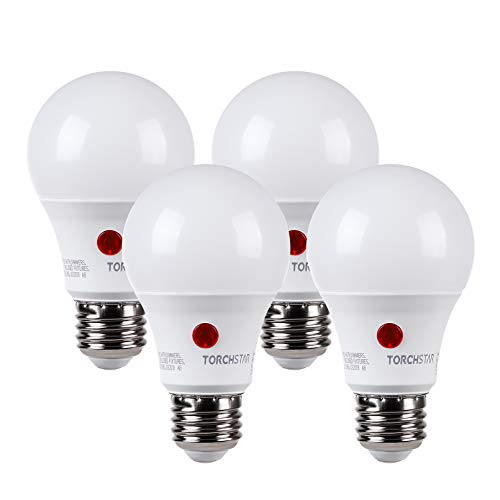 TORCHSTAR A-50408Best overall
 SETEN LED BULB 10WBrightest A19
 Sunco Lighting PAR38_D2D-15W-5K-2PKBest floodlight
Start with the quick checks
Most outdoor lighting problems have a simple cause. Before you blame the bulb, confirm that the wall switch is on, that the breaker has not tripped, and that any GFCI outlet or breaker on the circuit has not popped. Outdoor circuits often share a GFCI, and damp weather can trip it.
Next, look at the bulb itself. Let it cool, then screw it in firmly. A bulb that has backed out a quarter turn from vibration or temperature swings can lose contact without looking loose. If you have a spare bulb that you know works, swap it in. If the spare lights up, the old bulb was the problem. If it does not, the problem is in the fixture, the wiring or the power supply.
Check whether it is a dusk-to-dawn bulb
If you installed a bulb with a built-in light sensor, it may be working exactly as designed. These bulbs stay off in daylight and switch on when it gets dark, so a test in the afternoon will show nothing. Our best light bulbs for outdoor fixtures page covers how they work: the wall switch stays on and the sensor does the rest.
To test one, leave the switch on and cover the bulb with a dark cloth for a minute or two. If it lights, the sensor is fine. Then check for the usual problems:
- The wall switch is off. The sensor cannot work without power.
- Something is blocking the sensor. The TORCHSTAR A19 listing says not to cover the red photo sensor with anything.
- Another light shines on the bulb at night, so the sensor thinks it is still daytime.
- The bulb sits under a deep cover or in a closed lantern that hides it from daylight.
Why bulbs keep going out
A bulb that works and then fails again and again points to something repeating. Common causes include heat, moisture, vibration and a bad connection.
Heat builds up in small, enclosed fixtures. A bulb with poor airflow runs hotter, and electronics inside LED bulbs do not like that. If a fixture is sealed, choose a bulb that is meant for enclosed use and avoid a higher wattage than the fixture label allows.
Moisture is the other big one. Water that gets into a socket can corrode the contacts or cause the bulb to flicker, cut out or trip a breaker. If you see rust, green or white residue, or water droplets inside the glass of a lantern, the fixture needs attention, not just a new bulb.
Vibration matters near garage doors and busy doorways. Over time it loosens the bulb and the socket contacts. A bulb that cuts out when the door slams is a clue.
Finally, a loose wire or failing socket can look like a bad bulb. If new bulbs die quickly in the same fixture, stop swapping and have the fixture checked.
Match the bulb to the fixture
The wrong bulb type is a very common reason for poor results. An open fixture that gets rain needs a bulb that can handle it. The SETEN A19 listing gives an IP65 rating, and the Sunco PAR38 flood is listed as wet rated for indoor and outdoor use, with an operating range of minus 4 to 104 degrees F. A plain bulb in a covered porch fixture is fine, but the same bulb in an open, rain-exposed fixture may not last.
Shape and base matter too. Coach lights and lanterns usually take an A19 bulb, while floodlight fixtures take PAR30 or PAR38 flood bulbs. All the bulbs we list use an E26 base, but check your fixture before you buy. Also note that several of these bulbs are non-dimmable, including the Sunco PAR38 and PAR30 floods. Put them on a regular switch, because a dimmer can make a non-dimmable bulb flicker or fail early.
If you are choosing a replacement, see our best light bulbs comparison for a wider look at options.
Quick troubleshooting table
Use this table to match what you see to the likely cause.
| What you see | Likely cause | What to check |
|---|---|---|
| Nothing lights at all | No power | Switch, breaker, GFCI, spare bulb |
| Only lit at night or after covering | Dusk-to-dawn sensor | Wall switch on, sensor not blocked |
| Flickers or cuts out | Loose bulb or socket, moisture | Tighten bulb, inspect socket for corrosion |
| Burns out within weeks | Heat or wrong bulb type | Enclosed rating, wattage limit, wet rating |
| Cycles on and off at night | Sensor sees other light | Move bulb or block nearby light |
| Flickers on a dimmer | Non-dimmable bulb | Use a standard switch |
Safety before you start
Outdoor lighting combines electricity, water and often a ladder, so take it slowly.
Turn off the wall switch and, if you plan to open the fixture, the breaker too. Never handle a socket with wet hands or while standing in water. Let bulbs cool before you touch them, since even LED bulbs can get warm in a sealed fixture.
Set the ladder on firm, level ground and have someone nearby if you are working above head height. If you see scorched plastic, melted wire insulation, a cracked fixture or a breaker that keeps tripping, stop and call a licensed electrician. Those are not bulb problems.
When to replace the fixture instead
If the socket is corroded, the fixture is cracked, or water keeps getting in, a new bulb will not fix it. Replace the fixture with one rated for outdoor use. A fixture that is not rated for the weather is a common reason bulbs fail early, and it can be a safety risk too.
Once the fixture is sound, pick a bulb that fits how you use it. Our outdoor fixture comparison lines up brightness, shape, color temperature and warranty details side by side, such as the 5-year warranty listed for the Sunco PAR30 flood.
Frequently asked questions
Why does my new outdoor bulb not turn on?
Check the switch, breaker and GFCI first. Then confirm the bulb is screwed in fully and try it in another fixture. If it is a dusk-to-dawn bulb, it will stay off during the day.
Can a dimmer switch make an outdoor bulb stop working?
Yes. Non-dimmable LED bulbs can flicker, buzz or fail early on a dimmer. Use a standard on/off switch unless the bulb says it is dimmable.
Why does my dusk-to-dawn bulb turn on and off at night?
The sensor may be picking up light from a nearby lamp, a reflection or its own glow inside a closed fixture. Try moving the bulb or shielding it from other light sources.
Do outdoor fixtures need a special bulb?
Open fixtures that get rain need a bulb with a wet or IP65 rating. Enclosed fixtures protect the bulb from weather, but still check the fixture's wattage and enclosed-use limits.