Why Do Light Bulbs Contain Mercury and What Are They Made Of?
Only some bulbs contain mercury. Fluorescent tubes, compact fluorescent lamps (CFLs) and some high intensity discharge lamps use a tiny amount of mercury vapor to start the process that makes light. Incandescent, halogen and LED bulbs are built differently and do not need mercury at all.
 TJOY QASN83+85Best overall
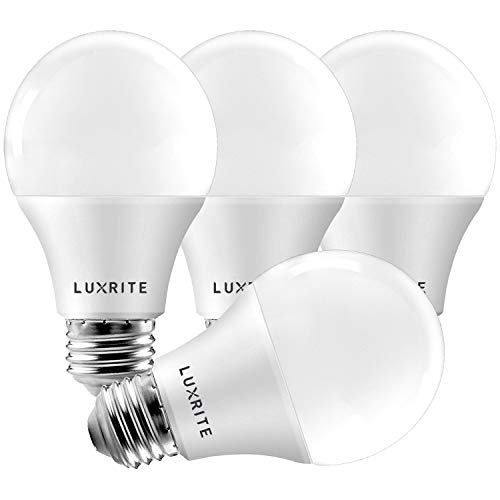 LUXRITE B07BHVRVPSLongest lasting
 GE 42977Best known brand
Why some bulbs need mercury
A fluorescent bulb does not glow by heating a wire. Instead, it passes an electric current through a sealed glass tube filled with a low-pressure gas and a small amount of mercury vapor. The current excites the mercury atoms, and they give off mostly ultraviolet light, which we cannot see.
The inside of the glass is coated with a white powder called phosphor. The phosphor absorbs the ultraviolet light and re-emits it as visible light. The mercury is the part that makes the whole chain work, and there is no common substitute that does the job as efficiently in this design.
This is why fluorescent lighting became popular as a more efficient alternative to old incandescent bulbs. It made light with far less wasted heat, but it brought along a small amount of a toxic metal that has to be handled with care at the end of the bulb's life.
Which bulbs contain mercury
Mercury shows up in a few lamp families. It does not appear in the bulbs most people now buy for lamps and ceiling fixtures.
- Straight fluorescent tubes, common in garages, basements and older kitchens.
- Compact fluorescent lamps (CFLs), the spiral or folded-tube bulbs sold as screw-in replacements.
- Some high intensity discharge (HID) lamps, such as mercury vapor and metal halide lamps used in large spaces and some outdoor lighting.
- Certain specialty lamps, including some germicidal and blacklight tubes.
- Not included: incandescent, halogen and LED bulbs.
What a standard incandescent bulb is made of
An incandescent bulb is the simplest design. A thin tungsten filament sits inside a glass envelope. Electric current heats the filament until it glows white hot. The glass is filled with an inert gas, or sometimes the air is removed, so the filament does not burn up.
The filament is held by thin support wires that connect to a metal base, usually brass or aluminum, which screws into the socket. A small glass stem and a bit of insulating material hold everything in place.
Halogen bulbs work the same way but add a halogen gas inside a small, tough capsule of quartz glass. That lets the filament run hotter and brighter. Both types turn much of their energy into heat rather than light, which is why they feel hot to the touch.
What an LED bulb is made of
An LED bulb makes light in a solid piece of semiconductor material. When current flows through the chip, it emits light directly. Most white LED bulbs use a chip that makes blue light, then a phosphor layer converts part of it into a warmer, fuller white.
The rest of the bulb is mostly electronics and structure. A driver circuit converts household power into the low-voltage current the chip needs. A metal heat sink, often aluminum, draws heat away from the chip. A plastic or glass cover spreads the light, and a metal base fits the socket.
None of this requires mercury. One example in our data is the E Energetic A19 bulb, whose listing states it contains no lead or mercury. The TJOY A19 in our best light bulbs comparison lists 800 lumens from 9 watts as a replacement for a 60W incandescent, which shows how little power the LED design needs for the same brightness.
Mercury safety, cleanup and disposal
The small amount of mercury in a CFL or tube is sealed inside the glass and does no harm while the bulb is intact. The concern is breakage, since a broken bulb can release mercury vapor and leave fine residue. Handle these bulbs gently and never throw them in the regular trash. Many hardware stores and local waste programs accept them for recycling.
If a CFL breaks, follow these steps. Ask children and pets to leave the room first.
- Open a window and leave the room for several minutes so the air can clear.
- Turn off any forced-air heating or cooling for the time being.
- Do not use a vacuum or broom at first, since they can spread mercury vapor and dust.
- Wear gloves, pick up large pieces carefully, and use stiff paper or cardboard to collect smaller bits.
- Press sticky tape on the area to pick up fine fragments.
- Place everything in a sealed container and check local rules for disposal.
- Wash your hands afterward.
Choosing a bulb without mercury
If you want to avoid mercury, an LED bulb is the straightforward choice for most rooms. You can also skip the extra cleanup worries, since an ordinary LED bulb has no mercury to release if it breaks, though broken glass is still sharp and should be handled with care.
When you compare LED bulbs, the details that change how a room feels are color temperature, brightness in lumens, color accuracy (CRI) and whether the bulb is dimmable. Our best light bulbs for health page looks at features such as flicker-free design and color quality. If you need bulbs for porches or garages, see best light bulbs for outdoor fixtures, and check that the bulb is rated for damp or outdoor use.
Always turn off power and let a bulb cool before you change it. Use a stable step stool when reaching ceiling fixtures, and never exceed the wattage a fixture lists.
| Bulb type | Contains mercury | Main light source |
|---|---|---|
| Incandescent | No | Heated tungsten filament |
| Halogen | No | Heated filament in halogen gas |
| CFL and fluorescent tube | Yes, a small amount | Mercury vapor plus phosphor coating |
| Some HID lamps | Often yes | Electric arc through vapor |
| LED | No | Semiconductor chip plus phosphor |
Frequently asked questions
Is it dangerous to have a CFL in my home?
An intact CFL is generally not a concern, because the mercury stays sealed inside the glass. The care is needed if it breaks, and when you dispose of it.
Can I tell if a bulb has mercury from the packaging?
Often, yes. Fluorescent and CFL packaging usually carries a mercury warning or recycling notice. LED packaging typically does not, and some listings state that the bulb has no mercury.
Why do fluorescent bulbs take a moment to warm up?
The mercury vapor and gas inside need a short time to reach stable operating conditions, so many CFLs start dim and brighten over a short time.
Are LED bulbs made of anything harmful?
LED bulbs contain electronics, metal and plastic, so it is best to recycle them where programs exist. They do not rely on mercury to make light.