Why Heavy Duty Gate Hinges Fail and How to Fix Them
Heavy duty gate hinges usually fail because of the setup around them, not the hinge itself. The usual causes are a gate heavier than the hinge rating, loose or stripped fasteners, posts that have shifted, and hinges that are rusted or mounted out of line. Find which one you have, fix it, and replace the hinge only if its specs do not fit your gate.
 Ajingff MJMJL02Best overall
 Weigreat WGZXMJL03Closest to the leader
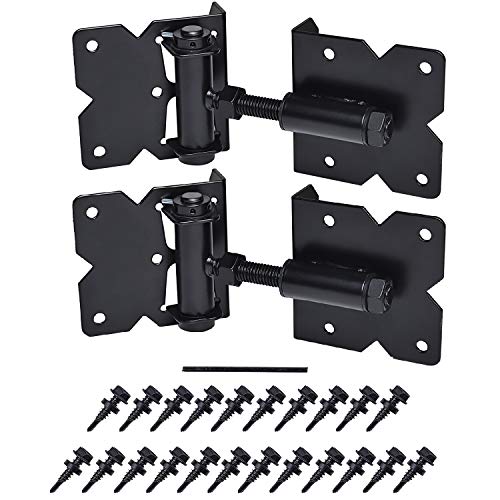 SANKINS SANKINS_B0897CH8RHSelf-closing, adjustable tension
What 'not working' usually looks like
People use the phrase for a few different problems. The gate may sag so the latch side drops and drags. It may bind or stick partway through its swing. It may squeak, grind or clunk. Or it may not open as far as you expected.
Each symptom points to a different cause. On a heavy gate, the weight pulls the latch-side corner down while the hinge side stays fixed, so a small problem grows quickly. That is why it pays to fix a loose bolt or a leaning post early.
Quick diagnosis chart
Start with the symptom you see and work across the row. Most fixes take basic hand tools.
| Symptom | Likely cause | First fix |
|---|---|---|
| Latch side drops or drags | Gate weight beyond hinge rating, or loose bolts | Compare weights, then tighten or re-seat hardware |
| Hinge pulls out of the wood | Stripped holes or screws too short | Drill fresh pilot holes or fill old ones, use longer fasteners |
| Gate binds mid-swing | Hinge pins not in line, or leaning post | Re-check alignment with a level and shim |
| Squeak or grind | Dry or rusty pivot | Clean, then lubricate |
| Gate will not open wide | Short swing angle or wrong mount style | Check the hinge's opening angle and mount position |
| Gate will not stay shut | Hinges lack spring, or latch is misaligned | Check the latch first, then consider a self-closing hinge |
The most common causes
Before you buy anything, rule out these problems in order. They are listed from most common to least.
- The gate is heavier than the hinge rating. Ratings are given per pair, so a 1000 lb rating covers one gate hung on two hinges. Weigh your gate, or estimate it, and leave a margin.
- Fasteners are loose, stripped or too short. Overtightening screws or reusing old, worn holes is a frequent cause of failure in wood.
- The post has moved. A leaning or loose post makes even a strong hinge look bad, because the pins no longer line up.
- The hinges are rusted or dry. A seized pivot makes the gate stiff and can bend parts over time.
- The hinge is the wrong type. A short hinge on a large gate, or a hinge made for light sheds, will not carry the load.
How to fix a sagging or binding gate
Work through these steps in order. Stop when the gate swings freely and the latch lines up.
Get a helper or a support under the latch end before loosening anything. A heavy gate can drop or swing suddenly.
- Hold the gate up with a block or jack stand at the latch end so the hinges carry no load.
- Check the posts. Push on them by hand and look at them with a level. Fix or re-set a loose post first.
- Tighten every bolt. If a screw spins in the wood, remove it, fill the hole or drill a fresh pilot hole, and use a longer fastener.
- Check the pins. The upper and lower hinge pins should line up in a straight vertical line. If they do not, shim the hinge on the post.
- Clean and lubricate the pivots. Wipe off rust and grit, then add lubricant. Some hinges have oil ports for this.
- Lower the gate, swing it through its full range, and check the latch gap. Adjust shims or reposition the latch plate as needed.
When the hinge is the wrong one
If the basics are sound and the gate still sags, compare the hinge to the job. The specs on our best gate hinges heavy duty page are a good starting point. Look at load per pair, strap length, steel, finish and mounting.
Length matters because a long strap spreads weight over more of the gate. Several models on that page list 13 in straps, for example the Ajingff and Weigreat sets, each rated at 1000 lb per pair. A 6.7 in hinge such as the Insaga lists 1100 lb per pair, but it carries that load over a shorter span and ships without bolts.
Opening angle is a spec too. The Lifeswell 13 in strap lists 130 degrees, while the Ajingff lists 180 degrees. Weigreat notes that face-mounting gives 180 degrees and side-mounting gives 90 degrees, so decide your swing direction before you drill.
If you want a wider look at the category, our best gate hinges page covers more styles, including lighter gates.
Install it right the second time
A good hinge can still fail if it is installed poorly. Use the hardware that suits your post material. Bolting suits wood posts, and welding suits steel. Some packs include screws and others do not, so check before you start. The Ajingff and Weigreat listings say their screws suit wood 35 mm to 60 mm thick, and the Insaga lists 0.5 in bolt holes with hardware not included.
If you weld, strip any coating at the weld area first. The Insaga listing says to remove the e-coating before welding. Let the metal cool, then touch up the bare spot with paint to slow rust.
Self-closing hinges work differently. The SANKINS model lists spring tension and a gap adjustment from 0.23 in to 1.25 in, but it publishes no load capacity. It suits vinyl and wood fences, not a large farm gate, so match it to a light gate.
Check the latch and opener too
Sometimes the hinges are fine and another part is causing the trouble. A latch that is out of line can make a gate seem to sag. See our best heavy duty gate latch page if yours is worn or too light for the gate.
If you plan to add automation, the hinge load and post strength matter even more, because a motor pushes the gate through every bump. Our best heavy duty swing gate opener comparison covers that side of the project.
Safety notes
Heavy gates can crush hands and feet. Support the gate before you loosen hinges, and keep fingers clear of the gap between gate and post.
Wear safety glasses when drilling, grinding or wiping off rust, and wear hearing protection around power tools. If you weld, use proper eye and skin protection and keep flammable material away. Use a ladder only on stable ground, and call a pro if the gate is very tall or very heavy.
Frequently asked questions
Can I add a third hinge to a sagging gate?
A third hinge can share the load on a tall or wide gate, but only if the posts and frame are sound. It will not fix a loose post or a gate that is far over the rating.
How often should I lubricate gate hinges?
Check them when you do other yard upkeep, and add lubricant whenever they feel stiff or sound dry. Wipe off grit first so it does not wear the pivot.
Do ball bearings really help?
Yes. Bearings reduce friction at the pivot, so the gate swings with less effort and wears less. Several hinges on our comparison page list them.
Why does my gate stay stiff after I lubricate it?
The pins may be out of line, or the post may have shifted. Lubricant cannot fix a bind caused by geometry, so check alignment with a level.