Why Do Garage Storage Cabinets Get So Hot?
Garage cabinets get hot because the garage itself traps heat, and a closed steel box inside it has no way to shed that heat. Sun on the roof and walls, stagnant air and heat from vehicles all warm the space, and the metal passes that warmth to everything inside. You can cut the problem with smarter placement, airflow and choosing what you store.
 Letaya 01Best overall
 Yizosh 72HLC-1850Top shelf rating, tied
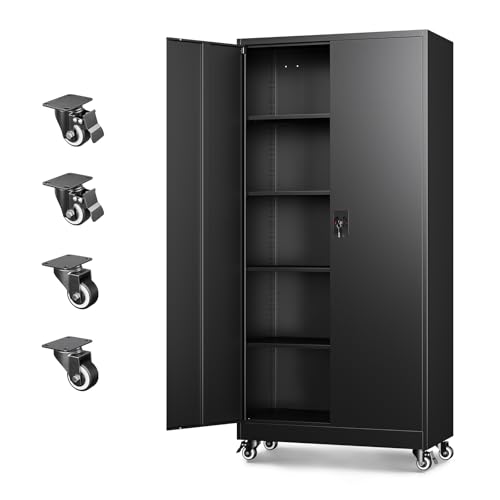 Letaya R694Rolling with wall mounting
Where the heat comes from
Most garages are built as simple shells. The roof and walls take in sun all day, and many garages have little or no insulation. The air inside warms up and has nowhere to go, so the whole room becomes a heat trap.
Heat also rises. If your garage has an attic above it or a poorly vented ceiling, the hottest air collects near the top. Tall cabinets reach into that warm layer, so their upper shelves can run hotter than the lower ones.
A car adds more. An engine and exhaust system hold heat for a while after you park, and a freshly parked vehicle warms the nearby air. A cabinet parked right beside the bay is in the line of fire.
Why a metal cabinet makes it feel worse
Steel conducts heat well. When the garage air warms up, the cabinet panels warm up with it, and the shelves, doors and sides can feel hot to the touch. Direct sun through a window or an open door can heat a panel faster than the surrounding air.
A closed cabinet also holds a still pocket of air. With the doors shut, there is little airflow to carry warmth out. The heat settles in and stays after the garage cools off in the evening.
Finish and color matter too. Many cabinets we compare, such as the Letaya and Yizosh models on our garage cabinet page, list a powder-coated finish. That coating is mainly for rust and scratch resistance. The listings do not publish any heat or temperature rating, so do not assume a cabinet is built to stay cool.
The main factors at a glance
Several things combine to decide how hot your cabinet gets. This table shows which ones you can change and which you cannot.
| Factor | Effect on the cabinet | Can you change it? |
|---|---|---|
| Sun on the walls | Warms panels and the air behind them | Partly, by moving the cabinet to a shaded wall |
| No insulation | Garage air tracks outdoor heat | Yes, with insulation or a weatherstripped door |
| Poor ventilation | Hot air stays trapped | Yes, with vents or a fan |
| Closed doors | Still air inside the box | Partly, by leaving gaps or airing it out |
| Tall cabinet | Top shelves reach the hottest layer | Yes, by storing sensitive items low |
| Vehicle nearby | Adds heat after parking | Yes, by spacing the cabinet away |
Simple ways to keep a cabinet cooler
You do not need a major renovation. Small changes help, and you can start with the cheapest ones first.
- Choose the right wall. A wall that gets less afternoon sun is usually better than one that bakes.
- Leave a gap behind and beside the cabinet. Even a small space lets air move around the panels.
- Open the garage door for a while on cooler evenings to flush out trapped hot air.
- Run a fan to keep air moving, and consider vents or a ridge or gable vent if your garage lacks them.
- Insulate the garage door or walls, which lowers the heat the cabinet has to absorb.
- Keep the cabinet out of direct sunlight from windows or the open door.
What to store, and what to keep out
Heat does more harm to some items than others. Hand tools and hardware generally handle warmth well, though handles and metal surfaces can get too hot to grab comfortably.
Some products do not belong in a hot cabinet at all. Check the label on anything you store, and move it indoors if it warns about heat.
- Paint, stains and adhesives: heat can change them and ruin the contents.
- Aerosol cans and fuels: pressure builds as temperatures rise. Follow the label and keep them away from heat sources.
- Batteries and chargers: heat can shorten their life and, in rare cases, cause leaks or fires.
- Propane cylinders: store them upright and outdoors, never inside a cabinet or closed space.
- Food, medicine and electronics: bring these indoors.
Safety notes
Never store gasoline, propane or other flammable liquids and gases in a closed steel cabinet unless it is built and labeled for that use. A cabinet that locks is a security feature, not a fire-rated one.
Wear gloves when you handle metal panels that have sat in the sun. Take care on a ladder if you are adding vents or insulation near the ceiling, and use eye and hearing protection when drilling or cutting.
If you add a fan or any electrical device, keep cords off hot surfaces and use a properly rated outlet. Ask a licensed electrician about any new wiring.
Picking a cabinet with heat in mind
No spec sheet on our page lists a temperature rating, so the best approach is to plan around the garage. Choose a cabinet that fits the wall you have with room to spare, so air can move around it. Check the width and depth, and make sure doors can open without hitting a car.
Wheels help here. A rolling model, such as the Letaya R694 with detachable 360° wheels or the BYNSOE with casters, can be moved away from a hot wall or out of a sunny spot. Wall mounting is still worth it for tall units, and the Letaya 01 lists pre-holes on the back for that.
When you compare options, start with the build details on our best garage storage cabinets page, then think about airflow and placement before you buy.
Frequently asked questions
Do dark cabinets get hotter than light ones?
In direct sun, a dark surface generally absorbs more heat than a light one. The product pages we compare do not give heat data for finishes, so the effect depends on where you put the cabinet.
Should I leave the cabinet doors open to cool it?
Opening the doors for a while on a cooler evening lets trapped hot air out. Keep them closed when you need to secure tools, and do not leave valuables unlocked.
Can I put a fan inside the cabinet?
It is better to move air in the room and around the cabinet. If you add any electrical device, use one rated for the space and keep cords away from hot metal.
Is a plastic cabinet a better choice for heat?
We compare steel models, so we cannot give a head to head comparison. Plastic and steel both warm up in a hot garage, so placement and ventilation still matter most.