Why Do Exhaust Clamps Come Loose or Keep Breaking?
Exhaust clamps usually come loose or break because of a size mismatch, uneven or incorrect tightening, constant heat cycling, engine vibration, or rust that thins the pipe and the band. Most repeat failures trace back to the wrong clamp type or size for the joint, or to a joint that is under strain from a misaligned or unsupported pipe. Fix the cause first, then fit a correctly sized band clamp and tighten it to spec.
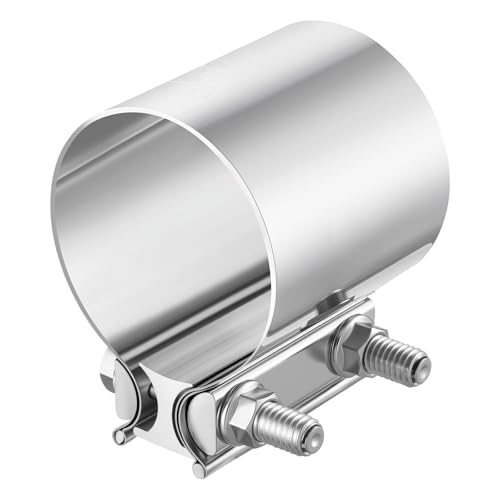 EVIL ENERGY 473SU5TBest overall
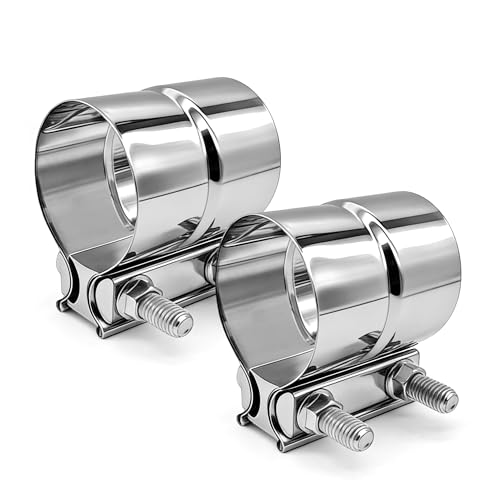 SKYMIRO CPBJ-3IN-2Best double-layer band
 SKYMIRO CPSC-25IN-1Best butt joint clamp
The short list of causes
An exhaust system lives a hard life. It gets very hot, cools down, shakes with the engine, and sits in road water and salt. A clamp has to hold a seal through all of that, so small mistakes show up fast.
Most loose or broken clamps come down to one or more of these causes:
- The clamp is the wrong size or the wrong type for the joint.
- The clamp was tightened unevenly, too little, or too much.
- Heat cycles expand and shrink the metal until the joint relaxes.
- Engine vibration works the nut loose over time.
- Rust thins the pipe or the band, so the clamp loses its grip.
- The pipes are misaligned or hanging without proper support, so the clamp carries weight it was never meant to carry.
- A cheap U-bolt style clamp crushes the pipe and cracks or leaks at the joint.
Wrong size or wrong type
This is the most common cause of a clamp that never seems to hold. A band clamp needs to match the outside diameter of the pipe it wraps. If it is even slightly off, the band cannot close evenly and the seal fails. Measure the outside diameter of your pipe before you buy, as our best exhaust clamp page also advises.
Type matters too. A lap joint clamp is made for a joint where one pipe slides inside another, such as a pipe into a muffler inlet. A butt joint clamp joins two pipes of the same size end to end. Using a butt clamp on a slip fit, or the other way around, leaves a gap or a step that the band cannot seal.
Rust can also change the picture. If a clamp keeps slipping, the old pipe may have corroded and shrunk, so the clamp no longer sits on solid metal. In that case, cut back to clean, sound pipe before you refit.
Heat cycling and vibration
Metal grows when it heats up and shrinks when it cools. Every drive repeats that cycle. Over time the bolt can lose some of its clamping force, and the joint may start to leak or rattle. Mixing different metals makes this worse, because they expand at different rates.
Vibration adds to it. The engine and road shake the system all the time, and a nut can slowly back off. A loose clamp often shows up as a new rattle, a buzz you feel in the floor, or a ticking sound on cold start.
Some designs help. One listed 2.5 in lap clamp uses dual bolts and an aluminum I-block, and its listing says the dual-bolt setup is meant to resist loosening from vibration. An I-block spreads the clamping force around the full circle, which also avoids squeezing the pipe out of shape.
Tightening mistakes
Many clamps fail because of how they were installed, not because of the clamp itself. Too loose and the joint leaks and works free. Too tight and you can stretch the bolt, deform the pipe, or crack the band.
Follow the torque value from the clamp maker when one is given. As an example from our data, the EVIL ENERGY 3.0 in clamp lists a torque of 63 N·m. Other clamps may list a different value, so check yours instead of copying that number.
Tighten in small steps and keep the band even around the pipe. If the clamp has two bolts, alternate between them. Check the joint again after the first heat cycles, since new gaskets and bands settle in.
Rust, material and band design
Plain steel clamps rust, and rust eats the band, the bolt and the pipe. A rusty bolt can also seize or snap when you try to adjust it. Stainless steel bands resist rust and heat much better, and 304 stainless is the grade used on the top picks on our comparison page.
Hardware matters as well. The bolts on several listed clamps are zinc plated, which helps against corrosion but is not the same as a stainless band. If your car sees road salt, check the bolt and nut for rust whenever you look under the car.
Band width and layers also play a part. Wider bands cover more of the pipe. The bands we list run 3 to 3.5 in where the width is given. One listed butt joint clamp has a 3.5 in band and a dual-layer 304 stainless build, which is meant to add strength at the joint.
Quick diagnosis table
Use this table to match what you see with the likely cause and the fix.
| What you notice | Likely cause | What to do |
|---|---|---|
| Clamp keeps loosening | Vibration or heat cycling | Retighten to spec and consider a dual-bolt clamp |
| Clamp will not seal at all | Wrong size or wrong joint type | Re-measure the outside diameter and pick lap or butt correctly |
| Band cracked or bolt snapped | Over-tightening or old, rusted metal | Replace the clamp and hardware, tighten in steps |
| Leak at an old U-bolt joint | Crushed or distorted pipe | Replace with a band clamp that wraps the full circle |
| Clamp slips on the pipe | Corroded, thinned pipe | Cut back to sound pipe, then refit |
| Rattle after refit | Pipe misaligned or unsupported | Check hangers and alignment before final tightening |
How to fit a clamp so it lasts
Work only when the exhaust is fully cold, since the pipes can burn you long after the engine is off. Support the car on proper jack stands on level ground, never on a jack alone. Wear safety glasses, because rust and dirt will fall as you work. Gloves help with sharp pipe edges.
Follow these steps:
- Clean the pipe ends with a wire brush until you reach bare, sound metal.
- Check that the pipe is round and free of deep pits or cracks.
- Confirm the clamp type and size against your measurement.
- Fit the gasket if the kit includes one, and slide the clamp into place centered over the joint.
- Align the pipes and check the hangers before you tighten anything.
- Tighten the bolts gradually and evenly to the maker's torque value.
- Start the engine only after the car is back on the ground, then check for leaks and recheck the nuts after a few drives.
When to stop and call a shop
Exhaust leaks can let carbon monoxide into the cabin, so do not ignore a persistent leak or a strong fume smell. If the pipe is badly rotted, if a catalytic converter is loose, or if you cannot reach the joint safely, have a professional check it.
If you also want to hold parts in place while you work, our best f clamps page compares clamps that can help with alignment during a repair. They are a workshop aid and do not replace an exhaust clamp.
Frequently asked questions
Can I reuse an old exhaust clamp?
It is better not to. The band and bolt stretch and weaken with heat, and a rusty bolt may not clamp evenly. A new clamp is a small part to replace.
Should I use anti-seize on the bolt?
Some people do on stainless hardware to stop seizing. Check the clamp maker's instructions first, since it can change how much clamping force you get at a given torque.
Is a lap clamp or butt clamp stronger?
Neither is stronger in general. They suit different joints. Pick the one that matches how your pipes meet.
Why does the clamp rattle even when it is tight?
The pipe may be touching the body or a hanger may be worn. Check alignment and support, since a tight clamp cannot fix a pipe that is under strain.