Why Do Drawer Slides Stick or Get Stuck? Causes and Fixes
Drawer slides usually stick because of misalignment, loose or uneven screws, dirt and rust, or a slide that does not fit the drawer. Most of these are fixable with a screwdriver, a tape measure and a little cleaning. If the slide is bent, badly rusted or too small for the load, replacing it is the better fix.
 HBL' DLSBest overall
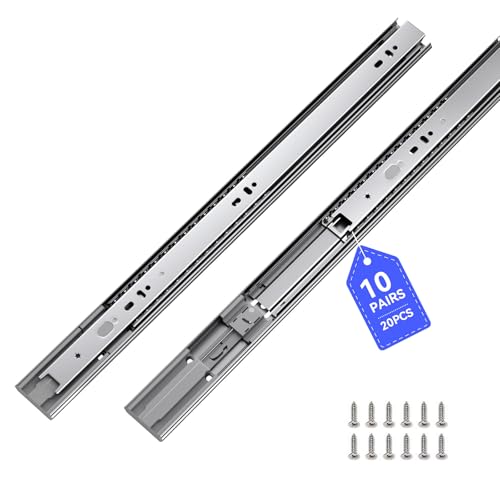 LONTAN SL4502S3-22-10PairsBig soft close pack
 VAGUDE 4512Short soft close pair
The quick answer: what makes slides stick
A drawer slide is a simple machine. Two or three steel rails ride on ball bearings, and the whole assembly depends on the rails sitting parallel and square. Anything that pushes them out of line, adds friction or overloads them can make the drawer drag, bind or jam.
Use this table to match what you feel to the most likely cause before you take anything apart.
| What you notice | Likely cause | First thing to try |
|---|---|---|
| Drawer drags on one side | Slides not parallel or screws uneven | Loosen screws, realign, retighten evenly |
| Drawer stops short or jams halfway | Wrong length or something blocking the track | Check for debris and compare slide length to drawer depth |
| Gritty or noisy movement | Dirt, dust or worn bearings | Clean the rails and bearings |
| Rough, stiff motion in a damp room | Rust on the steel | Clean off rust, or replace the slides |
| Sags or tilts when open | Overloaded or flexing slides | Remove weight, check the load rating |
| Hard to pull open or shut at the end | Soft close damper or lock engaged | Check the latch or damper, then the alignment |
Misalignment and loose screws
Misalignment is the most common cause. If the left and right slides are not level with each other, or not the same distance from the front of the cabinet, the drawer fights itself every time it moves. Even a small difference can make a drawer bind.
Screws matter more than most people expect. A missing screw lets the slide shift under load. Screws tightened unevenly can twist the rail slightly. Over time, wood can also loosen around screw holes, especially in particleboard, so a slide that was fine a year ago can start to wander.
Cabinet boxes can go out of square too. If the cabinet itself has shifted, a perfectly installed slide will still bind. Hold a square or a level against the cabinet sides to check.
The slide does not fit the drawer
Sometimes a slide sticks from day one because it was a poor match. Three specs decide whether a slide suits your drawer: length, load rating and clearance.
Length should match the drawer depth or run a little shorter, and it cannot be longer than the cabinet. On our best drawer slides page, lengths run from 10 in to 22 in. A slide that is too short leaves the drawer poorly supported, so it can tilt and catch.
Clearance is the other common trap. Side mount slides need about 0.5 in of space on each side between the drawer and the cabinet wall. One listing, the VAGUDE 12 in slide, spells this out as 1 in total (inside cabinet width minus outside drawer width). If your drawer box is too wide, it rubs the cabinet or pinches the slides.
Load rating matters too. Ratings in our lineup run from 50 lb up to 200 lb. Pots, tools and files call for the high end, while clothes and linens are fine with 100 lb slides. A slide rated well below the real load will flex, and flexing slides stick.
Dirt, rust and worn bearings
Dust, sawdust, crumbs and small objects collect in the tracks. Anything hard sitting in a rail can stop the bearings dead. In kitchens and bathrooms, moisture can add rust, which roughens the track and slows the bearings.
Finish helps here. A zinc-plated, galvanized or coated finish protects steel against rust in damp rooms, and many listings leave the finish out, so check the spec sheet. Ball bearing slides are designed to run without heavy grease, and one listing in our data notes that its slides do not rely on grease or oil. If you add lubricant, use a small amount of a dry or light type and wipe off the excess, since sticky residue attracts more dust.
Bearings can also wear out or fall out of their cage after years of use or an overloaded drawer. If you hear grinding or feel a repeating rough spot, that is a sign the slide itself is worn.
How to fix sticking slides, step by step
Work through these in order. Start with the simplest fix and stop when the drawer runs smoothly.
- Empty the drawer. Weight hides alignment problems and makes everything harder to judge.
- Pull the drawer out fully and look for debris, loose screws, bent rails or visible rust. Check both sides.
- Remove the drawer if it is detachable. Many slides have a plastic release tab or buckle on the inner rail. Press it, or lift the lever as the design requires, to separate the drawer.
- Vacuum the tracks and wipe the rails and bearings with a damp cloth, then dry them fully.
- Loosen the mounting screws a quarter turn, square up the slides, and retighten them evenly. Check that each slide sits level with its partner and the same distance from the cabinet front.
- Replace any missing or stripped screws. If a hole is stripped, fill it with wood glue and a toothpick or move the screw to a fresh hole.
- Reinstall the drawer and test it empty, then add the load back slowly.
Hard to open or close: soft close and locks
Not every stiff drawer is broken. Soft close slides use a damper that slows the last part of the closing motion, so the end of the stroke feels deliberate by design. Some slides also include a self-locking feature. The VAGUDE listing, for example, says its design needs a deliberate pull to open, which prevents accidental opening.
If a drawer feels much harder than that, check alignment first. A misaligned damper can drag, and a lock or latch that is not fully released can hold the drawer shut. Slides sold without a lock, like the REGUDA model in our data, cannot be locked closed or open, so a stiff drawer there points to alignment or debris instead.
Safety note: keep fingers clear of the gap between the drawer and cabinet when you force a stuck drawer. Do not stand on or hang from a drawer to free it. If you need to remove screws over your head or from a high cabinet, use a stable step stool. Wear safety glasses when cleaning out debris or prying parts.
When to replace instead of repair
Replace the slides if the rails are bent, the bearings are worn, rust has eaten into the track, or the drawer sags even when the load is light. Repair will not restore a deformed rail.
When you shop, measure the drawer depth and the cabinet depth, confirm the 0.5 in side clearance for side mount slides, and pick a rating above the heaviest load you expect. Full extension slides open the drawer completely, and soft close adds the damper. Compare the numbers on our drawer slide comparison so you can see what each maker lists and what it leaves out.
Frequently asked questions
Can I fix a drawer slide that is slightly bent?
Light bends in a thin rail are hard to correct and often return. If the rail is visibly bent, replacement is usually the more reliable choice.
Should I put grease on ball bearing slides?
Usually not much. Clean them first, since dirt causes most problems. If you do lubricate, use a tiny amount of light or dry lubricant and wipe away the excess.
Why did my drawer start sticking after years of working fine?
Screws can loosen, wood can swell in humid weather, and dust or wear can build up in the tracks. Check the screws and clean the rails first.
Does a heavier load rating prevent sticking?
It helps if the old slide was overloaded, because a stronger slide flexes less. It does not fix misalignment or wrong clearance.