Why Are My Garage Lights Not Working? A Step-by-Step Fix Guide
Most dead garage lights come down to a burned-out bulb or driver, a tripped breaker or GFCI outlet, a bad switch, or a loose connection. Work from the simplest check to the hardest: bulb, switch, power, then fixture. Flashing usually points to a loose bulb, an incompatible control, or a failing driver, and a burning smell or a breaker that keeps tripping means stop and call an electrician.
 POLARPRA JP-CKD-1Best overall
 CINOTON KING-HR150EBrightest and most efficient
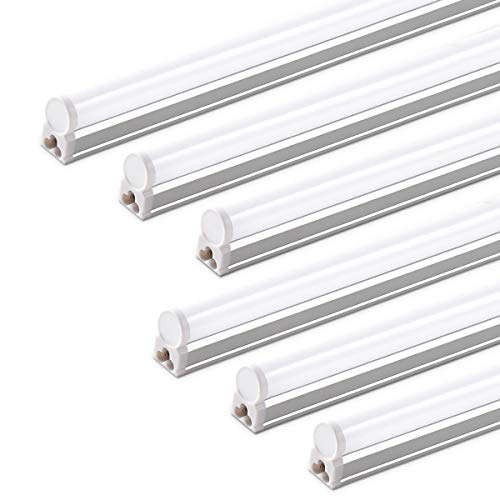 Barrina AAL20Truest colors, longest chain
Start with safety
Garage lights are usually mounted high, so most injuries come from ladders and hot bulbs, not from the wiring itself. Turn the light switch off and let any bulb cool for several minutes before you touch it.
Use a stable ladder on a flat floor, and wear safety glasses when you work overhead. Dust and bits of old fixture fall straight down. If you ever open a fixture or touch wiring, shut off the breaker first and confirm the power is off with a non-contact voltage tester.
Quick checks in the right order
Skip the guesswork and go through these steps in order. Each one rules out a whole group of causes, and the first few take a minute or less.
- Try the switch. Flip it a few times. A worn switch can feel loose or click without doing anything.
- Check the bulb. Look for dark marks inside it, loose pieces, or a bulb that is not fully seated. Swap in a bulb you know works.
- Look at the breaker panel. A tripped breaker sits halfway between on and off. Switch it fully off, then back on.
- Find any GFCI outlet. Garage outlets often have a test and reset button, and a tripped GFCI can cut power to the lights on the same circuit.
- Check whether other things are dead. If outlets are also out, the problem is the circuit, not the bulb.
- Inspect the socket. Look for scorching, corrosion or a bent center tab, and do this only with the power off.
Match the symptom to the likely cause
The way the light fails tells you a lot. This table covers the common patterns and what to check first.
| What you see | Likely cause | First thing to try |
|---|---|---|
| Nothing works, outlets dead too | Tripped breaker or GFCI | Reset the GFCI, then the breaker |
| One light dead, others fine | Bulb, socket or fixture driver | Swap in a known good bulb |
| Light dead after a storm or surge | Tripped GFCI or failed driver | Reset GFCI, then test the bulb |
| Light works from one switch only | Faulty switch or three-way wiring | Test the other switch, then call a pro if needed |
| Light flashes or flickers | Loose bulb, bad control, failing driver | Re-seat the bulb and check the control |
| Light buzzes, smells hot, or the breaker trips again | Wiring or fixture fault | Turn it off and call an electrician |
Why garage lights flash or flicker
Flashing is annoying, but it is often easy to fix. Start by turning the power off, tightening the bulb into the socket, and turning the power back on. A bulb that has worked loose from vibration, such as from a garage door opening and closing, is a common cause.
Next, think about what controls the light. LED lights can flicker when paired with a dimmer, a motion sensor or a timer that was not designed for them. Some linkable tube lights say plainly in their listing that they are not compatible with motion sensors, and that using one can shorten the lifespan. If your fixture has a built-in switch or plug-in cord, try it without any extra control in between.
If the flashing happens only when a large appliance such as a compressor or a freezer starts, the cause may be a heavily loaded circuit or a loose connection. That is worth having an electrician look at, because loose connections can heat up.
Finally, LED fixtures contain a driver that converts household power to the low voltage the LEDs need. When a driver ages or overheats, the light may flicker, dim, or cut out after a few minutes. In that case replacing the fixture is usually simpler than repairing it.
If the lights are on the garage door opener
Many openers have their own light with a timer that turns it off after a few minutes. If it goes dark on its own, that is normal behavior. If it never turns on, check the bulb type the opener calls for and replace it with the correct one.
Some LED bulbs can also interfere with the opener's remote signal, so if your remote range dropped after a bulb swap, try the bulb type recommended in the opener manual. Never reach into the opener housing while it is plugged in.
When it is time to replace the light
If the bulb is fine, the socket looks clean, and power reaches the fixture, the light itself may be at the end of its life. LED fixtures are rated in hours, and heat, dust and cold swings in a garage can shorten that. Our best garage lights page lists rated lifespans for several products, such as 50000 hr and 60000 hr, so you can see what makers claim.
Think about what you want from the new fixture. Screw-in panel lights fit a standard E26/E27 socket and need no wiring, which makes a swap quick. Linkable tubes, such as a tube set that links up to 8 units, cover long benches more evenly. If you are comparing options, our garage light comparison puts lumens, CRI, mounting type and certification side by side.
Look for an ETL or UL listing when you choose. It means a recognized lab certified the fixture to electrical safety standards, and that matters for something running overhead. Our comparison notes that several screw-in garage lights list no certification or FCC only, so check this spec before you buy.
When to call an electrician
Some problems are not a DIY job. Call a licensed electrician if a breaker trips again right after you reset it, if you smell burning, or if you see melted plastic or scorch marks at a socket, switch or outlet. The same goes for lights that die whenever it rains, since moisture and electricity do not mix.
Also call a pro if you have to change fixed wiring, replace a hardwired fixture you are not comfortable with, or add new circuits. Do not keep resetting a breaker that keeps tripping. It is doing its job by warning you of a fault.
Frequently asked questions
Why did my garage lights stop working all at once?
A tripped breaker or GFCI is the most common reason when everything goes dark together. Reset the GFCI first, then the breaker. If it trips again, stop and call an electrician.
Can a bad switch make lights not work?
Yes. Switches wear out from use, and a loose or clicking-but-dead switch is a common culprit. Turn the power off at the breaker before you remove a switch plate, or leave it to a pro.
Are flickering garage lights dangerous?
Not always. A loose bulb is harmless once tightened. But flickering with a buzzing sound, a hot fixture or a burning smell can mean a wiring fault, so turn the power off and get it checked.
Why does my LED garage light turn off after a few minutes?
Heat is a frequent cause. A failing driver or poor airflow around the fixture can cause it to shut down, then come back after it cools. If it keeps happening, replace the fixture.
Does cold weather affect garage lights?
It can. Cold slows some bulb types from reaching full brightness, and temperature swings stress older fixtures. A light that works fine once warmed up may simply be showing its age.