Which Hammer Drill Is Right for Concrete? A Buyer Guide
For occasional holes in concrete, block and brick, a corded 1/2 inch hammer drill with a 6.5 to 7.8 amp motor and a high blows-per-minute rating is the most direct fit. A cordless hammer drill is worth it when you work away from outlets or overhead, but check the listed blows per minute and weight first. You do need hammer action for concrete, because a plain drill mostly polishes the hole instead of cutting it.
 Hammerhead HAHD075Best overall on specs
 DEWALT DCD806BLightest in the lineup
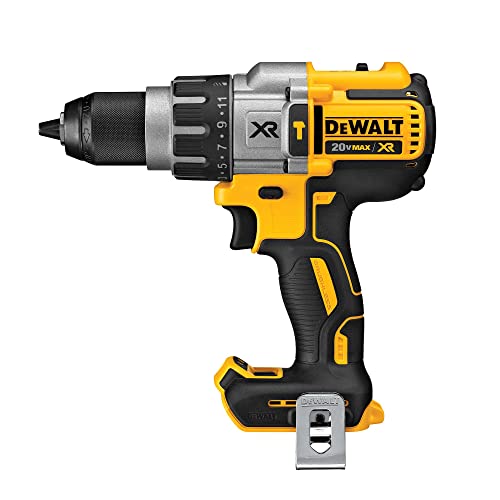 DEWALT DCD996BCordless with BPM listed
Do you really need a hammer drill for concrete?
Yes, for anything beyond a tiny pilot hole. A standard drill only spins the bit. Concrete is hard and brittle, so a spinning carbide tip wears down and drills very slowly. A hammer drill adds rapid short strikes along the bit's axis while it rotates. The strikes crush the material in front of the tip and the rotation clears it out.
A hammer drill is a middle step, not the strongest tool for masonry. For many large holes, deep holes or work near rebar, a rotary hammer that uses SDS bits is the usual upgrade. For breaking concrete rather than drilling it, see our best demolition hammer for breaking concrete page.
For light jobs such as anchors for shelves, a conduit strap or a fence bracket, a 1/2 inch hammer drill is usually enough.
What the specs mean for concrete work
Spec sheets list several numbers. Only a few of them tell you much about masonry performance.
Blows per minute (BPM) counts how often the hammer action strikes. In our data, listed BPM runs from 25500 to 52700, though not every product publishes it. Higher BPM generally helps in brick and block. Motor amps matter for corded tools, and RPM tells you how fast the bit turns. Concrete drilling wants a steady, controlled speed, not the highest speed.
- BPM: more strikes per minute help the bit cut masonry.
- Motor amps: a higher amp rating on a corded tool points to more sustained power.
- Chuck type: keyless chucks change bits by hand, while keyed chucks need a key and are often chosen for bit retention.
- Side handle and depth rod: these help you keep the drill steady and stop at the right depth.
- Variable speed trigger: it lets you start slowly so the bit does not wander.
Corded or cordless for concrete
Corded tools keep their power as long as they are plugged in, and they do not depend on a battery. Our best hammer drill corded page covers that group. Cordless tools trade some hammer rate for freedom of movement. See our best hammer drill cordless page for that side.
The numbers in our data show the difference. The corded CRAFTSMAN CMED741R lists 52700 BPM and 3100 RPM. The cordless DEWALT DCD996B lists 38250 BPM and 2250 RPM. The cordless Craftsman V20 kit lists 25500 BPM and 1500 RPM.
Cordless is worth it if you drill at heights, work outdoors, or move around a site. Corded is the better fit if most of your holes are in one place and you want higher listed BPM. Also check what comes in the box. Some cordless listings, such as the DEWALT DCD806B, are tool only, so you would need a battery and charger.
How the listed models compare
The table uses the figures from our spec sheet. A dash means the listing does not publish that number. Treat these as published specs, not measured results.
Weight matters because concrete holes are often drilled sideways or overhead, and a heavy tool tires you quickly.
| Model | Power | BPM | Weight (lb) | Chuck |
|---|---|---|---|---|
| Hammerhead HAHD075 | Corded, 7.5 A | 48000 | 5.18 | Keyless |
| CRAFTSMAN CMED741R | Corded, 7 A | 52700 | 5.29 | Keyed |
| Bosch 1191VSRK | Corded, 7 A | 48000 | 4.1 | Keyed |
| SKIL HD182001 | Corded, 7.5 A | 48000 | 5.34 | Keyed |
| BLACK+DECKER BEHD201 | Corded, 6.5 A | 48000 | - | Single-sleeve |
| DEWALT DCD996B | 20V MAX cordless | 38250 | 4 | Keyless |
| DEWALT DCD806B | 20V MAX cordless, tool only | - | 3.49 | Keyless |
| Craftsman V20 kit | V20 cordless | 25500 | 6.1 | Keyless |
| DCK 20V kit | 20V brushless cordless | 36000 | 8.15 | Keyless |
Matching a drill to your job
Start with how many holes you need and where they are. A handful of holes at home is a different job from a day of anchors on a site.
Occasional holes in a garage, basement or patio wall suit a corded 6.5 to 7.8 amp model. The BLACK+DECKER BEHD201, Hammerhead HAHD075, SKIL HD182001 and Bosch 1191VSRK all list 48000 BPM. If you also need a general-purpose tool for wood and metal, our best drill page may help you decide how much hammer capability you want.
Overhead or ladder work favors lighter tools. The DEWALT DCD996B lists 4 lb, and the corded Bosch lists 4.1 lb. The DCK kit lists 8.15 lb, which is the heaviest in our data.
Reinforced concrete is the limit for many tools in this class. The Hammerhead listing says it cannot be used in reinforced concrete walls. If you expect to hit rebar often, look at an SDS rotary hammer instead.
Bits and technique
The bit matters as much as the drill. Use carbide-tipped masonry bits sized for your anchor. A dull or wrong bit makes any drill look weak.
Follow these steps for a cleaner hole:
- Mark the spot and confirm there are no cables or pipes behind the surface.
- Set the drill to hammer mode and start at low speed so the tip bites.
- Hold the drill straight and apply steady, moderate pressure. Let the hammer action do the work.
- Pull the bit out now and then to clear dust, especially in deep holes.
- Use the depth rod if your drill has one, so every hole ends at the same depth.
- Blow or vacuum the dust out before you set the anchor.
Safety notes
Wear safety glasses, because chips can fly out of the hole. Concrete drilling is loud, so use hearing protection. Concrete dust can harm your lungs, so wear a dust mask or respirator rated for fine dust and use a vacuum or dust shroud where possible.
Always use the side handle if your drill has one. A bit that jams can twist the tool hard. For corded drills, check the cord and use an outlet with ground-fault protection, especially outdoors or in damp spaces. On a ladder, keep your balance and do not overreach.
Before drilling into walls or floors, check for hidden wiring, water pipes or gas lines. A concrete slab may hold post-tension cables or electrical conduit.
Frequently asked questions
Can I use a hammer drill on brick and block?
Yes. Brick and concrete block are common hammer drill targets, and they are generally easier to drill than dense poured concrete. Use a masonry bit and start slowly.
Is a higher BPM always better?
Not always. More strikes per minute can help cut masonry, but weight, control and bit quality also matter. Compare BPM alongside weight and the type of work you do.
Should I turn on hammer mode for wood or metal?
No. Switch to plain drill mode for wood and metal. Hammer mode is meant for masonry and can damage softer materials.
What is the difference between a hammer drill and an SDS rotary hammer?
An SDS rotary hammer uses a stronger striking mechanism and special bits, so it handles bigger and deeper holes in concrete with less effort. A hammer drill is lighter and more versatile for everyday jobs.