What Tool Is Used for Cutting Metal? A Complete Guide
The most common tools for cutting metal are hacksaws, tin snips, angle grinders, reciprocating saws, band saws and metal chop saws. The right one depends on the shape and thickness of the metal and how many cuts you need to make. For repeated, square cuts in tube, bar and angle iron, a dedicated metal chop saw is usually the best fit.
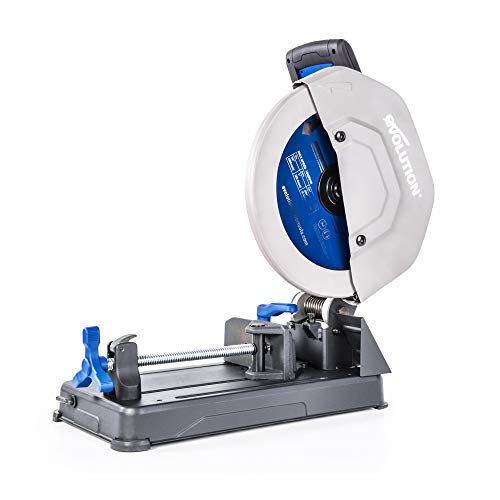 EVOLUTION S355CPSLBest overall
 EVOLUTION S14CPS
 EVOLUTION S14MCSBest for fabrication shops
The main tools that cut metal
No single tool is best for every job. Metal comes as thin sheet, flat bar, round bar, tube, pipe and structural shapes, and each shape suits a different cutter. Here are the tools most people reach for, from simple hand tools to power equipment.
Hand tools cost little and need no power, so they work well for occasional cuts and tight spots. Power tools save time and effort when the stock is thick or you have many pieces to cut.
- Hacksaw: a hand saw with a fine-tooth blade for bar, pipe and small tube.
- Tin snips and aviation snips: hand shears for thin sheet metal.
- Angle grinder with a cutting disc: fast and portable for rough cuts and awkward jobs.
- Reciprocating saw: a push-pull saw for demolition and cutting in place.
- Oscillating multi-tool: a small vibrating blade for flush cuts and tight spaces.
- Band saw: a shop machine for precise straight and curved cuts in thicker stock.
- Metal chop saw: a pivoting saw with a vise, built for straight, square or mitered cuts.
What is metal cutting called?
Metal cutting is a broad term, and the name changes with the method. Sawing uses a toothed blade. Shearing uses two blades that slide past each other, the way snips and metal shears work. Abrasive cutting grinds through the metal with a bonded disc. Cold cutting is sawing with a slow-running toothed blade that keeps heat low.
A metal cutting tool is simply any tool that removes or separates metal in one of these ways. In a machine shop, the term can also cover lathe and mill cutters, but for home and fabrication work it usually means saws, shears and discs.
Match the tool to the job
Start with what you are cutting and how often. A single cut in a thin bracket does not justify a bench machine. Fifty identical cuts in square tube do.
The table below gives a simple starting point. It is general guidance, so check your tool's manual for the materials and thicknesses it is rated for.
| Job | Good tool choices | Why |
|---|---|---|
| Thin sheet metal | Tin snips, aviation snips | Clean cuts with no sparks |
| Small bar or pipe, occasional cuts | Hacksaw | Cheap and quiet, but slow |
| Rough cuts, odd angles, on site | Angle grinder with cutting disc | Portable and quick |
| Flush cuts and tight spaces | Oscillating multi-tool | Small blade reaches awkward spots |
| Demolition or cutting in place | Reciprocating saw | Cuts whole assemblies |
| Thick stock, precise shapes | Band saw | Controlled cut with little heat |
| Repeated square or mitered cuts | Metal chop saw | Vise and fence give accurate, repeatable cuts |
Why chop saws suit repeat cuts
If you cut tube, bar and angle iron regularly, a chop saw is hard to beat. The workpiece sits in a vise against a fence, and the blade comes down the same way every time. That gives you square cuts and consistent miters without marking and guessing each time. Our best metal cutting tool comparison puts several of these saws side by side.
Blade size sets how thick a piece you can cut. Among the saws on that page, blade diameters run from 7-1/4 in to 16 in. The 14 in Evolution S355CPSL lists a round cut capacity of 130.2 mm, the largest of the saws that give that figure. The compact 7-1/4 in VEVOR suits small tube and flat bar.
Speed matters too. Cold cut saws run slower than abrasive saws, which keeps the teeth cooler and the cut cleaner. The Evolution S14MCS runs at 1,100 RPM with a soft start and an electric brake, while the small VEVOR 7-1/4 in saw runs at 4,000 RPM. Weight is the other trade-off. The S14MCS weighs 72.4 lb and stays put on a bench, while the 7-1/4 in VEVOR weighs 14.44 lb and is easy to carry.
Blades, discs and accessories
The cutter you attach matters as much as the tool. A tool with the wrong blade will cut slowly, overheat or ruin the work.
Toothed carbide or cermet blades cut metal with less heat, fewer sparks and cleaner edges, so parts are often ready to weld sooner. Abrasive discs wear down quickly and leave burrs, but they are cheap and cut very hard materials. If you use a grinder, our guide to the best angle grinder disc for cutting metal explains what to compare.
For hand work, blade tooth count is the key. Use fine teeth for thin stock so at least a few teeth are always in contact with the metal. Our best hand saw for cutting metal page covers saw options. For tight spaces, see the best oscillating tool for metal and the matching best oscillating tool blades for metal.
Safety before you cut
Cutting metal throws sparks, chips and noise, and the work gets hot. A few habits prevent most injuries.
Always read the manual for your tool and match the blade or disc to the tool's rated speed.
- Wear safety glasses or a face shield. Add hearing protection for grinders and chop saws.
- Wear gloves when handling cut pieces, which have sharp edges and can be hot. Take them off near spinning blades if they could catch.
- Clamp the workpiece firmly. Never hold it by hand against a power saw or grinder.
- Keep sparks away from anything flammable, and clear the area of rags, solvents and sawdust.
- Unplug the tool before changing a blade or disc, and let the blade reach full speed before it touches the metal.
- Inspect abrasive discs for cracks before every use, and never remove a guard.
A simple way to get a clean cut
Good technique helps any tool. Follow these steps and your cuts will be straighter and your blades will last longer.
- Measure twice and mark the cut line with a scribe or marker.
- Clamp the metal so the cut falls just past the edge of the support.
- Let the tool reach full speed before it contacts the metal.
- Apply steady, even pressure and let the blade do the work.
- Keep the feed moving, since a very slow feed builds heat.
- Deburr the edge with a file when you finish.
Frequently asked questions
What is the easiest tool to cut metal at home?
For thin sheet, snips are the simplest. For bar or pipe, a hacksaw needs no power and little setup. An angle grinder is quicker for thicker pieces.
Can a regular wood saw cut metal?
Not safely. Metal needs a blade made for it, with the right tooth style and speed rating. Some multi-material saws cut metal with a special blade, so check the manual.
Is a cold cut saw better than an abrasive saw?
Cold cut saws leave cleaner, cooler cuts with fewer burrs. Abrasive saws are cheaper to start with but wear through discs and make more sparks and dust.
Do I need a vise when cutting metal?
Yes, or another solid clamp. A loose workpiece can bind, kick or spin, which is dangerous and gives a poor cut.