What Tool Do Roofers Use to Remove Shingles?
Roofers use a long-handled roof shovel (also called a shingle stripper) or a shingle ripper to remove whole sections of shingles, and a short claw pry bar, often called a roof snake, to pull nails and replace a few damaged shingles. Which one you need depends on whether you are repairing a spot or stripping the roof. Always work with fall protection.
 PacTool RS501 Roof SnakeBest overall
 Hoqqf 54UCB060Most compact
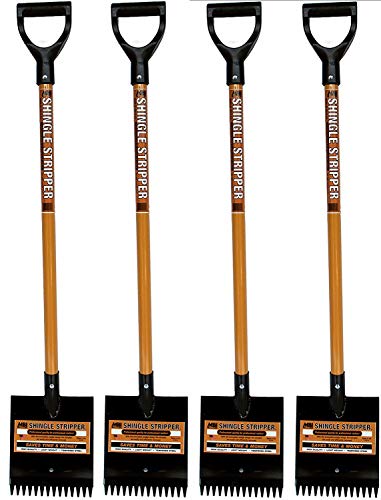 MBI Tools MBISS-4LBest for full tear-offs
The short version: match the tool to the job
There is no single tool for every shingle job. Roofers carry different tools because a spot repair and a full tear-off are very different kinds of work.
For a full tear-off, the usual choice is a roof shovel, which has a long handle and a flat, toothed blade. For smaller work, roofers reach for a short pry bar with a claw tip. A shingle ripper sits in between. Our best shingle removal tool page puts several of these on one spec sheet if you want to compare them.
- Full tear-off: a long roof shovel or stripper lifts whole rows of shingles and nails at once.
- Mid-length work: a shingle ripper gives more leverage than a pry bar in a shorter tool.
- Spot repair: a short claw pry bar (roof snake) pulls hidden nails without tearing nearby shingles.
- Installing new shingles: look for a nail slot that holds a nail in position under the row above.
Roof shovels for stripping a whole roof
A roof shovel is the tool most people picture. You slide the blade under the shingles, push down on the handle, and the shingles and their nails come up together. The long handle gives you leverage and lets you stay more upright than you would with a short bar.
The MBI Stripper Roof Shovel on our comparison page is 47 in. long with an 8 in. blade, the longest and widest tool on the sheet. The listing mentions 11ga tempered steel and a steel D-grip handle, and says it is made in the USA.
A shovel has no claw or nail slot, so it is built for removal only. It is also awkward for a few shingles, where its length gets in the way.
Pry bars and roof snakes for repairs
When only a few shingles are damaged, roofers use a short flat pry bar with a claw tip. A roof snake is a popular version. You slip the claw under a nail hidden beneath the shingle above, roll the nail out and lift the damaged piece without bending the good ones around it.
Many of these tools also have a nail slot. The slot holds a new nail at the right offset from the bottom edge of the course, so you can drive it without hitting your fingers or the surrounding shingles.
On our sheet, the PacTool RoofSnake is 13 in. long and weighs 1.4 lb, the lowest weight among the products that list one. The Hoqqf 2-in-1 is the shortest at 11.6 in. The SDSNTE bar is 12 in. long and its listing names 4140 steel. Short bars give modest leverage, so they suit repairs rather than stripping.
Shingle rippers: the middle option
A shingle ripper is a longer pry tool that lifts shingles and pulls nails with more force than a pocket bar. It suits people who want extra leverage but do not need a full-length shovel.
The Dasco Pro 640 on our page is a 24 in. ripper made from high carbon steel with a powder-coated finish. It weighs 7.2 lb, the heaviest tool listed, and it is assembled in the USA. The listing notes a choice of models with or without TargetGuard, a grip feature meant to keep your hand from slipping.
Comparing the main tool types
The table below uses the published specifications from our comparison page. Length and weight are the quickest ways to tell these tools apart.
The pattern is simple: longer and heavier tools strip more roof per pass, while shorter and lighter tools fit tight spots and finer work.
| Tool type | Example | Length | Weight | Best for |
|---|---|---|---|---|
| Roof shovel | MBI Stripper Roof Shovel | 47 in. | 1.52 lb | Full tear-offs |
| Shingle ripper | Dasco Pro 640 | 24 in. | 7.2 lb | Extra leverage on mid-size jobs |
| Pocket pry bar (roof snake) | PacTool RoofSnake | 13 in. | 1.4 lb | Repairs, with claw and nail slot |
| Compact claw pry bar | Hoqqf 2-in-1 | 11.6 in. | Not listed | Spot repairs in tight spaces |
How roofers remove shingles with a pry tool
The exact method depends on the tool, but a typical repair with a claw pry bar follows the steps below. Check your shingle type first, since 3-tab and architectural shingles are nailed differently.
- Put on fall protection, eye protection, gloves and non-slip footwear before you climb.
- Lift the shingle above the damaged one gently to expose the nails.
- Slide the claw under each nail head and roll the nail out. Do not yank straight up.
- Remove the damaged shingle and clear any leftover nails from the deck.
- Slide the new shingle into place and use the nail slot to set nails at the correct offset.
- Drive the nails, then press the upper shingle back down.
Safety on the roof
Roofing is one of the more dangerous home projects, so treat safety as part of the tool choice. Use a harness tied to a secure anchor on any steep or high roof, and never work on a wet, icy or windy day.
Wear safety glasses because nails and debris can fly when you pry. Gloves help with sharp shingle edges. If you use a hammer or a powered nailer afterward, hearing protection is a good idea too.
Keep the ground below clear, and tell anyone nearby that you are tossing debris. Shingles slide and fall faster than people expect. If you are not comfortable with the height or pitch, hire a professional.
What to look for when you choose
Start with the job, then check length, steel and extras. Longer tools give more leverage, and our listings run from 11.6 to 47 in. Steel matters because you will be hitting and prying, so look for tempered, high carbon or 4140 steel.
A nail slot is worth having if you will install new shingles, and less important for pure tear-offs. Weight is the last check, since a heavy tool tires you out over a long day. Our shingle removal tool comparison lays out these specs side by side.
Frequently asked questions
What is a shingle removal tool called?
Common names include shingle remover, shingle stripper, roof shovel, shingle ripper and roofing pry bar. Short claw-style bars are often called roof snakes. The name usually hints at the job: shovels strip rows, bars pull individual nails.
Can I use a regular flat bar and hammer?
For one or two shingles you can, but a plain flat bar makes it easier to tear the shingles around the repair. A claw-tip roofing bar reaches hidden nails more cleanly. Use the same fall and eye protection either way.
Do I need a nail slot on my tool?
Only if you plan to install new shingles. The slot holds a nail in position and helps you place it at the right offset without hitting your fingers. If you are only tearing off old shingles, you can skip it.
Is a longer tool always better?
No. Longer tools give more leverage for big areas, but they are clumsy for small repairs. A short bar fits tight spots and a tool belt, so pick the length that matches the work.