What Sizes Do Table Saws Come In and Which Do You Need?
Table saws are sized by blade diameter, and 10 inches is the standard for nearly every jobsite, contractor and cabinet saw. Compact models sometimes use smaller blades, and a few large shop saws use 12 inch blades. For most woodworking, a 10 inch saw with enough rip capacity for your widest board is the right size.
 EVOLUTION R10TBLXBest overall
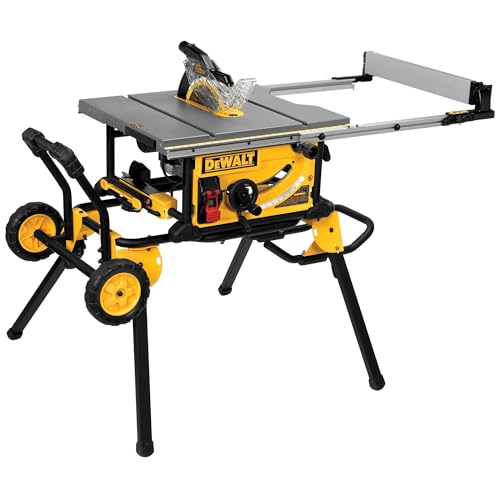 DEWALT DWE7491RSWidest rip capacity
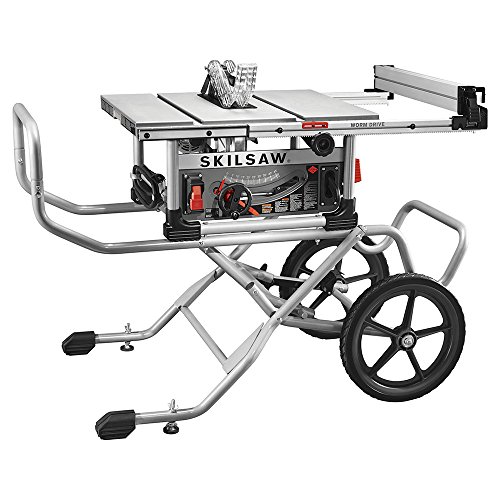 SKILSAW SPT99-11Deepest cut at 90°
Table saw sizes at a glance
When people ask what size a table saw is, they usually mean blade diameter. The 10 inch blade is the common size, and it is what you will find on most saws sold for general woodworking and construction. That also means blades, dado sets and zero-clearance inserts are easy to find.
Smaller saws exist. Some compact models use blades of roughly 8 to 8-1/2 inches, which cut less deep and offer fewer blade choices. A few large stationary saws use 12 inch blades for thicker stock, but they are heavier and need more space and power.
The saw type often matters more than the blade. Here is how the main groups compare in general terms.
| Saw type | Typical blade | Best for | Main tradeoff |
|---|---|---|---|
| Compact benchtop | 8 to 8-1/2 in, sometimes 10 in | Small projects and tight spaces | Smaller table and shorter rip capacity |
| Jobsite | 10 in | Trim, shelving and work that moves | Lighter build, limited rip width |
| Contractor | 10 in | Home shops that still need to move the saw | Heavier and usually needs a stand |
| Cabinet | 10 in, some 12 in | Daily shop work and wide panels | Very heavy and fixed in place |
Which size you need for woodworking
For most woodworkers, a 10 inch blade is the answer, so the better question is how large the whole saw should be. Think about the widest board you cut, how thick your stock is, and where the saw will live.
A small shop that handles trim, boxes and shelves can work well with a compact or jobsite saw. Furniture makers who cut wide panels or thick hardwood often prefer a larger table and longer fence rails.
Rip capacity on the right side of the blade is hard to add later. Choose it with some room to spare rather than buying right at the width of your current projects.
Measurements that matter more than blade size
Because the blade is nearly always 10 inches, these specs do more to separate one saw from another:
- Rip capacity: the widest cut between the blade and the fence. It decides whether you can cut wide shelving and panels.
- Depth of cut at 90°: the thickest board the blade can pass through in one pass.
- Bevel range: how far the blade tilts for angled cuts, which matters for trim and joinery.
- Weight: how easy the saw is to load, carry and set up.
- Table and stand: a larger table supports long boards, and a stable stand sets a comfortable work height.
What jobsite saws on our sheet show
Our best jobsite table saw page puts five saws on one spec sheet. All five use a 10 inch blade, so the useful differences are in the other numbers.
Weight runs from 50.8 lb to 112 lb. Among the four that publish rip capacity, the range is 26 in to 32.5 in, and depth of cut at 90° runs from 2.91 in to 3.625 in. None lists enough rip width for a full sheet of plywood, so plan to break sheets down first.
| Saw | Blade | Rip capacity | Depth at 90° | Weight |
|---|---|---|---|---|
| Evolution R10TBLX | 10 in | 26 in | 3.375 in | 50.8 lb |
| DEWALT DWE7491RS | 10 in | 32.5 in | 3.125 in | 112 lb |
| SKIL SPT99-11 | 10 in | 30.5 in | 3.625 in | 94.3 lb |
| Bosch GTS15-10 | 10 in | 32.125 in | 3.5625 in | 102.95 lb |
| EliteEdge 10in | 10 in | Not published | 2.91 in | 52.96 lb |
How to pick your size, step by step
A short checklist keeps the choice simple. Work through it in order:
- Measure the widest board you cut most often, then add a little margin for rip capacity.
- Note the thickest stock you cut and compare it with the depth of cut at 90°.
- Decide how often the saw has to move. If you carry it daily, weight comes first.
- Check the space and power supply where the saw will sit, including a stand or outfeed room.
- Compare the specs side by side, for example on our jobsite saw comparison, and treat any unpublished spec as a risk.
Safety notes when sizing up
A bigger saw is not automatically a safer one. Wear eye and hearing protection every time, keep the guard and riving knife in place, and use a push stick for narrow cuts.
Never reach over a spinning blade, and support long boards so they cannot bind or kick back. Make sure the circuit and any extension cord can handle the saw's amp rating, and get help lifting heavy models to avoid back injuries.
Frequently asked questions
Is a bigger table saw always better?
No. A larger saw offers more table and rip width, but it also weighs more and takes more space. Choose the size that fits your widest board and your workspace. Extra capacity you never use only adds bulk to move.
Can I fit a different blade size on my saw?
No. Use only the blade diameter and arbor size your saw's manual lists. A wrong-size blade can foul the guard or riving knife and create a serious safety risk. Change the blade type, not the size.
Does a heavier saw cut more accurately?
Not necessarily. Extra weight can add stability, but accuracy depends on the fence, the table and the blade. On our sheet, weight runs from 50.8 lb to 112 lb, so check fence type and rip capacity too.
Do I need a stand with a table saw?
A stand sets a safe work height and makes a saw easier to move. All five saws on our jobsite page list a rolling stand. Check how fast it folds and how stable it feels under wide boards.