What Size Wood Lathe Chuck Do You Need for Bowl Turning?
For most bowl turners, a four-jaw scroll chuck of roughly 4 to 5 inches in body diameter, with a standard 50mm jaw set, is the right size. Pick the chuck that fits your lathe's swing and spindle thread, then add jaw sets for the bowl sizes you turn. Smaller chucks suit mini lathes, and larger ones help on bigger lathes with heavy bowls.
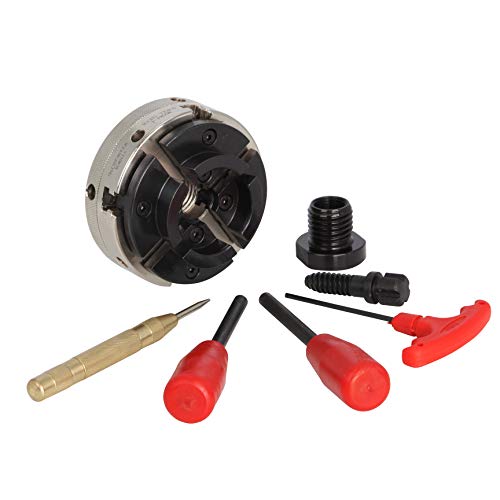 VINWOX SCR4-4Best overall
 NNBWKIXI NNBWKIXI0611Largest chuck body
 BMTURNING SCK-3/4RSmallest body, reversible jaws
Start with your lathe, not the bowl
Chuck size is limited first by your lathe. The chuck body spins right next to the bed and headstock, so a chuck that is too large for the swing can leave little room to work and make the tool rest awkward to position.
A common rule of thumb from experienced turners is to keep the chuck body well under the swing of the lathe. On a lathe with an 18 inch swing, for example, a chuck of 5 inches or less is a sensible match. On a smaller midi or mini lathe, a compact chuck of about 3 inches or less keeps the whole setup balanced and safe.
If you have not picked a lathe yet, our best wood lathe comparison shows swing, spindle thread and motor details side by side, which helps you choose a chuck at the same time.
Chuck body sizes at a glance
Bowl chucks are usually sold as four-jaw scroll chucks. The body size mostly tells you how stable the chuck is and how many jaw sets are made for it. This table gives general guidance, not product specifications.
| Lathe type | Typical chuck body | Good for |
|---|---|---|
| Mini or benchtop lathe | About 3 inches or less | Small bowls, boxes, pens and trinkets |
| Midi lathe | About 3 to 4 inches | Small to medium bowls |
| Full-size lathe with about 12 to 16 inch swing | About 4 to 5 inches | Most everyday bowls |
| Large lathe with 18 inch swing or more | About 5 inches or larger | Large, heavy bowls and blanks |
Jaws matter as much as the chuck body
Many turners focus on the chuck body and forget that the jaws do the actual gripping. Most four-jaw chucks ship with 50mm jaws, which handle a wide range of work, from a bowl tenon to a small box.
A larger jaw set holds a wider tenon or recess, which spreads the grip over more wood. That helps with big, heavy bowls. Smaller jaws are better for little bowls and delicate work where a large tenon would look out of proportion.
A chuck with many available jaw sets gives you more room to grow. This is one reason some turners lean toward a 5 inch chuck on a larger lathe, since more jaw options exist for it.
Match the chuck to your spindle thread
Even the perfect size will not help if it does not thread onto your lathe. Chucks use a threaded insert that must match your headstock spindle. Common thread sizes include 1 inch by 8 threads per inch and 1-1/4 inch by 8 threads per inch, but lathes vary, so check your manual.
Many chucks come with an insert for a single thread size, and others offer inserts you can swap. Confirm the thread, the direction of rotation and the spindle's depth before you buy. Our best wood lathe chuck for bowl turning page lists compatible thread options so you can narrow things down quickly.
How jaws grip a bowl: tenon or recess
There are two basic ways to hold a bowl blank in a chuck. Both use the jaws in different ways, so the jaw size you need depends on which you prefer.
A tenon is a short cylinder of wood left on the base of the bowl. The jaws close around it in compression. A recess is a shallow, dovetail-shaped hole cut into the base. The jaws expand into it. Either way, a well-formed shape that matches the jaw angle holds securely through the whole turning process.
As you plan, keep these points in mind:
- Make the tenon or recess a close fit for the jaw diameter, so the jaws grip fully rather than at a few points.
- Leave enough wood depth so the jaws seat against a flat shoulder.
- Use a larger jaw set for heavy blanks, and a smaller set when the finished bowl base needs to stay small.
- Reverse chucking, which holds the finished bowl by its rim or a jam fit, often needs a different jaw type, so think ahead about finishing the base.
Safety notes before you mount a bowl
Bowl blanks are heavy and often unbalanced, so start slow. Begin at a low speed and raise it only when the blank spins smoothly. Stand out of the line of the blank when you switch on, because a poorly gripped blank can fly off.
Wear a full face shield, not just safety glasses, and use hearing protection and a dust mask or respirator. Always unplug the lathe before changing jaws, inserts or belts. Tighten the chuck fully with the proper key, and check the grip again after the first few cuts.
A simple way to choose
If you are still unsure, work through this short process:
- Check your lathe's swing and the largest bowl you want to make.
- Find your spindle thread size and confirm any adapters.
- Choose a chuck body that fits comfortably within the swing, usually in the 3 to 5 inch range.
- Start with the standard 50mm jaws, then add larger or smaller jaw sets as your projects require.
- Compare options on our chuck comparison page by body size, jaw sets and thread compatibility.
Frequently asked questions
Can I use a small chuck for large bowls?
You can, but a small chuck grips a smaller area, which can strain the wood and the jaws on heavy blanks. A larger jaw set or a larger chuck body is safer for big bowls.
Do I need more than one chuck?
Most turners do fine with one four-jaw chuck and extra jaw sets. A second chuck is mainly a convenience when you want to switch between roughing and finishing set-ups.
Is a faceplate or screw chuck enough instead?
A faceplate or screw chuck can hold a bowl blank, but a scroll chuck is quicker to mount and release. Screw holes also leave marks in the base, so many turners prefer jaws.
What size chuck fits a 12 inch lathe?
A 12 inch swing lathe generally pairs best with a compact chuck, often around 3 to 4 inches in body diameter. Check the clearance between the chuck and the bed before you buy.