What Size Tungsten and Cup Do You Need for Aluminum?
For most AC TIG work on aluminum, a 3/32 inch tungsten with a #7 or #8 cup is a sound starting point. Drop to 1/16 inch for thin sheet at low amperage, and move to 1/8 inch when you run high current on thick plate. Match the tungsten to your amperage first, then pick the cup for the joint and the gas coverage you need.
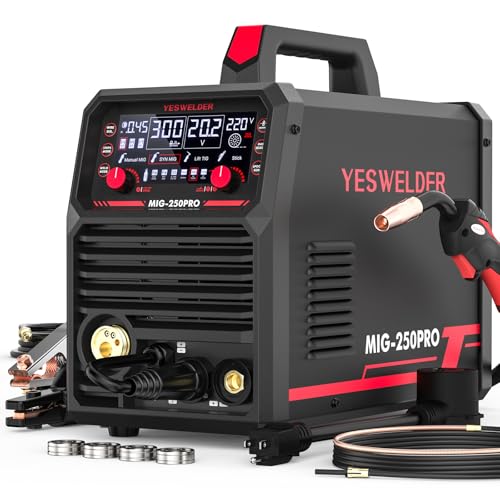 YESWELDER MIG-250DS PROBest overall
 BILT HARD WLD-1603Lightest
 ARCCAPTAIN MIG200Best finishing controls
The short version: a starting setup
Aluminum needs AC (alternating current) from a TIG machine, because the AC cycle breaks up the oxide skin that sits on top of the metal. That skin melts at a far higher temperature than the aluminum under it, which is why the cleaning action of AC matters so much.
A good all-round setup is a 3/32 inch (2.4 mm) tungsten, a #7 cup and pure argon. It covers a wide range of everyday jobs, from automotive brackets to boat repairs. From there you adjust up or down based on thickness, joint type and how much current you run.
Choosing tungsten diameter
Tungsten diameter has to carry your welding current. AC puts more heat load on the electrode than DC does, because part of each cycle sends heat into the tungsten instead of the work. That is why aluminum often calls for a slightly larger tungsten than you would use on steel at the same amperage.
The table below gives rough starting ranges. Manufacturers publish their own charts, and they differ a little, so check the one that came with your electrodes and your machine.
- Too small a tungsten for the current will overheat, grow a large ball and may spit tungsten into the weld.
- Too large a tungsten can give an unstable, wandering arc at low current.
- If you use more electrode-positive balance for extra cleaning, consider stepping up one size, since that setting heats the tungsten more.
| Tungsten diameter | Typical use on aluminum | Rough AC amperage guide |
|---|---|---|
| 1/16 in (1.6 mm) | Thin sheet, tight corners, low heat | Low, up to roughly 80 to 100A |
| 3/32 in (2.4 mm) | General purpose, most hobby work | Mid range, roughly 80 to 180A |
| 1/8 in (3.2 mm) | Thick plate, high current, long welds | High, roughly 150A and up |
Choosing the right tungsten type
Pure tungsten (green band) is the traditional choice for AC aluminum and balls easily. Zirconiated tungsten (brown band) handles heat well and resists contamination. Many welders with modern inverter machines prefer rare earth blends such as lanthanated or ceriated tungsten, which start easily and hold a tip shape longer.
Avoid thoriated tungsten (red band) for aluminum. It is meant for DC work, and it contains a mildly radioactive element, so the grinding dust is something you want to keep out of your lungs. Whatever type you buy, use a grinding wheel only for tungsten, wear eye protection and a dust mask, and keep the dust off surfaces where you eat or work.
Choosing the right cup size
Cups are sized in sixteenths of an inch across the opening. A #7 cup is 7/16 inch and a #8 is 1/2 inch. A bigger cup puts out a wider blanket of argon, which helps aluminum because the weld pool is very sensitive to contamination.
A #7 works well for most joints. Step up to a #8 when you want more coverage, when you run higher amperage, or when you stick the tungsten out a little farther. A #10 or larger gas lens cup makes sense on corner joints or deep access, but bigger cups can block your view of the puddle and reach into tight spaces poorly.
- #5 or #6: tight spaces and thin material, with less coverage.
- #7: a solid default for most aluminum work.
- #8: a bit more coverage for higher current or longer stickout.
- #10 and up: wide coverage, usually paired with a gas lens, best on open joints.
How to ball the tungsten for aluminum
On older transformer-style AC machines, a rounded tip helps keep the arc stable. You can form the ball on the machine by switching to DC electrode positive, striking an arc on a clean piece of copper or scrap aluminum, and letting the tip melt into a ball. Stop when the ball is about the same width as the tungsten diameter, or slightly bigger.
With most inverter AC TIG machines, you do not need to build a big ball first. Grind the tungsten to a point, flatten the very tip a little, and let the AC arc form a small ball by itself. A small ball stays steady. A huge ball gives a wide, wandering arc and means your tungsten is too small for the current, or your balance is set too far toward cleaning.
Grind the tungsten lengthwise, not around the wheel, so the grind marks run along the electrode. This keeps the arc focused. If the tip touches the pool or the filler rod, stop, regrind and start again. A contaminated tip can leave black soot and an unstable arc.
Setup checklist and safety
Before you strike an arc, run through this short list:
- Clean the aluminum with a stainless brush used only for aluminum, just before welding.
- Use pure argon shielding gas, and set flow so the pool is protected without causing turbulence.
- Keep tungsten stickout roughly equal to the cup diameter, a little more on corner joints.
- Confirm your machine is set to AC and that the torch and leads are rated for the current you plan to use.
- Wear a welding helmet with the right shade, gloves, long sleeves and eye protection under the helmet. Wear hearing protection when grinding.
What if your welder cannot do AC TIG?
Many multi-process welders list lift TIG or HF TIG, but those modes are DC. Without AC output you cannot properly clean the oxide off aluminum, so the tungsten and cup sizes above do not apply to those machines.
If your machine does not have AC TIG, spool gun MIG is the practical route. Our best welding for aluminum page compares welders that reach aluminum this way. For the cleanest, most controlled welds you will want a dedicated AC TIG machine, and the same page explains how the two routes differ so you can decide which fits your projects.
Frequently asked questions
Can I use a 1/16 inch tungsten for aluminum?
Yes, on thin sheet at low amperage. If the tip balls up fast or sprays, step up to 3/32 inch.
Does a bigger cup always make a better weld?
No. A larger cup gives wider gas coverage, but it can block your view and will not fit tight joints. Use the smallest cup that still gives you clean welds.
Why does my tungsten turn gray or black?
This is usually contamination from touching the pool or filler, too little gas or poor cleaning of the aluminum. Regrind the tip and check your gas flow and prep.
Is a gas lens worth it for aluminum?
It smooths the gas flow and lets you use a longer stickout, which helps on corners and awkward joints. It is optional for flat work.