What Size Tool Set Do You Need for Your Projects?
For most renters and new homeowners, a set of about 90 to 140 pieces covers screws, furniture, pictures and light repairs. If you also work on bikes or cars, step up to a set of roughly 250 pieces or more with a socket set and a 72-tooth ratchet. Piece count alone can mislead, so check which tools are actually in the case.
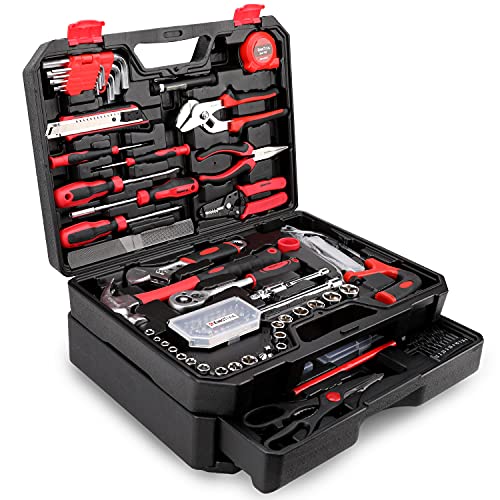 KingTool DS-HDT001Best overall
 CRESOLVIA RD105328Most pieces
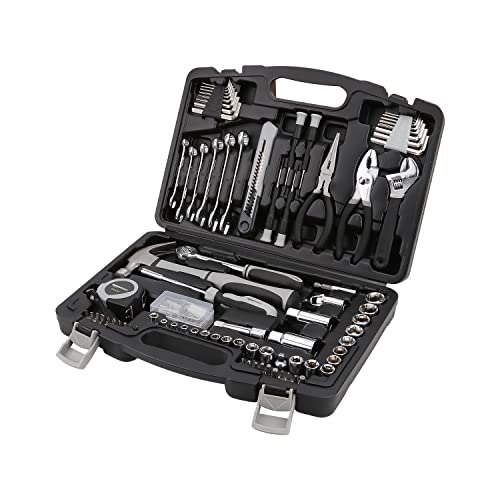 Amazon Basics DS-JYAMZ0002Best basic set
Start with your projects, not the piece count
The right size depends on what you plan to fix, build or assemble. Someone who hangs shelves and builds flat-pack furniture needs far less than someone who changes brakes on weekends.
Piece counts are also a blunt measure. Small bits, hex keys and fasteners all count as pieces, so a big number can hide a short list of real tools. Our best tool set comparison shows kits from 39 to 328 pieces, and the gap between them is mostly bits and small parts, not extra hammers or pliers.
A better question is which jobs you do most often, then which tools those jobs need.
A quick size guide
Use this table as a starting point. The example kits come from the published specs on our comparison page.
| Your situation | Typical size | What to look for | Example from our data |
|---|---|---|---|
| Renter, student or first apartment | About 40 to 100 pieces | Hammer, pliers, tape measure, a few screwdriver bits, hex keys | DEKOPRO 94-piece kit with a 4 oz hammer |
| Homeowner with everyday repairs | About 100 to 150 pieces | Full screwdriver set, wrenches, pliers, claw hammer, hex keys | Amazon Basics 131-piece set with an 8-ounce claw hammer |
| Furniture, bikes and basic car jobs | About 250 pieces or more | Socket set, 72-tooth ratchet, many bit types | Prostormer 259-piece kit in a hard case |
| Workshop, garage and many small projects | About 300 pieces or more | Drawer toolbox, sockets, 40 bits, levels, pipe wrench | CRESOLVIA 328-piece kit and KingTool 325-piece kit |
What a small set covers
A kit in the 40 to 100 piece range handles the basics. Think tightening a loose cabinet hinge, hanging a frame, assembling a desk or tightening a wobbly chair.
The DEKOPRO 94-piece kit is a good picture of this tier. It has a 4 oz claw hammer, 5.5-inch combination pliers, a utility knife, a 6.56-foot tape measure, five hex keys, ten bits and four small 1/4-inch sockets. That is enough for light work in a small space.
If weight and storage matter most, the CARTMAN 39-piece set is the lightest in our data at 3.3 lb. The tradeoff is fewer tools, so check that your most common jobs are covered.
What a mid-size set adds
Mid-size kits add tools that make household repairs easier. Look for a wider range of screwdrivers, combination wrenches, long nose pliers and a heavier hammer.
The Amazon Basics 131-piece set lists 16 hex keys, 6 combination wrenches, 4 precision screwdrivers, an 8-ounce claw hammer and 6-inch long nose pliers. It weighs 7.94 lb and comes in a hard case that measures 15.1 inches long. That mix suits dripping taps, furniture and general upkeep.
If you only want a few extra jobs covered, this tier is often the sweet spot. You get real tools without carrying a drawer toolbox.
When to go bigger
Step up in size when you need sockets and a ratchet. A fine-tooth ratchet, such as the 72-tooth models in the KingTool, Prostormer and CRAFTSMAN kits, can turn in tight spaces where a coarse ratchet cannot. That helps with bike frames, appliance panels and engine bays.
Larger kits also bring more bit types and better storage. The KingTool 325-piece kit comes with a drawer toolbox, 1/4 inch and 3/8 inch sockets, a 72-tooth ratchet and soft-grip handles. The CRESOLVIA 328-piece kit adds 40 screwdriver bits, but it weighs 13.33 lb, so carrying it around takes some effort.
If most of your work is under the hood, a smaller mechanics set may serve you better than a huge household kit. Our best tool set for mechanics page compares those options. The CRAFTSMAN 57-piece set, for example, has a 72-tooth ratchet and weighs 7.25 lb.
Check these features before you buy
Whatever size you pick, a few details separate a useful kit from a box of filler.
- Count the real tools. Add up screwdrivers, pliers, wrenches, sockets and the hammer, and ignore loose bits and fasteners.
- Check the steel and finish. Chrome vanadium or heat-treated alloy steel with a chrome finish resists bending and rust.
- Look at the handles. Soft grips make long jobs more comfortable.
- Think about the case. Molded hard cases show at a glance what is missing, and drawer toolboxes hold more but weigh more.
- Match the sockets to your needs. The kits above list metric sockets, so confirm the sizes if you work on older equipment or imported gear.
Safety notes
Wear safety goggles when you use a hammer, and any time you cut, pry or strike metal. Small chips can fly off without warning.
Turn off power at the breaker before you work near outlets, switches or wiring, and do not use metal-handled tools on live circuits. Hand tool sets are not a substitute for a licensed electrician on electrical or gas work.
For car jobs, never rely on a jack alone. Use jack stands on level ground, and keep tools off hot engine parts. Use a stable step ladder for any job above shoulder height.
A simple way to decide
Write down the last five jobs you did or wish you could do. If they are all screws, frames and furniture, buy a small or mid-size set. If any involve bolts, bikes or cars, pick a kit with a socket set and a fine-tooth ratchet.
Then compare a few kits side by side. Our best tool set page lists piece counts, weights, case types and key features together so you can see what each box really holds.
Frequently asked questions
Is a bigger tool set always better?
No. A larger kit has more pieces, but many are small bits or fasteners. A smaller set with the tools you use often is more useful than a large one full of items you never touch.
Do I need a socket set for home use?
Not always. Sockets help with bolts on furniture, bikes and cars. If you mostly drive screws and hang pictures, screwdrivers, pliers, a hammer and hex keys will cover most jobs.
Should I buy a set or individual tools?
A set is a convenient start because everything is stored in one case. Add single tools later for jobs you do often, such as a better hammer or a larger adjustable wrench.
How much space does a tool set take up?
Hard cases in our data measure about 15 to 17 inches long. Drawer toolboxes are about 16 inches long, but they weigh more, so plan for a closet shelf or garage spot.