What Size Stick Welding Machine Do You Need?
For most home and farm work, including 1/8 inch steel, a stick welder rated for about 140 to 200 amps on 240V is plenty. Choose by the thickest steel you will weld and the rod size it needs, then check input power and duty cycle. A 200A dual voltage machine covers nearly everything a beginner is likely to try.
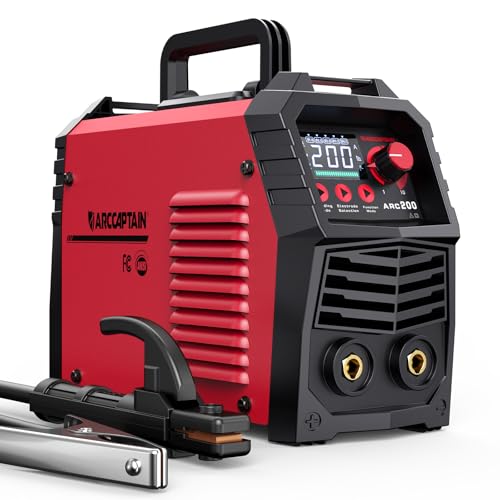 ARCCAPTAIN ARC200Best overall
 YESWELDER ARC-205DS PROBest for power
 Eioehtl portable welderHighest rated output
Start with your steel thickness and rod size
Stick welding size comes down to amps. Thicker steel needs a bigger rod, and a bigger rod needs more current to melt properly. So the question is really: what is the thickest metal you plan to weld, and what rod does that call for?
Beginners most often use 3/32 inch, 1/8 inch and 5/32 inch rods. As a loose rule of thumb, 3/32 inch rods run at the lower end of the amp range, 1/8 inch rods sit in the middle, and 5/32 inch rods need the most current. The exact range is printed on the rod box, so always follow that over any chart.
Your welder's maximum amps should sit comfortably above the highest setting you expect to use. Running a machine at its absolute limit all day is a recipe for overheating and a poor arc.
What size machine for 1/8 inch steel?
Welding 1/8 inch steel is a common goal, and it is well within reach of an entry-level machine. A 1/8 inch rod such as 6011 or 7018 typically runs somewhere around the middle of the rod's printed range, often well below 200A. That means a 140A to 200A machine handles it with room to spare.
Thicker plate is where extra capacity helps. If you also want to weld 1/4 inch or 3/8 inch steel, you will use bigger rods, make multiple passes, and benefit from a machine with 200A or more on 240V. Multi-pass welding means laying several beads on top of each other, so the machine runs longer at higher settings.
Our product data gives a few reference points. The Sefaspe ARC 200Pro is listed as a 200A machine for 2.5 to 4.0 mm rods, with a stated single-pass limit of 4 mm and multi-pass work up to 12 mm. The Eioehtl 250A portable welder lists rods from 0.094 to 0.125 inch, which is 3/32 to 1/8 inch. Both claims come from the manufacturers' published specifications.
Quick sizing guide
Use this table as a starting point. The amp ranges are general guidance, not specifications for any one machine, so check your rod box and your welder's manual.
| Steel thickness | Typical rod | Machine to look for | Best power |
|---|---|---|---|
| Up to 1/8 inch | 3/32 to 1/8 inch | 140A or more | 120V or 240V |
| 1/8 to 1/4 inch | 1/8 to 5/32 inch | 180A to 200A | 240V preferred |
| 1/4 to 3/8 inch (multi-pass) | 5/32 inch | 200A or more | 240V |
| Thicker structural work | 5/32 inch and up | 200A or more with a high duty cycle | 240V |
Check your power supply
A welder's rated amps are only available if your outlet can feed it. Most modern inverter stick welders accept both 120V and 240V, but they deliver their full output on 240V. On a standard 120V household circuit, expect lower maximum output, which limits you to thinner steel and smaller rods.
Every machine in our data is dual voltage, including the ARCCAPTAIN ARC200, the YESWELDER ARC-205DS PRO and the Eioehtl 250A. That flexibility is handy if you weld in a garage on 120V and on a farm or jobsite on 240V. Note that the Eioehtl listing says its 220V adapter is sold separately, so check what comes in the box.
Make sure the circuit breaker, outlet and extension cord can handle the machine's input draw. An undersized cord or breaker can overheat. When in doubt, ask a licensed electrician to check the circuit before you plug in.
Duty cycle, weight and features that matter
Duty cycle is the share of a ten-minute period a welder can run at a given output before it needs to cool. A higher duty cycle means fewer breaks on long welds. The ARCCAPTAIN ARC200 and the YESWELDER ARC-205DS PRO both list a 60% duty cycle, the highest among the machines we compare. Not every listing gives a duty cycle figure, so check the manual for the amp level you plan to use.
Weight matters if you move the machine around. The ARCCAPTAIN ARC200 is listed at 7.94 lb, the YESWELDER at 8.4 lb and the Eioehtl at 8.58 lb. Our best stick welding machine page shows the full range, from a 3.7 lb mini welder up to 20 lb.
Beyond size, a few features make rods easier to run:
- Hot start gives a burst of current to strike the arc.
- Arc force adds current when the rod gets close to the puddle, helping keep the arc steady.
- Anti-stick cuts current if the rod freezes to the metal.
- Lift TIG mode, listed on the ARC200, ARC-205DS PRO and ARC 200Pro, adds a cleaner option for thinner metal if you buy a torch separately.
How to pick your size in four steps
Use this short process to settle on a machine without overbuying.
- Write down the thickest steel you expect to weld, not the average job.
- Pick the rod size that suits it and note the amp range on the box.
- Confirm you have 240V available. If not, plan for thinner steel.
- Choose a machine whose maximum amps are comfortably above your highest setting, then compare duty cycle and weight.
- Shortlist on our best stick welding machine comparison.
Safety before you strike an arc
Stick welding is safe when you respect the hazards. The arc gives off intense light that can burn your eyes and skin, so wear a proper auto-darkening or fixed-shade helmet, leather gloves and long sleeves made from natural fiber. Protect your hearing if you grind slag or work in a loud shop.
Remove paint, grease and coatings first, and weld only in a ventilated area, since the fumes are harmful to breathe. Keep flammable materials well away from sparks, and keep a fire extinguisher nearby.
Never touch live parts with bare skin or wet gloves, and do not weld in standing water. Some machines have VRD, which lowers the no-load voltage, and the Sefaspe ARC 200Pro lists this feature. It helps in damp conditions but does not replace careful habits. Let the machine cool and the fan stop before you switch it off or move it, as the ARCCAPTAIN listing advises.
Frequently asked questions
Can a 120V stick welder weld 1/8 inch steel?
Often yes for thinner work, but output is limited on 120V. If you want reliable penetration on 1/8 inch and thicker steel, 240V gives the machine room to deliver its full rated amps.
Is a bigger welder always better?
Not always. Extra amps help with thick steel, but a large machine can be heavier and needs a stronger power supply. Pick the size your thickest job requires, with some margin.
Do I need lift TIG on a stick welder?
No. It is an optional extra for cleaner welds on thinner metal. It also needs a TIG torch, which some listings say is not included.
What rods are common for beginners?
Types such as 6010, 6011, 6013 and 7018 appear across our listings. Match the rod size to your steel and the amp range on the box.