What Size Shower Head Do I Need? Fittings and Threads Explained
In the United States, almost every shower arm uses a 1/2 inch NPT thread, so most shower heads will screw on without an adapter. The size that really changes your shower is the head diameter, which sets how much of you the spray covers. Check your arm and your space first, then choose a diameter and weight that suit both.
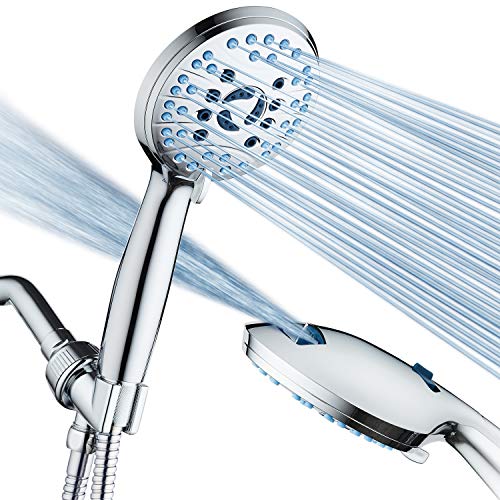 Hotel Spa 2639MBest overall
 BOZYBO 460311Rain head plus 9 settings
 Razime XWYMagnetic dual-head system
Three different things people mean by "size"
When shoppers ask what size shower head to buy, they usually mean one of three things. The first is the thread size, which decides whether the head physically attaches to your pipe. The second is the head diameter, which affects spray coverage. The third is flow rate, which is how much water passes through, measured in gallons per minute (GPM).
Thread size is a fit question with a simple answer for most US homes. Head diameter and flow rate are choice questions, and they are where you have real decisions to make. The sections below take them in that order.
Shower head threads and fittings
Standard US shower arms have a 1/2 inch NPT thread. NPT stands for National Pipe Thread, a tapered thread used on plumbing in North America. The 1/2 inch figure is a nominal pipe size, so do not expect a ruler to read exactly half an inch across the threads.
Because this is such a common standard, most heads sold in the US are made to match it. Product listings often say so. One handheld combo in our data, the BESAQUO 9-function model, lists standard 1/2 inch thread connections for its installation. A rain and handheld combo from Razime is described as designed for compatible standard U.S. shower-arm connections.
Handheld sets add a second connection point. The hose attaches to the shower arm or a diverter at one end and to the handheld head at the other. Both ends are normally made to the same standard size, and a small rubber washer inside the nut makes the seal. Check the listing to confirm that the whole kit uses standard threads.
Be careful with imported heads. Thread standards outside North America can differ, and a head that looks the same may not seal on a US arm. If you bought a head abroad, check that it lists a 1/2 inch NPT connection before you rely on it.
How to check that your shower arm will work
Look at the end of the shower arm where the head attaches. In most homes it is a short pipe sticking out of the wall with external threads. Your new head has an internal thread, and the two screw together.
Some situations call for a closer look:
- Wall-mounted arm with a broken or damaged thread: replace the arm before you buy a new head.
- Ceiling-mounted or rain shower pipe: confirm the outlet thread and the pipe length with the maker.
- Arm that spins or leans: tighten or replace it, especially if you plan to hang a large, heavy head.
- Built-in handheld or slide bar: check which connection the kit replaces, since some sets include their own arm.
Choosing a head diameter
Once you know the head will fit, diameter is the next decision. A wider face spreads water over more of your body, which many people describe as a rain feel. A smaller face feels more focused and is easier to hold in your hand when it doubles as a handheld.
The figures below come from the models on our best shower head comparison, so you can see how far the range stretches.
| Style | Diameter in our data | Example from the data | Weight where listed |
|---|---|---|---|
| Compact handheld | 4.5 in | Hotel Spa AquaCare 8-Mode Handheld | 1.5 lb |
| Larger handheld face | 5.04 in | BESAQUO 9-Function Handheld | Not listed |
| Mid-size rain head | 10 in | All-metal rain combo | Not listed |
| Large rain head | 12 in | BOZYBO 12in Rain Shower with Handheld | 4.04 lb |
| Large rain head | 12 in | Razime 12in Rain Shower Head with Handheld | 4.63 lb |
| Largest listed | 13 in | Largest-diameter pick on our page | Not listed |
Weight, mounting and safety
Bigger heads weigh more. Among the products in our data, the compact Hotel Spa handheld weighs 1.5 lb, while the two 12 inch rain combos weigh 4.04 lb and 4.63 lb. A fixed rain head hangs from the arm, so the arm and its wall connection need to be secure.
Our best shower head page makes the same point: a heavy rain head also needs a secure shower arm. If your arm wobbles, fix that before you hang anything large on it.
Stay safe while you work. Use a stable step stool rather than standing on a tub edge, and keep the floor dry so you do not slip. Wet tile and tub surfaces are slippery, so take your time.
How to swap a shower head
Replacing a head is a basic job for most homeowners. Follow these steps.
- Unscrew the old head by turning it counterclockwise. Use a cloth around the nut and an adjustable wrench only if you need extra grip.
- Clean the arm threads and remove old tape or residue.
- Wrap plumber's tape around the arm threads a few times, in the direction the head will tighten (clockwise when you face the pipe).
- Screw on the new head by hand, then snug it a quarter turn with a wrench. Do not overtighten, because that can crack plastic nuts or damage the arm.
- Run the water and check for drips at the connection. Add a bit more tape or reseat the washer if it leaks.
- Set the water temperature before you step in, and test it with your hand first to avoid a scald.
Match the head to your water flow
Flow rate is the other size that matters. Among the models that list it on our comparison page, 2.5 GPM is the highest and 1.8 GPM is the lowest, and only 6 of 13 products list it at all. If a maker does not publish flow, you cannot compare output, so look for the figure before you buy.
A removable flow restrictor, listed on the Hotel Spa and BESAQUO models, lets you take out the small insert that limits flow. Check your local rules and your own preferences before removing one. For a full comparison of spray settings, anti-clog nozzles and warranties, see our shower head comparison.
Frequently asked questions
Can I put a handheld on a regular shower arm?
Usually yes. Many handheld kits attach to the arm with a standard connection, often with a diverter that lets you switch between a fixed head and the handheld. Read the listing to see which parts are included.
Do I need an adapter to install a new head?
Not for most US homes, since heads and arms follow the same standard. You may need one if you have an unusual fitting, a ceiling pipe or an imported head.
Does a bigger head mean stronger pressure?
No. A wider face spreads the same water over more area, so it often feels softer. Water pressure comes from your plumbing, and the flow rating sets the most water the head delivers.
Should I use plumber's tape on a shower head?
Many installers add a few wraps to the arm threads to help the seal. Some heads seal well with just the washer, so start with the maker's instructions.