What Size Pry Bar Do I Need for My Project?
For trim, baseboards, tile and nails, a flat bar of about 10 to 15 inches is the right size. For tearing out subfloors, framing and decking, step up to a forged bar of roughly 25 to 36 inches. Length is leverage, so pick the shortest bar that still gives you enough force for the job.
 Titan 11509Lightest in the lineup
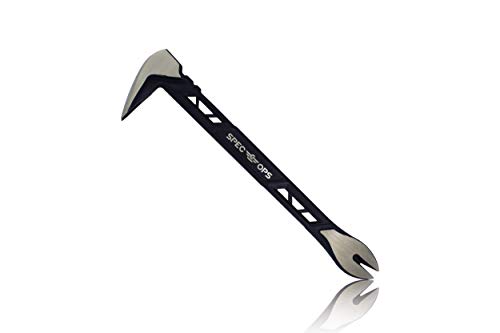 Spec Ops SPEC-D10CLAWDedicated nail puller
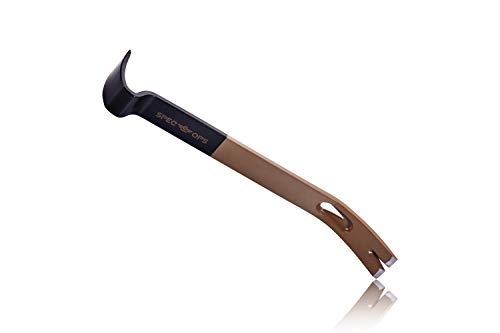 Spec Ops SPEC-D15BARMid-size flat bar
Start with the job, not the bar
A pry bar is a lever. The longer the bar, the more force you get from the same push, but the harder it is to control in a tight space. That trade-off decides the size you need.
So ask two questions before you buy. How much force will the job take? And how much room will you have to swing the bar? Delicate trim in a cramped corner calls for a short bar. A nailed-down deck board with room around it calls for a longer one.
Most homeowners end up with two sizes: a small flat bar for finish work and a longer bar for rough work. If your projects vary, a set can cover both ends.
Pry bar length by project
The table below pairs common jobs with a length range and an example from the products we compare. The lengths and weights come from the published specifications on our pry bar page.
| Project | Suggested length | Bar style | Example from our comparison |
|---|---|---|---|
| Scraping caulk, small trim, tacks | Under 10 in | Flat scraper | Titan 11509, 9.25 in, 0.1 lb |
| Pulling nails, headless nails | About 10 in | Cat's paw | Spec Ops SPEC-D10CLAW, 10 in, 0.7 lb |
| Baseboard, casing, tile, plywood | 10 to 15 in | Flat bar | Spec Ops SPEC-D15BAR, 15 in, 1.68 lb |
| Lifting boards, mid-size demo | 12 to 25 in | Handled angled bar | TEKTON LSQ42103 set, 12, 17 and 25 in |
| Framing, subfloor, deck boards | 25 to 38.5 in | Curved or gooseneck | Mayhew 61366 set, up to 38.5 in |
| Heavy demolition | About 36 in | Gooseneck wrecking bar | Estwing EWB-36PS, 36 in, 8 lb |
Small bars for trim, tile and nails
For finish work, think 10 to 15 inches. These bars are light enough to control, and a thin beveled tip slides under trim without chewing up the wall.
The Titan scraper on our page is 9.25 inches long and weighs 0.1 lb, with a nail puller slot and a scraper edge. It suits caulk, baseboard and light prying. It is not a demolition bar, so do not ask it to lift framing.
If your main job is pulling nails, the Spec Ops 10 in cat's paw lists two nail pullers and dual strike zones. A cat's paw digs into the wood around a nail head, which is useful when the nail is flush or the head is gone.
For general trim and board lifting, a 15 in flat bar gives you more reach. The Spec Ops 15 in bar and the STEELHEAD 15 in bar both list a nail puller. The STEELHEAD lists three nail slots at different angles. You can see more of these on our best pry bar comparison.
Mid-size bars for general home projects
Between about 12 and 25 inches you get a good balance of leverage and control. This is the range for lifting floorboards, separating plywood and prying apart stuck assemblies.
Handled bars work well here. The TEKTON set lists 12, 17 and 25 in bars with a steel strike cap on each. A cap lets you tap the bar with a hammer to start the tip under material, without damaging the handle.
If you are not sure which size you will reach for most, a set removes the guesswork. The SHALL set includes four flat bars: 5.5, 7.5, 10 and 15 in. That covers small and mid-size jobs, though it will not replace a long bar for heavy tear-out.
Long bars for demolition
Once you are tearing out subfloors, studs, decking or sheathing, length matters more than finesse. A bar of about 25 to 36 inches gives you the leverage to lift material that is nailed down firmly.
The Estwing 36 in gooseneck is the example on our page. It is forged in one piece, has a slotted nail puller end, and weighs 8 lb. That weight helps the bar do work, but it also means you will feel it after an hour of use.
The Mayhew 5-piece set tops out at 38.5 in and lists a strike cap on each bar. It is a good fit if you want several curved bars for different spots.
The longest bar we list is the Mayhew Dominator at 58 in and 9.32 lb. Its listing points to automotive and mechanical work, such as oil pans and axles, so it is not the usual choice for home demolition. A longer bar is not automatically better. It can be awkward in a stud bay and harder to place accurately.
How to choose, step by step
Use this quick checklist to land on a size:
- Identify the hardest job you expect to do, and size the bar for that.
- Check your working space. Tight spots favor bars under 15 in.
- Decide if you will hit the bar with a hammer. If so, look for a strike cap.
- Look for a nail puller slot if the material is nailed down.
- Check the weight. A heavy bar will tire you out on long jobs.
- If your jobs vary a lot, consider a set instead of one bar.
Safety notes before you pry
Pry bars store a lot of force, and a slipping bar can hurt you or damage the wall. A few habits help.
Wear safety glasses, since nails, splinters and old plaster can fly off. Wear work gloves, and add hearing protection if you are also hammering on the bar for a long stretch.
Strike a bar only if it is made for it. Our page lists strike caps on the Mayhew and TEKTON bars. Do not hit a bar that has no cap.
Before you pry on walls, floors or ceilings, check for hidden wires, water pipes and gas lines. If you may be near electrical wiring, turn off the power at the breaker first. If you smell gas, stop and leave the area.
Keep your body out of the line the bar will travel if it slips. If you work on a ladder or at height, make sure you have stable footing first, because heavy prying can throw you off balance. Old paint and dust from older homes may be hazardous, so use a suitable dust mask or respirator.
Frequently asked questions
How long is a typical pry bar?
They range widely. On our comparison page, bars run from 9.25 in to 58 in. Small flat bars of 10 to 15 in are common for trim, while demolition bars are often around 36 in.
Is a longer pry bar always stronger?
A longer bar gives more leverage, but strength also depends on build. A forged one-piece body has no weld or joint that can fail. Among the products we compare, only the Estwing lists a forged one-piece spec.
Can I use one pry bar for everything?
Not well. A short bar is easy to control but lacks leverage, and a long bar is heavy and awkward for trim. Many people keep a small flat bar and a long bar, or buy a set.
Do I need a nail puller on my pry bar?
It helps whenever boards or trim are nailed down. Every flat bar on our page lists a nail puller, so you can pull the nail without switching to a hammer.