What Size Post Hole Digger Do You Need? Bit Sizes by Post Type
For a standard 4x4 post, a 10 in bit is the usual choice. It makes a hole about three times the post's width, which leaves room for gravel or concrete. A 6 in bit suits small stakes, trees and bulbs, and a 12 in bit suits 6x6 posts and big footings.
 NEO-TEC NEO-TECLightest gas digger
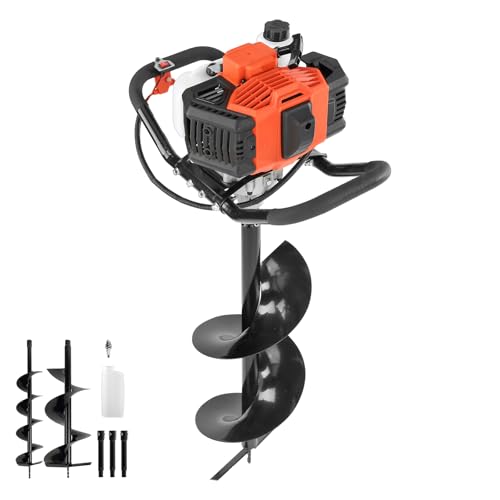 VEVOR D52-FMost extension rods
 WORKIT OO-EA62BWidest bit included
The short rule: hole width is about three times the post
A post hole digger does not have a size in the way a drill does. The auger bit sets the hole width, so the real question is which bit diameter you need. A common rule of thumb is a hole about three times as wide as the post.
The reason is simple. You want several inches of space around the post for tamped gravel or concrete. Too narrow and you cannot pack the fill properly. Too wide and you spend extra effort digging, hauling soil and mixing fill for no benefit.
What size post hole digger for a 4x4 post?
A 4x4 post is not actually 4 in across. Lumber sizes are nominal, and a 4x4 measures about 3.5 in on each side. Three times that is roughly 10.5 in, so a 10 in bit is the closest standard match.
If you plan to set the post in compacted gravel rather than concrete, an 8 in bit can work, since you only need a bit of working room. For concrete, stay with 10 in. A 12 in hole is not wrong for a 4x4, but it takes more fill and more digging.
Bit size by project
Use this table as a starting point. The post sizes are standard lumber dimensions, and the hole widths follow the three-times rule. Always follow your local building code or your deck or fence plans if they call for something different.
- Round posts: measure the diameter and multiply by three.
- Concrete footings: go with the wider bit so the concrete collar is thick enough.
- Gravel-packed posts: you can use a slightly narrower bit, because you only need room to tamp.
| Project | Typical post or item | Suggested bit |
|---|---|---|
| Bulbs, small plants | Under 3 in | 4 in to 6 in |
| Small stakes, signs, steel fence posts | Up to about 2 in | 6 in |
| Mailbox or light fence post | 4x4 (about 3.5 in) | 8 in to 10 in |
| Standard fence post, deck footing | 4x4 (about 3.5 in) | 10 in |
| Heavy gate post, pergola post | 6x6 (about 5.5 in) | 12 in |
Don't forget depth
Width is only half the job. As a general guide, about one third of the post's total length goes below ground, and posts in cold climates often need to go below the local frost line. Your local building department can tell you the required depth.
Depth is where extension rods matter. A bit alone only reaches so far, and rods let you keep digging without bending over. Our best post hole digger page lists the number of rods in each kit, so you can match reach to the depth you need.
Which diggers on our list cover which bit sizes
Bit sizes vary a lot between models. Across the group we compare, the largest bit runs from 6 in to 12 in. Here is what each one lists, based on the published specifications.
The electric model is the most limited on size. It includes only a 6 in bit, so it fits small posts and plants but not a 4x4 in concrete. For a 4x4 fence post, look for a kit with a 10 in bit.
| Model | Included bits | Extension rods |
|---|---|---|
| NEO-TEC 72cc gas | 6 in and 10 in | 1 |
| VEVOR 52cc gas | 6 in and 10 in | 3 |
| WORKIT 72cc gas | 4 in, 6 in and 12 in | 2 |
| XtremepowerUS 1500 W electric | 6 in | Not listed |
| VEVOR 43cc gas | 8 in | Not listed |
Choosing the right setup for your job
If you are setting 4x4 posts, a kit with a 10 in bit covers the standard case. The NEO-TEC and the 52cc VEVOR both include one, along with a 6 in bit for smaller work. The 52cc VEVOR also includes three extension rods, which helps with deeper holes.
If you also build with 6x6 posts, the WORKIT includes a 12 in bit, the widest on our list. It also comes with 4 in and 6 in bits for lighter jobs, though it has no 10 in bit for the standard 4x4 case.
Weight matters for a long day of digging. The NEO-TEC lists 17.6 lb, the lowest on our list among models that give a weight. The 52cc VEVOR lists 34.5 lb. A lighter machine is easier to steer, though the right bit and enough reach come first.
Safety before you dig
Call 811 a few days before you dig so utility lines are marked. Hitting a buried line is dangerous and can be costly. Check for irrigation lines and private cables as well.
Wear safety glasses, hearing protection, gloves and sturdy boots. A gas auger is loud, and a bit that catches a rock or root can twist the machine hard. Keep both hands on the handles, keep your feet clear, and know where the stop switch is.
Mix and store fuel away from sparks and open flame, and let the engine cool before refueling. For corded electric models, use a properly rated extension cord and a GFCI outlet, and never dig in wet conditions.
Frequently asked questions
What diameter hole does a post hole digger make?
It makes whatever diameter the bit is. Common bits run from about 4 in to 12 in, and some are wider. Check which bits come in the kit before you buy.
Can I use a 6 in bit for a 4x4 post?
A 6 in hole leaves less than 1.5 in of space on each side of a 4x4, which is tight for tamping or concrete. It works only for very light uses. A 10 in bit is the better fit.
Can I dig a wide hole with a narrow bit?
Not well. You can wiggle a bit to widen a hole, but it gives uneven walls and puts strain on the machine. Switch to the correct bit instead.
Does a bigger bit need a bigger engine?
Usually, yes. A wider bit moves more soil and meets more resistance, so it calls for more power and a firm grip. Clay and roots make that even more true.